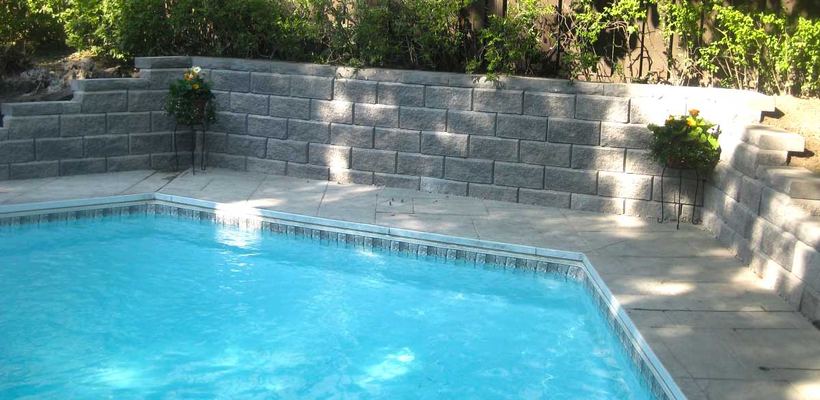

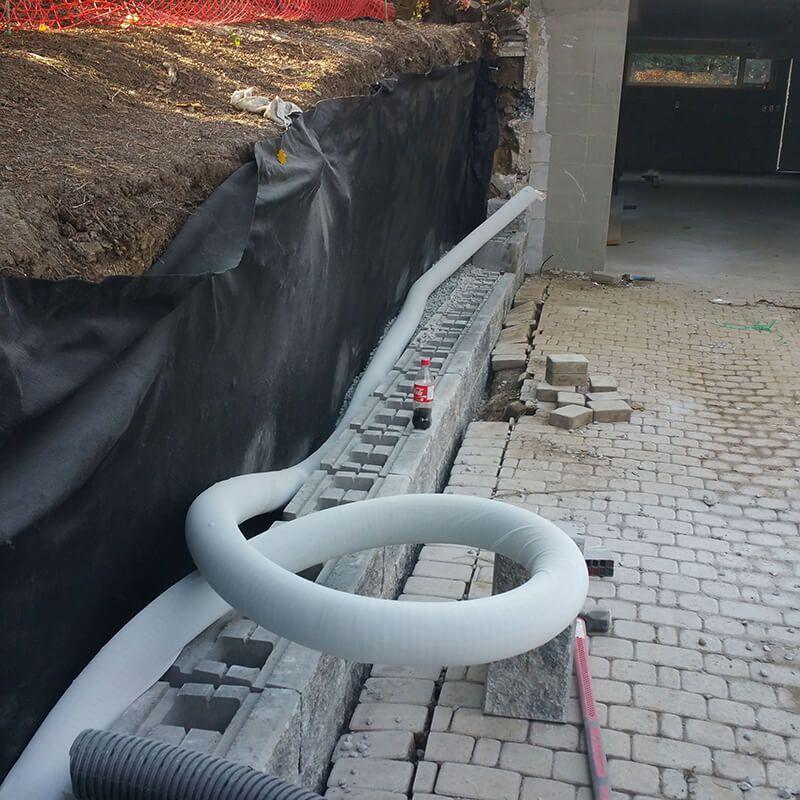
Retaining wall drainage is the system behind the face that lets water out before it builds pressure. It has four parts: a compacted gravel base, a zone of clear, free-draining stone behind the wall (at least 12 inches for segmental block), non-woven filter fabric between that stone and the native soil, and a perforated weeping tile at the bottom that carries water to an outlet. In Toronto’s clay and freeze-thaw winters, a wall without it is holding back water it was never built to hold.
Drainage is also the part of a wall nobody sees once it is finished, which is why it gets skipped. Below we go through each layer, where the water should end up, the signs that drainage has failed, and what can be done about it on an existing wall. The layers are the same whether the face is natural stone, large precast block or small block.
Why water is the main reason retaining walls fail
A retaining wall is designed to hold soil. Wet soil is heavier, and water standing behind a wall pushes on it as well, a load called hydrostatic pressure. Clay, common under many GTA neighbourhoods, holds that water instead of letting it through. In winter the water in it freezes and expands, so every freeze-thaw cycle shoves a badly drained wall a little further out of line.
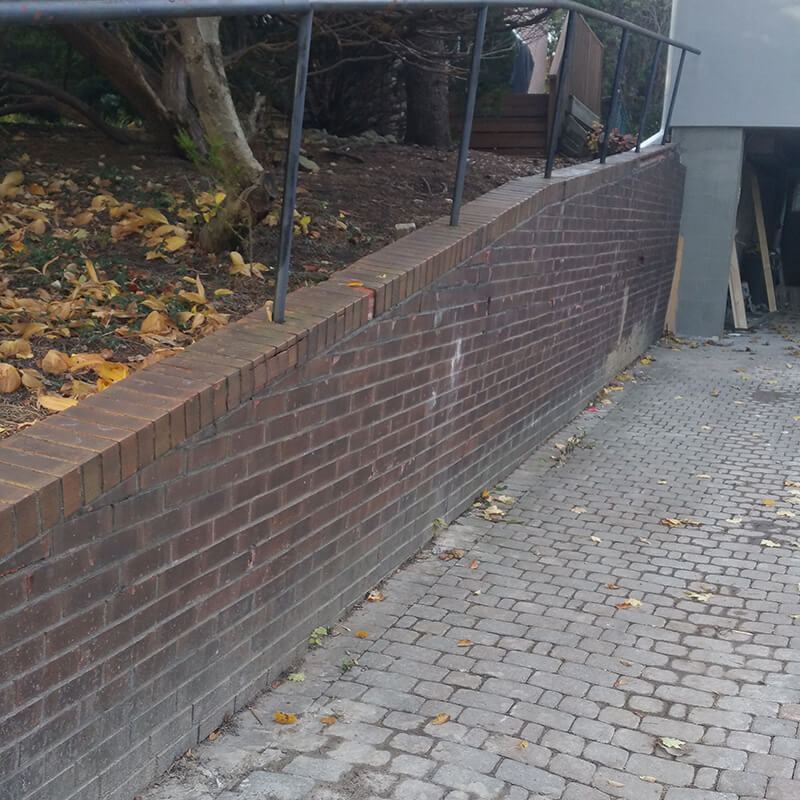
Proper drainage gets ground water away from the back of the wall and keeps the material behind it free-draining, which is what prevents premature structural failure. On the Kaivan wall we replaced, poorly installed drainage behind the old wall had contributed to it leaning and crumbling. The full picture of frost damage is in why retaining walls fail after winter.
The four layers of retaining wall drainage
- A compacted gravel baseUsually ¾″ gravel, mechanically compacted and levelled under the first course. It spreads the wall’s weight evenly and gives the first course a firm, free-draining bed. Even a flexible dry-stacked stone wall needs it.
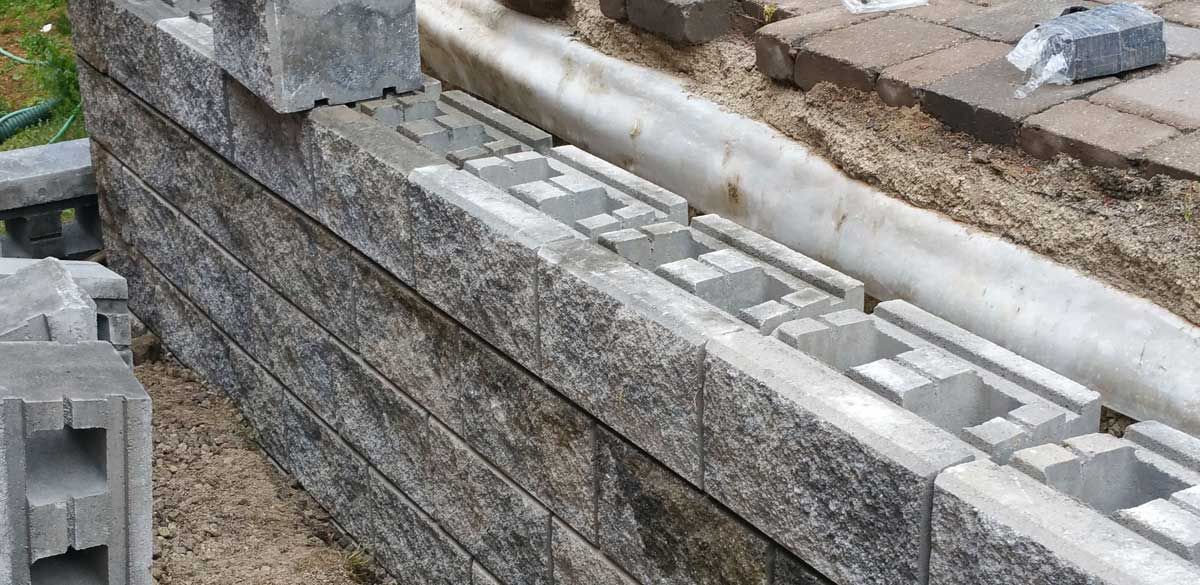
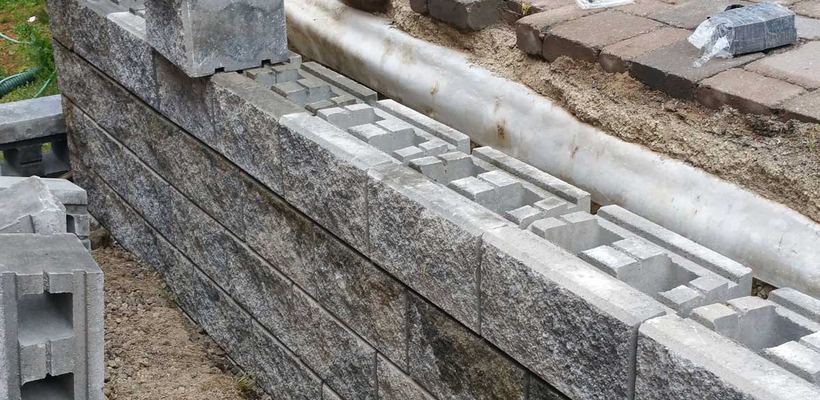
- A clear-stone drainage zoneClean ¾″ clear gravel with no fines, placed directly behind the wall. The Concrete Masonry & Hardscapes Association’s segmental retaining wall design note calls for at least 12 in. (305 mm) of free-draining aggregate behind the units. In hollow block, the cores are filled with the same stone.
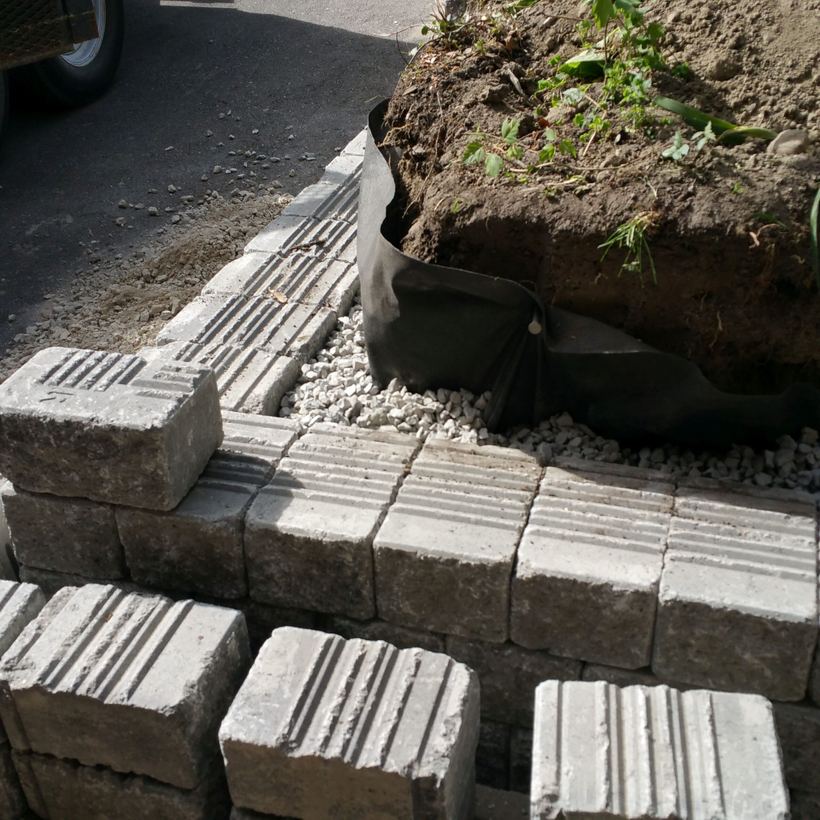
- Non-woven filter fabricA geotextile laid between the clean stone and the native soil. Water passes through it; soil doesn’t, so the drainage zone doesn’t silt up over the years.
- Perforated weeping tileA 4″ perforated pipe at the bottom of the drainage stone, at the back, sloped to an outlet. A sock, a fabric sleeve around the pipe, keeps fine particles out of the perforations.
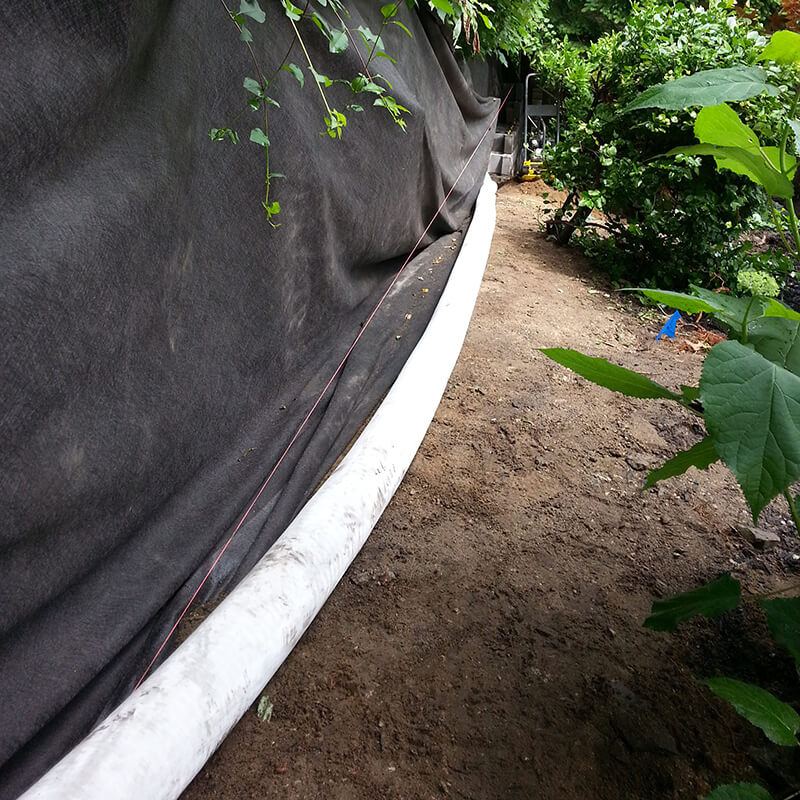
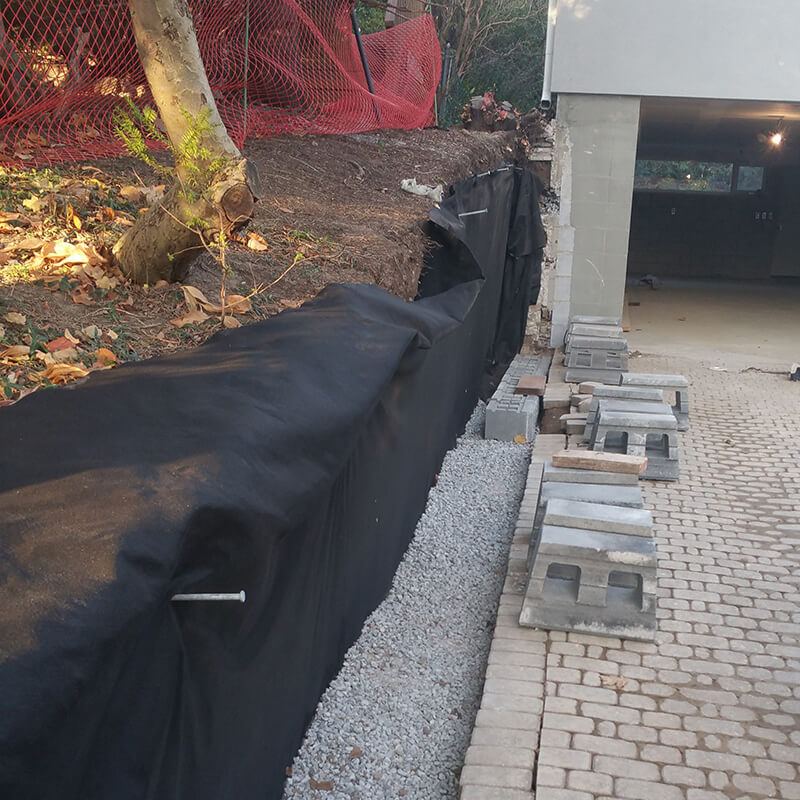
Weeping tile behind a retaining wall: where it goes and where it drains
The pipe sits at the back of the drainage stone, as low in the wall as possible while still falling toward its outlet. Water that soaks down through the clear stone finds the pipe and leaves the wall instead of building up against it.
A pipe is only as good as its outlet. CMHA’s design note puts drain outlets no more than 50 ft (15.2 m) apart, and outlets belong at the low points of the wall. They usually daylight at grade beyond the end of the wall or through the face near the bottom, onto ground that slopes away. Where the water goes matters as much as getting it out. The City of Toronto’s downspout disconnection guidance says to make sure the flow won’t damage a neighbour’s property or run onto a driveway or sidewalk, and the same thinking applies to a wall drain.
On the Jancy King wall in High Park, the soil was sandy, so we used flexible 4″ socked weeping tile and non-woven fabric to keep sand out of the clean gravel. The right combination depends on the soil, and on the block manufacturer’s or engineer’s detail for taller walls.
Retaining wall backfill: clear gravel, not soil
The material directly behind the wall should be clear stone, not the clay that came out of the hole. Clay holds water against the wall, swells when it freezes and shrinks when it dries, which is exactly what the wall is trying to resist. Clear ¾″ stone has no fine particles to clog it, so water drops straight through to the pipe.
Behind the clear-stone zone, the retained soil is placed and compacted in layers. On taller walls, geo-grid sheets are laid between courses and run back into that compacted fill, tying the wall to the soil mass. On the Sandie Dix, Pinkus and Jancy King walls, geo-grid went in about every 2 feet of height.
Why filter fabric is worth it
Without fabric, fine soil washes into the clear stone with every rain. Over a few seasons the drainage zone turns back into dirt, the pipe silts up and the wall is holding wet soil again. If you see soil washing out through the joints of an old wall, missing or torn fabric is the usual cause.
Surface water: the drainage people forget
Most water reaches a wall from above, not below. A downspout or sump pump emptying onto the high side, a lawn that slopes toward the wall, or a neighbour’s grading that sends runoff your way can overwhelm good drainage behind it. Before a wall is built, we look at where the roof water and surface water go, and how the yard is graded around the wall.
In newer subdivisions, lot grading plans often route water along a side-yard or rear-yard swale. A wall that blocks the swale moves the problem to your basement or your neighbour’s. The Markham and Vaughan pages cover this for newer lots; check your municipality’s grading rules before changing the grade.
Signs your retaining wall drainage has failed
| What you see | What it usually means | What to do |
|---|---|---|
| Wet face, ice in winter, white mineral staining | Water is getting through the wall, not around it | Find the outlet; redirect downspouts |
| Puddles at the base after rain | No outlet, or a crushed or blocked pipe | Locate and flush the outlet; dig if it’s gone |
| Soil washing through joints | Filter fabric missing or torn | Open the back, add fabric and clear stone |
| Outlet stays dry after heavy rain | Pipe clogged, or never connected | Flush it; camera or dig to check |
| Bulge in the middle of the wall | Water pressure, often with missing reinforcement | Have it assessed; often a rebuild |
Can drainage be added to an existing retaining wall?
Sometimes, and the cheap steps come first. Move downspouts, sump discharge and sprinklers off the high side, then find the drain outlet at the foot of the wall and flush it. If water runs from it, the wall may only need maintenance.
If there is no outlet, the pipe is crushed, or there is solid clay against the back of the wall, the soil has to come out and go back as clear stone wrapped in fabric, with new weeping tile at the bottom. On a wall that already leans, that dig is part of a rebuild, because the old face may not stand up to it. Our retaining wall repair page shows how we decide.
Drainage on our documented walls
| Project | Wall | Drainage behind it |
|---|---|---|
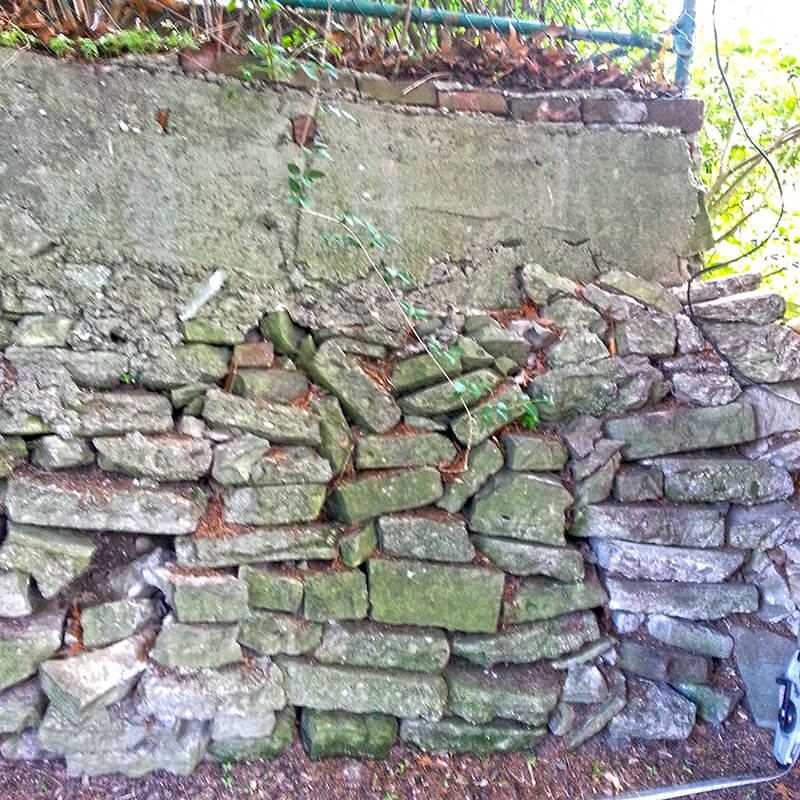
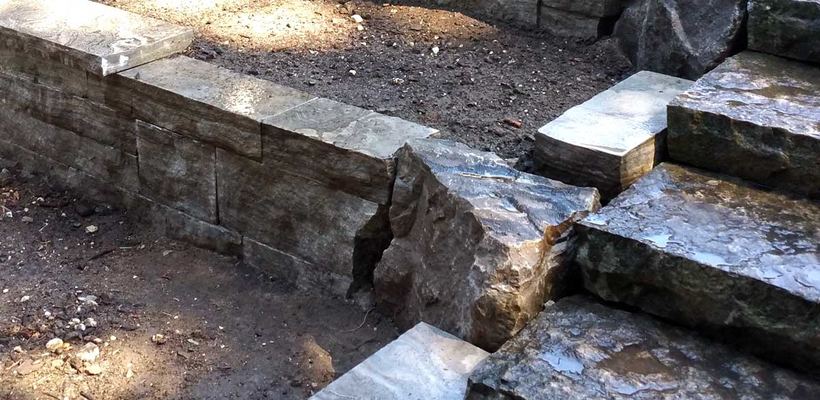
| Jancy King, High Park | Dry-stacked 8″ Eramosa | ¾″ gravel base, ¾″ clear backfill, non-woven fabric, 4″ socked weeping tile |
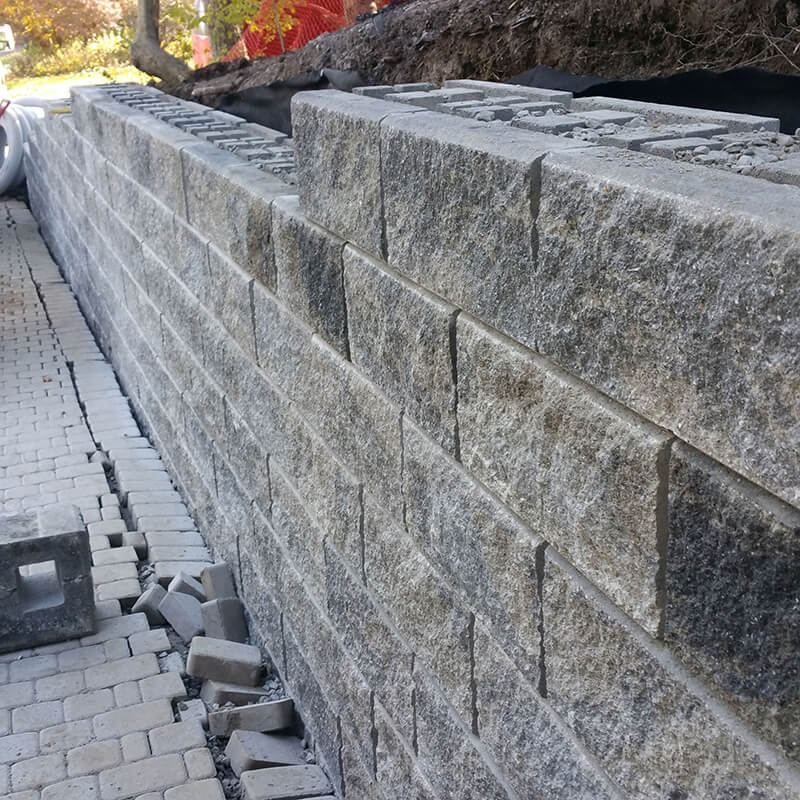
| Sandie Dix | Hollow Hewnstone block | Drainage pipe and filter fabric; cores filled with clear gravel |
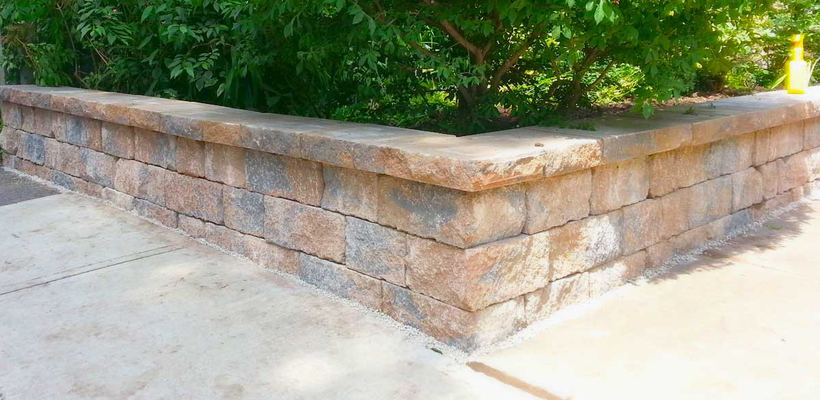
| Pinkus | Techo-Bloc Suprema | Clear ¾″ aggregate, heavy filter fabric, drainage behind the block |
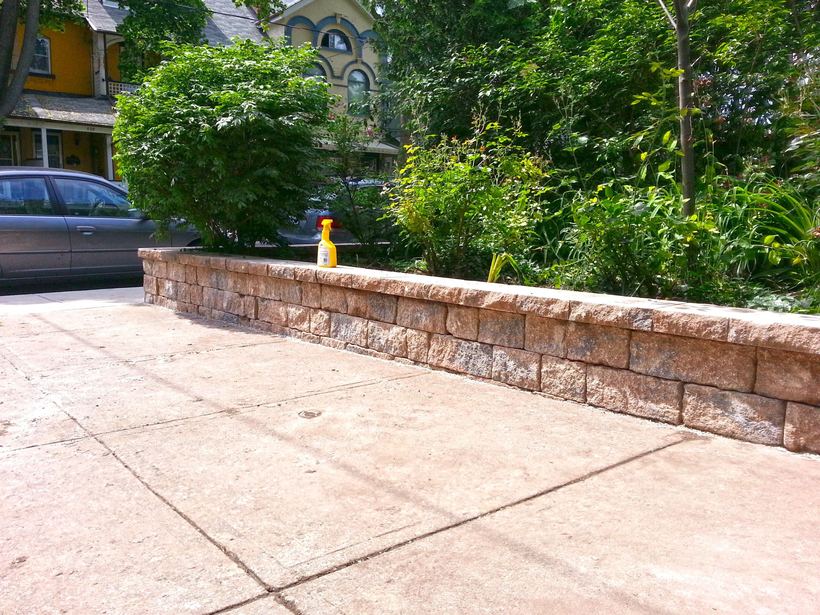
| Peter Palmer | Bestway Parkwall small block | ¾″ gravel base, non-woven fabric, clear gravel backfill, perforated socked weeping tile |
Water pooling at your wall?
We’ll find where it’s coming from and whether the drainage can be fixed or the wall needs rebuilding.
Retaining wall drainage: common questions
Does a retaining wall need drainage?
Yes. Retaining wall drainage keeps water from building pressure behind the wall, and in Toronto’s clay and freeze-thaw winters that pressure is the most common reason walls lean and bulge. At minimum a wall needs a compacted gravel base and free-draining stone behind it; most walls also need filter fabric and a perforated pipe with an outlet.
What gravel goes behind a retaining wall?
Clear stone with no fines, usually ¾″ clear gravel, placed directly behind the units and inside hollow blocks. CMHA calls for at least 12 inches of free-draining aggregate behind segmental block walls. The compacted base under the wall is usually ¾″ gravel as well.
Where should a retaining wall drain pipe outlet go?
To a low point where the water can run away from the wall and the house: daylighting at grade beyond the end of the wall or through the face near the bottom. It shouldn’t empty onto a neighbour’s property, a driveway or a sidewalk. CMHA spaces outlets no more than 50 feet apart on longer walls.
Should weeping tile behind a retaining wall be socked?
A sock keeps fine soil out of the pipe’s perforations, which is why we used socked 4″ weeping tile behind the Jancy King wall, built on sandy soil. Filter fabric between the native soil and the clear stone does the main filtering. Follow the block manufacturer’s or engineer’s detail on taller walls.
Does a low garden wall need weeping tile?
Even a low wall benefits from clear stone behind it on clay, and a pipe is cheap insurance where water collects. The 2 to 4 ft Peter Palmer wall has socked weeping tile. Whether a short wall needs a pipe depends on the soil, the grading and how much water reaches it from above.
How do I know if my retaining wall drainage is blocked?
Look for a dry outlet after heavy rain, puddles or ice at the base, a wet or stained face, or soil washing through the joints. Any of these means water isn’t leaving the way it should. Start by moving downspouts and flushing the outlet; if that doesn’t help, have the wall assessed.