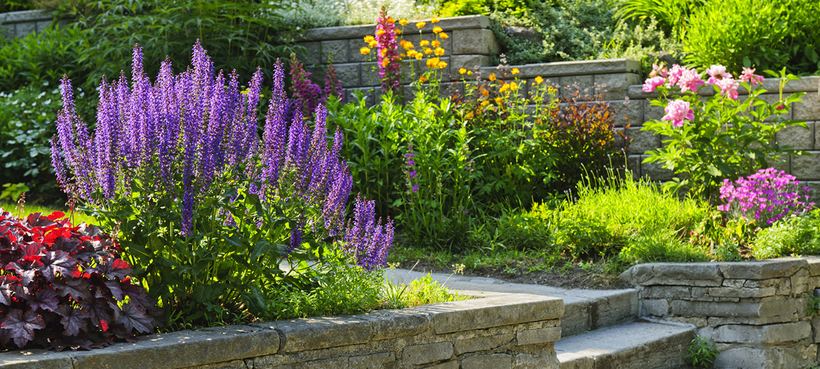
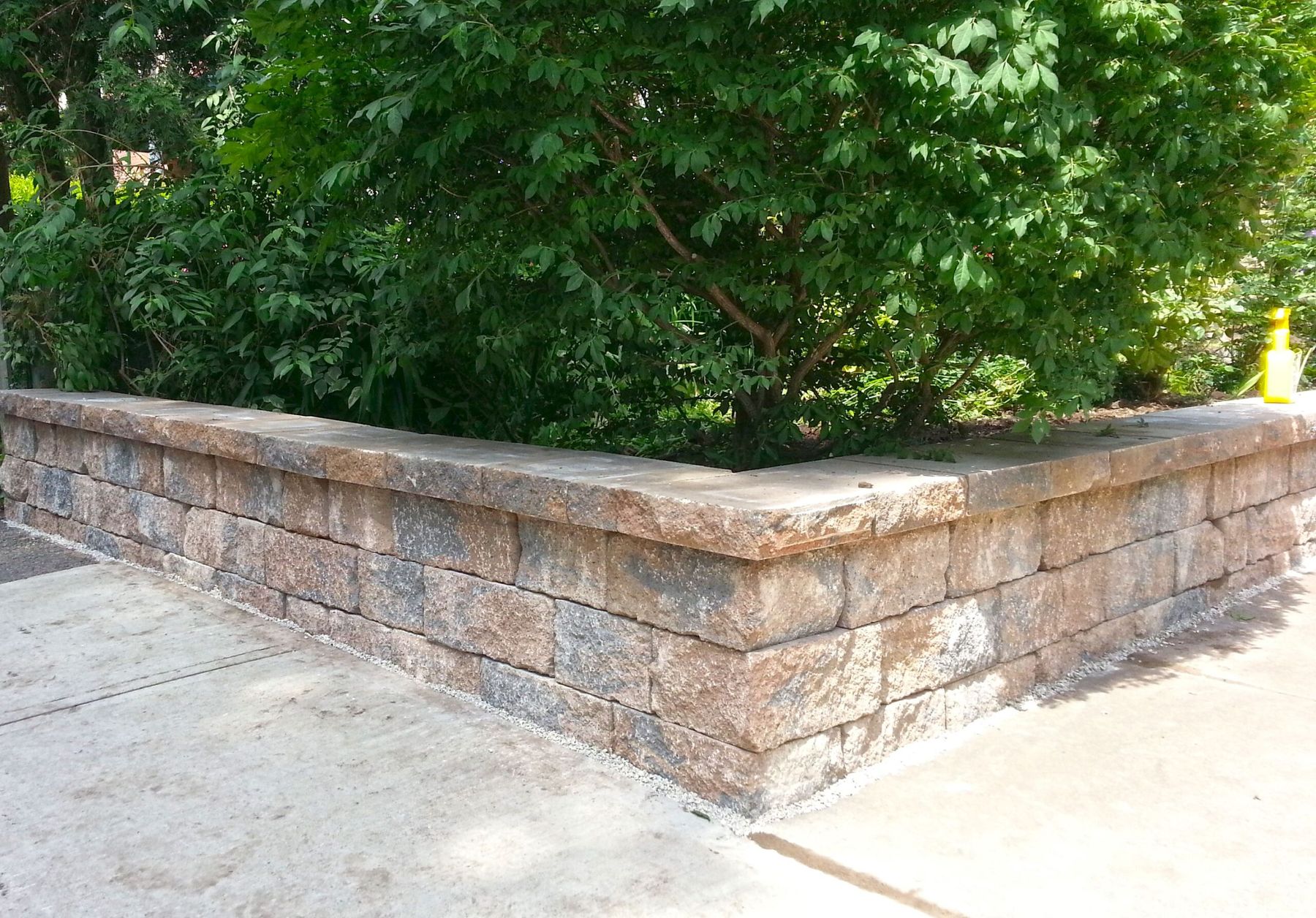
Small segmental retaining walls are constructed using precast concrete blocks that weigh less than 100 lbs each. These blocks come in a variety of shapes and sizes and are more suited to building light-duty retaining walls less than 6′ in height. If your site has limited access, and bringing in heavy equipment is not viable, then small precast retaining wall blocks might be a good choice.
Quick answers
Short, direct answers to the questions homeowners ask most about small block retaining walls.
- What is a small block retaining wall?
- A small block retaining wall is a segmental wall built from precast concrete blocks that weigh under 100 lb each, light enough to set by hand. The blocks interlock in a running bond, each course offset by half a block with a slight batter, so the wall acts as one unit. Top Mark builds them across Toronto and the GTA for light-duty walls under about 6′.
- Does a small block wall need an engineer or a permit?
- Often not for a low garden wall. Small block walls under about 6′ with no surcharge may not need a structural engineer, but a municipal permit may still be required. In Ontario, a wall over 1 m (about 3′3″) of exposed height beside public property, a building entrance or property the public uses generally needs a permit and an engineered design. Top Mark checks this with you during planning.
- Which blocks are used for small block walls?
- For light-duty walls, small precast blocks such as Versa-Lok, Unilock Pisa 2 and Bestway Stone Parkwall are ideal. Top Mark used Bestway Parkwall with matching Parkwall coping on the 2–4 ft Peter Palmer wall, and a solid block with its own locking grooves, clips and matching coping on the Harbord Handy Man wall. Height, look and access in your GTA yard decide the choice.
- Why choose small block where access is limited?
- Each block weighs under 100 lb, so a crew can carry and set it by hand with no heavy machine reaching the wall. That suits narrow side yards, back gardens and Toronto lots where equipment can’t get in or would damage lawns and neighbouring property. Top Mark recommends small block on these sites when the wall is under about 6′ with no load on top.
- What goes behind a small block retaining wall?
- A compacted ¾″ gravel base under a partly buried first course, non-woven filter fabric against the soil, clear-stone backfill, perforated socked weeping tile and, where the design calls for it, geo-grid tie-backs. Top Mark ran geo-grid every 2 courses on the Peter Palmer wall. On Toronto’s water-holding clay, this drainage matters even for a low garden wall.
- What affects the cost of a small block wall?
- Length and exposed height set the square footage, then access, removal of the old wall, drainage, geo-grid, coping and any steps add to it. Prices are usually quoted per square foot of wall face, so convert every quote to the same unit before comparing. Top Mark’s retaining wall cost guide lists typical GTA ranges per square and linear foot.
How a small block retaining wall works
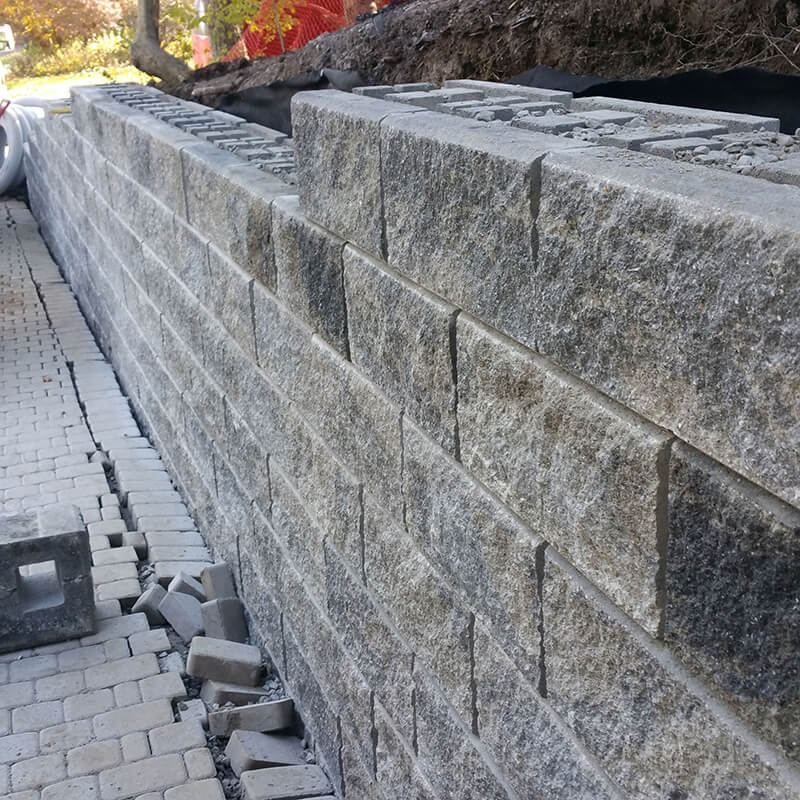
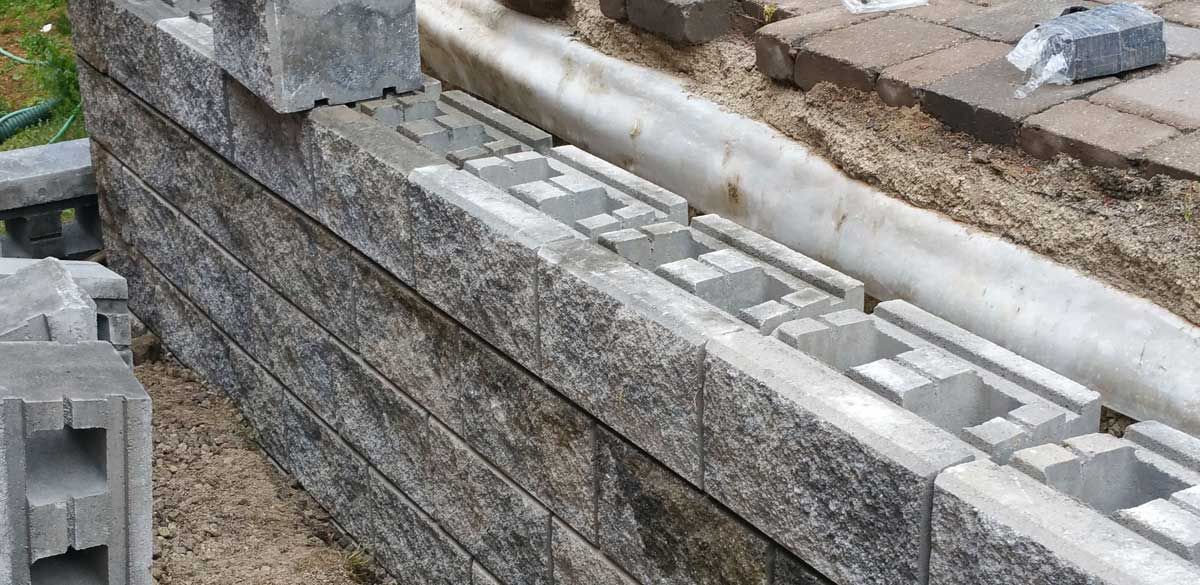
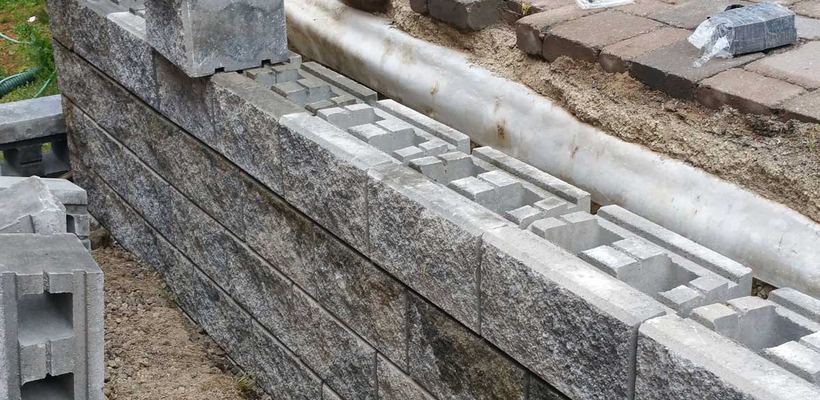
Precast retaining wall blocks work by interlocking with each other to act as one single unit. Each block interlocks with the one beneath it, and every course is offset by half a block so that a running bond is created to provide maximum strength and stability. Each course will often have a slight setback, called a batter, to improve stability by leaning back into the retained soil.
Unlike armour stone retaining walls, precast retaining walls are fairly rigid, and are incapable of minor movements without undermining the structural integrity of the retaining wall. Small precast concrete blocks are one of the most cost-effective methods of building a retaining wall. However, careful consideration must be given to site and soil conditions before selecting a small concrete block, as their load-bearing capacity is rather limited.
Geo-grid, taller walls and permits
Even a small segmental retaining wall block, reinforced with geo-grid, can be used to build retaining walls up to 50′ in height. Such walls require meticulous planning and in-depth geotechnical analysis. For retaining walls that are less than 6′ in height and are not required to withstand load surcharges, small precast blocks such as Versa-Lok or Unilock Pisa 2 are ideal. These types of retaining walls may not require the approval of a structural engineer, but a municipal building permit may be required for such a construction.
A surcharge is any extra weight on the soil behind the wall, such as a driveway, a shed, a pool or a slope rising above it. A wall that carries one usually needs an engineered design.
Permits and approvals
Most small block garden walls stay well under 1 m (about 3′3″) of exposed height, the point at which Ontario’s rules start to bite. A front-yard wall that rises past it beside the public sidewalk, a building entrance or other private property the public uses generally needs a building permit, plus a professional engineer’s design. Backing onto a ravine or creek can bring in Toronto’s ravine and natural feature by-law or your local conservation authority, such as the TRCA, even for a modest wall. Your municipality has the final word, so ask before you build; we look into it with you when we plan the wall.
If your retaining wall project requires a wall in excess of 3′ in height, it is best to contact a specialized retaining wall contractor well in advance, as the design and permit phase of the project could take considerable time and resources. We are fully equipped to service residential, commercial and industrial clients across Toronto and the GTA, from Thornhill, Vaughan, Richmond Hill and Markham to Mississauga, Burlington, Hamilton and surrounding areas. Give us a call today at 416.728.2159 to set up a free consultation.
Where small block walls work best
Small blocks suit lots where the grade changes by a few feet and the wall holds soil, not traffic, including narrow side yards and back gardens a machine can’t reach.
Garden beds
A low wall levels a sloped bed, so rain soaks in and mulch stays put.
Front-yard grade changes
A 2′ to 4′ wall squares off a yard that drops toward the driveway or walk.
Raised garden walls
Raised planters lift flowers or vegetables to a comfortable working height.
Patio and walkway edges
A low wall gives a patio or path a clean, finished edge.
When to choose something heavier
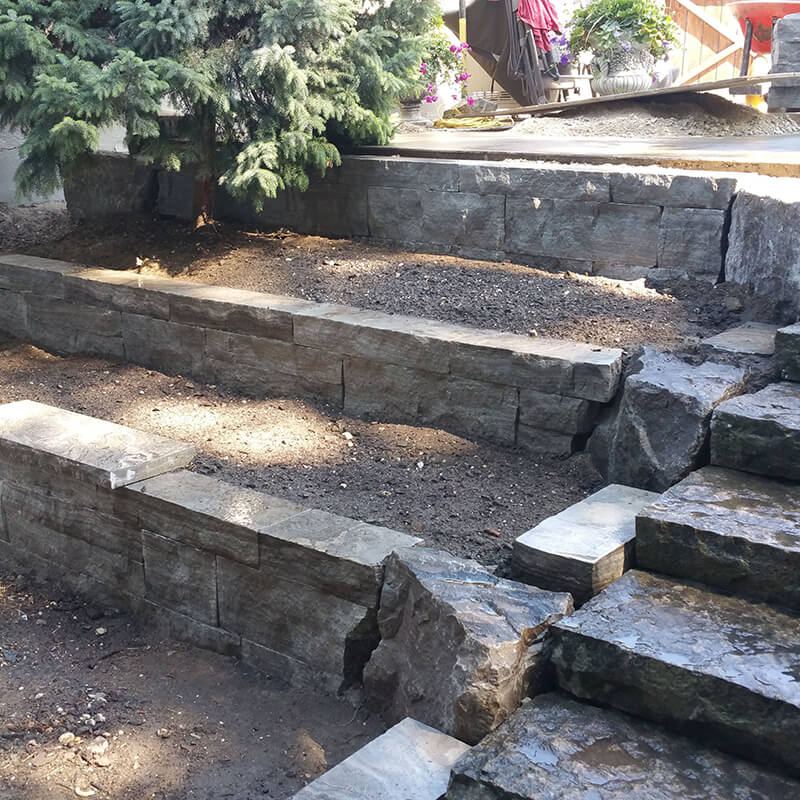
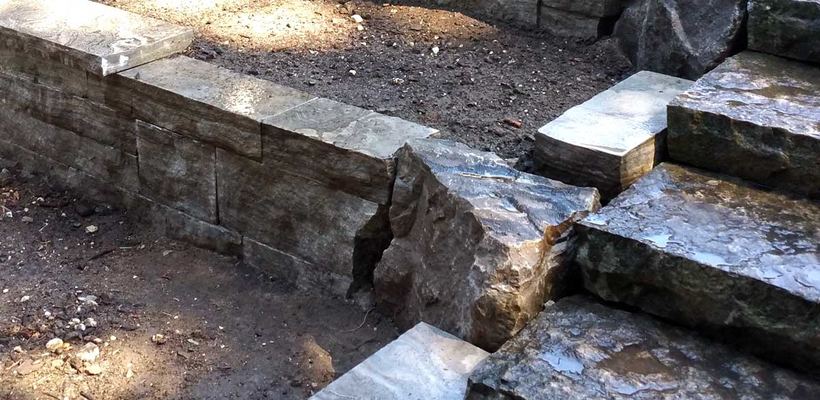
Small block isn’t the best fit for a wall over 6′, one carrying a driveway or other surcharge, or one holding back wet clay on a long slope. Those jobs call for large precast block, or sometimes armour stone, which is somewhat flexible and can absorb minor movement.
How we build a small block retaining wall
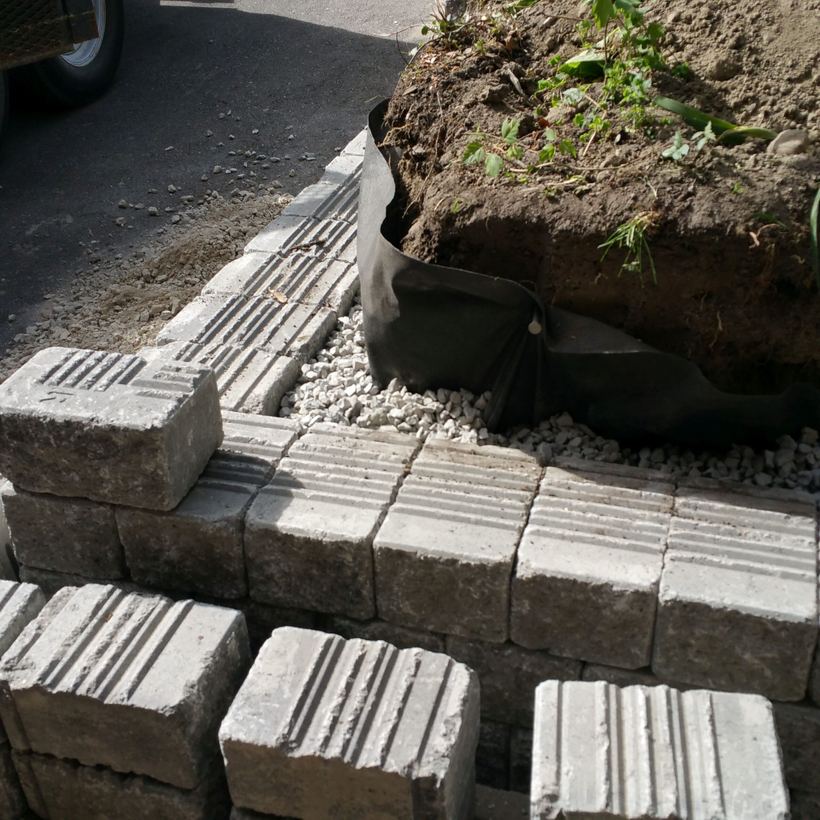
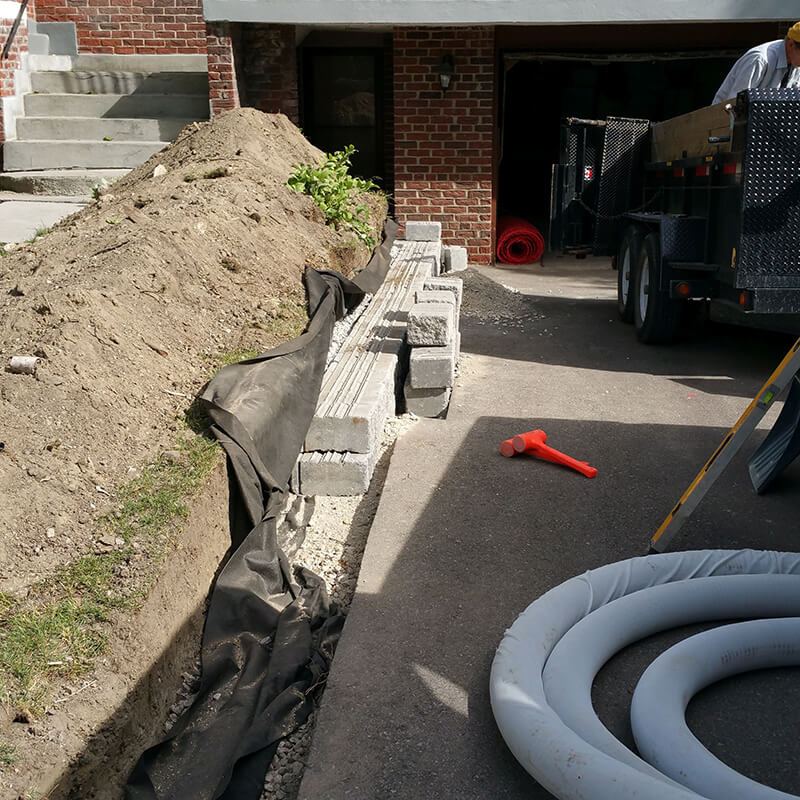
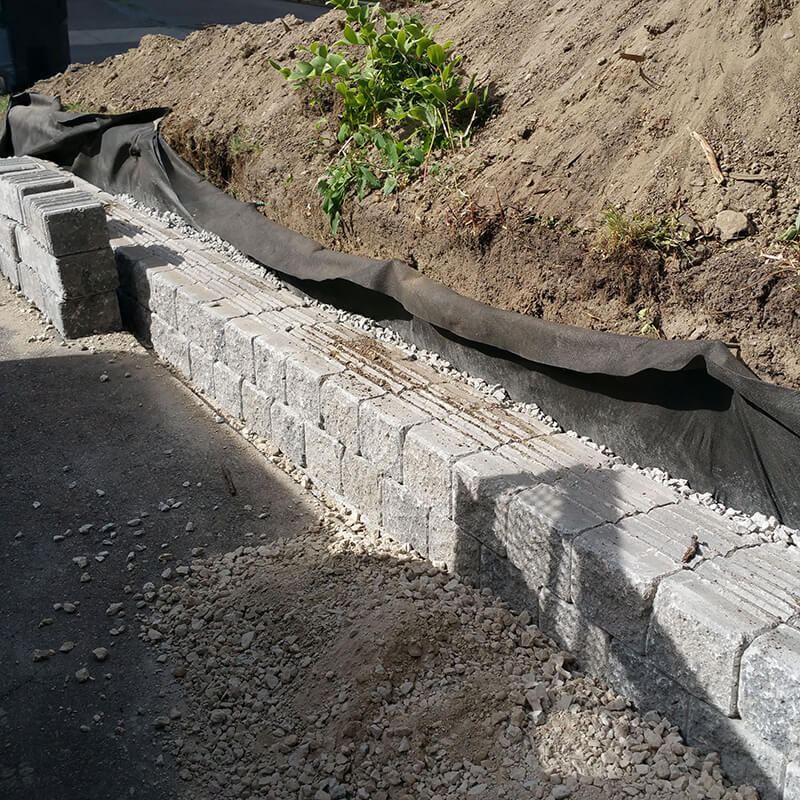
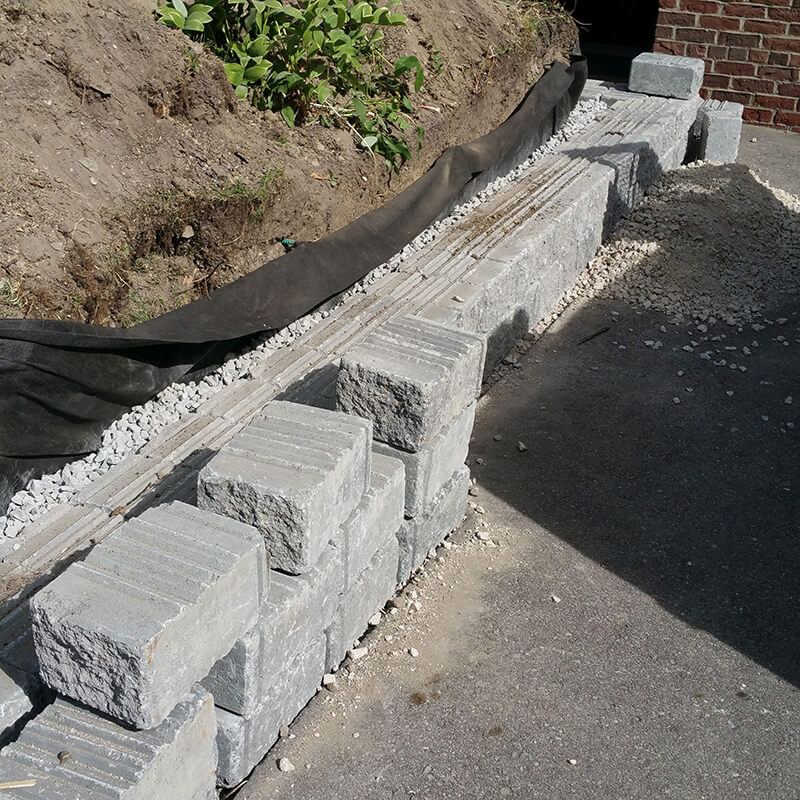
A block wall is only as good as what sits under and behind it. These steps follow the Peter Palmer wall below.
- Tear out and excavateThe failed wall comes out and the soil is cut back for the base, drainage stone and geo-grid.
- Compacted gravel baseThe first course sits on compacted ¾″ gravel. Most block makers also call for part of it to be buried.
- Level the first courseThe slowest and most important step: any error here repeats in every course above.
- Filter fabric and weeping tileNon-woven filter fabric lines the cut to keep soil out of the backfill, and perforated, socked weeping tile goes in behind the base to carry water away.
- Clear-stone backfillEach course is backfilled with clear gravel, which drains freely instead of holding water against the blocks.
- Geo-grid tie-backsWhere the design calls for it, geo-grid mesh runs back into the backfill (every 2 courses on the Peter Palmer wall), tying blocks and soil together.
- Coping and finishMatching coping caps the top course, then the ground behind is graded and planted.
Why drainage matters in Toronto
Much of Toronto and York Region sits on clay that holds water. Saturated soil adds water pressure to its own weight, and water that freezes behind the blocks expands. A rigid block wall can’t flex with that pressure, so drainage matters even on a low garden wall.
Replacing old tie and timber walls
Both projects on this page replaced a failing wall: rotting railroad ties on one, crumbling metal-reinforced concrete on the other. Signs it’s time to replace an old tie or timber wall:
- Soft, split or rotting timbers
- The wall leaning out or bulging
- Soil washing through gaps after rain
- Insects or mould in the wood
Old railroad ties are usually treated with creosote, so they shouldn’t be reused around a vegetable garden. A replacement wall is built with the compacted base and drainage that many of these old walls never had.
Small block vs large precast vs natural stone
| Small block | Large precast | Natural stone | |
|---|---|---|---|
| Weight | Under 100 lbs | Over 100 lbs, up to 5,000 lbs | Often over a tonne each |
| Best for | Light-duty walls under 6′ | Medium to heavy-duty walls, usually over 5′ | Garden & terraced walls |
| Structure | Interlocking, rigid | Interlocking, rigid | Gravity, somewhat flexible |
| Access | Set by hand; good for tight sites | Usually placed with heavy equipment | Heavy equipment for large stones |
| Engineer | May not be needed under 6′ with no surcharge | Over 6′ or with added loads | Varies with height & site |
Two small block walls from our portfolio follow; more are on our projects page.
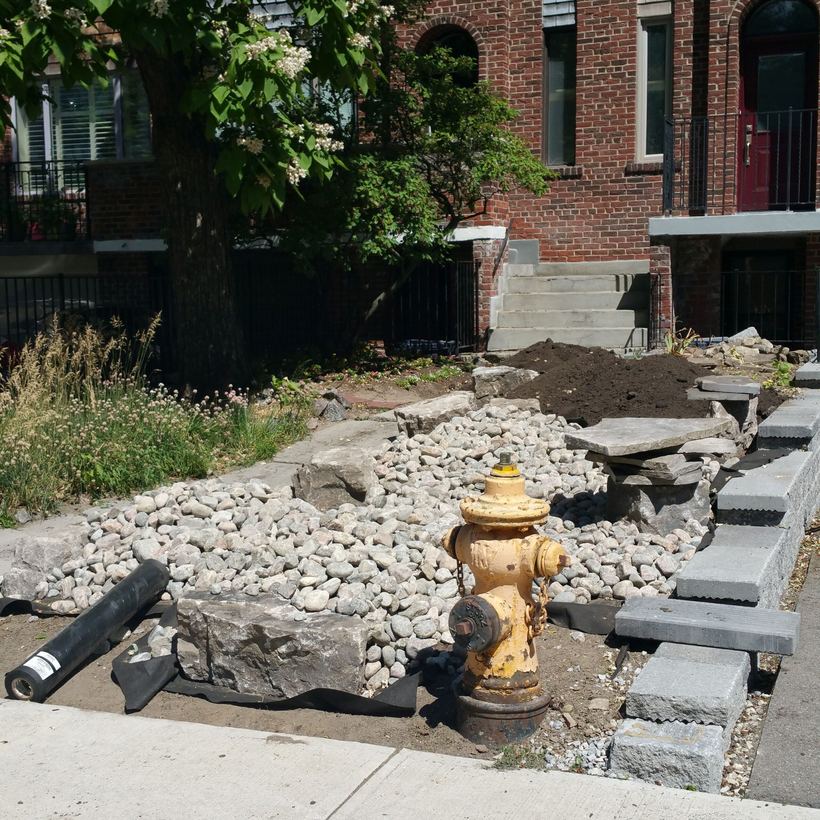
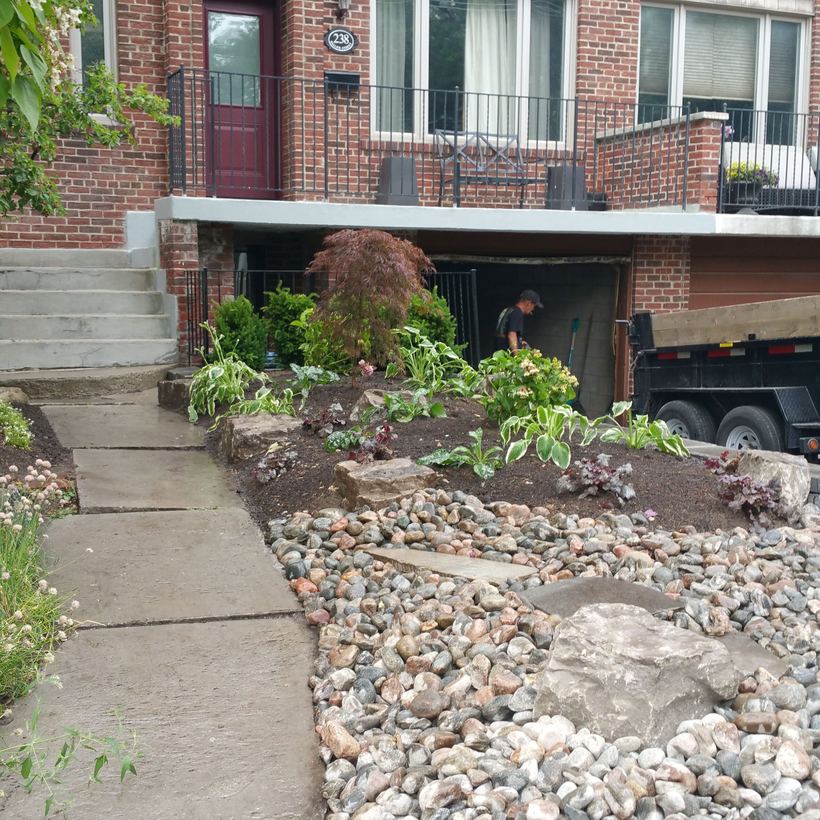
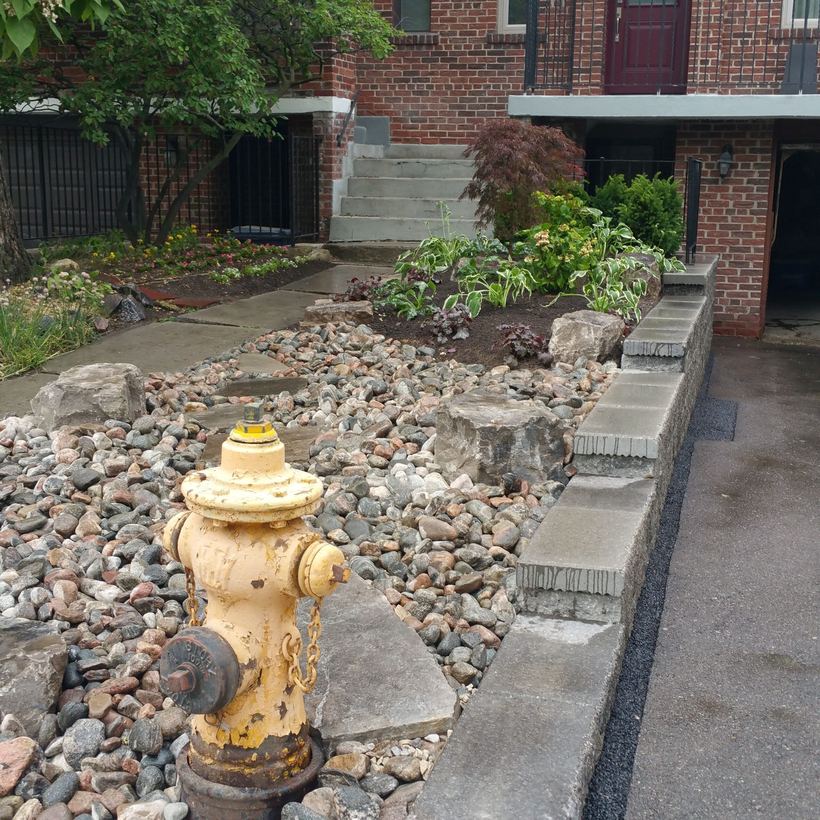
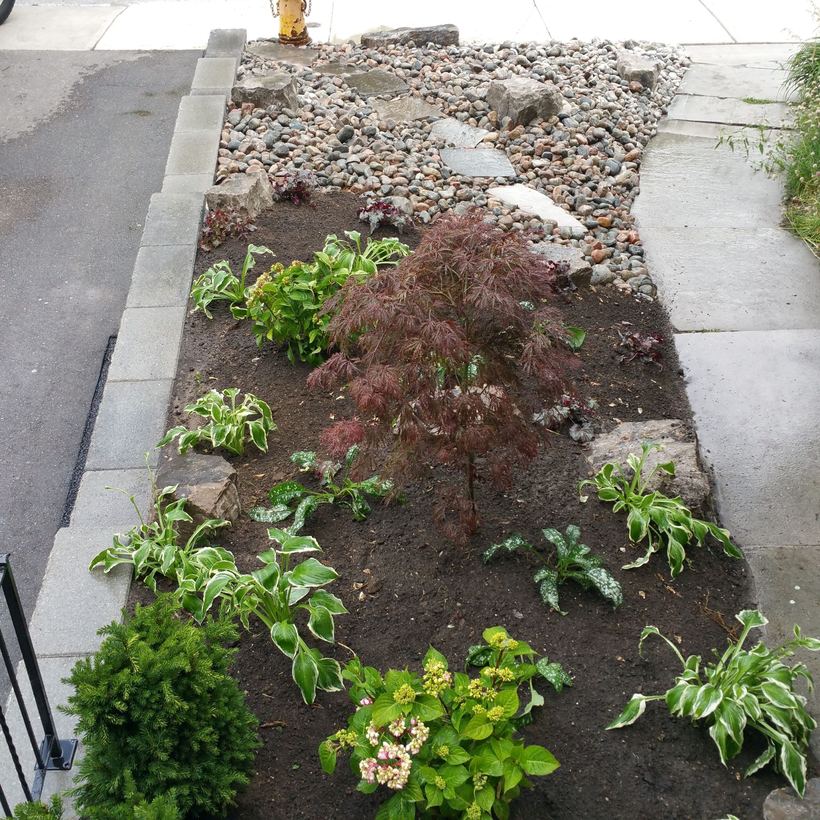
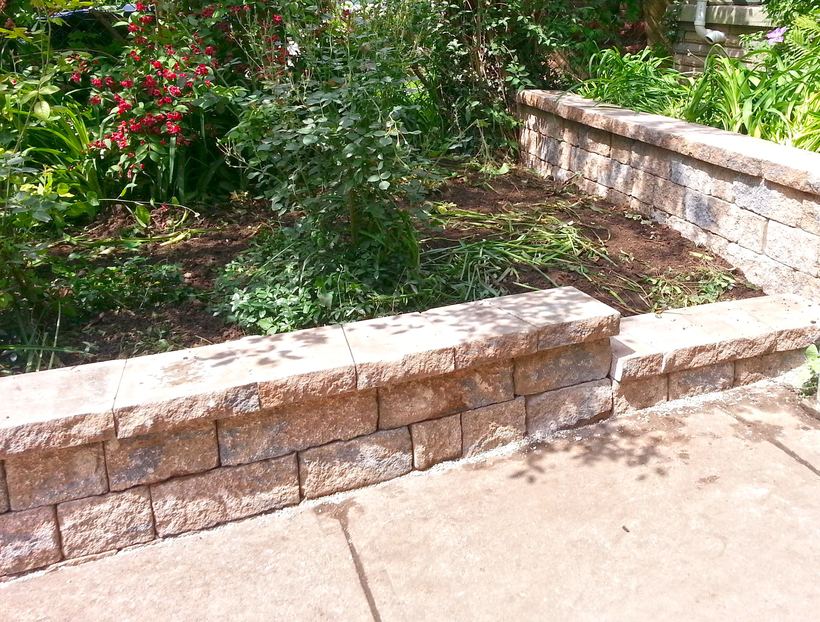
Peter Palmer Wall
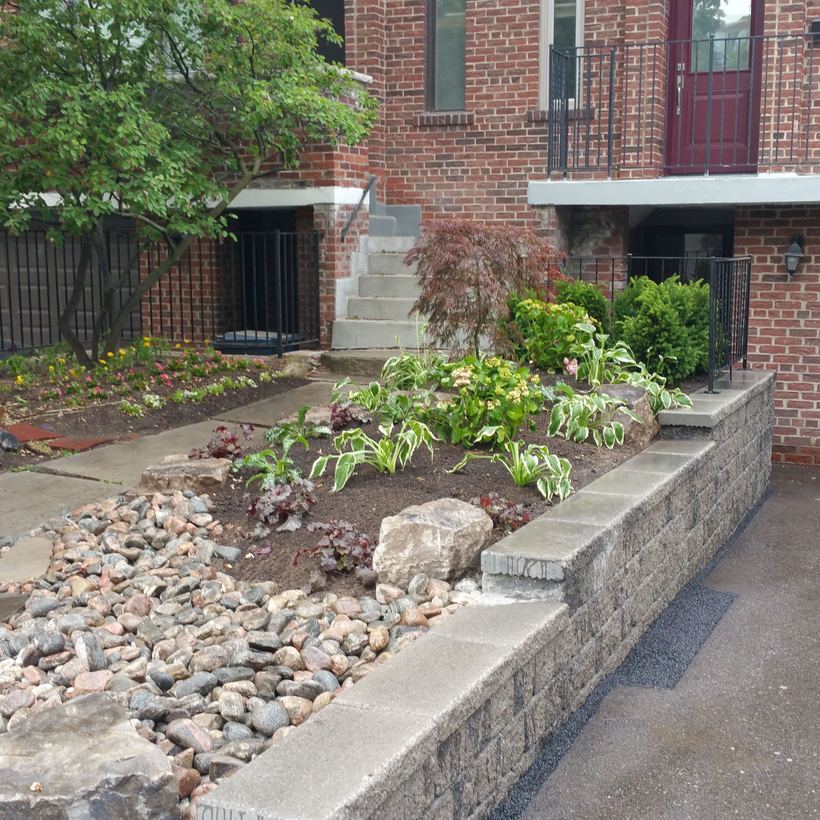
The original wall was a pre-existing rotting railroad tie wall, which had long since lost its visual appeal and practical purpose.
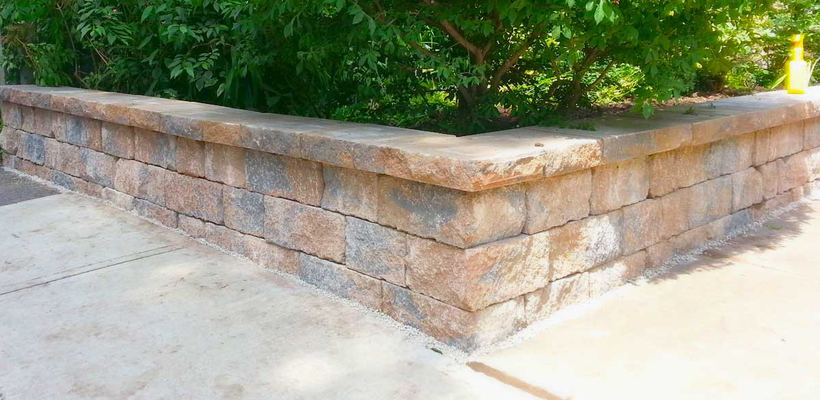
The replacement wall was a 2 to 4 foot high precast block wall, using a Bestway Stone Parkwall product. The wall was set on a ¾ inch gravel base, with non-woven filter fabric to separate the soil from the clear gravel used as backfill. Perforated socked weeping tile was installed behind the wall for drainage, and a geo-grid mesh tie-back was installed every 2 courses for structural support. Parkwall coping was installed to finish the top of the wall.
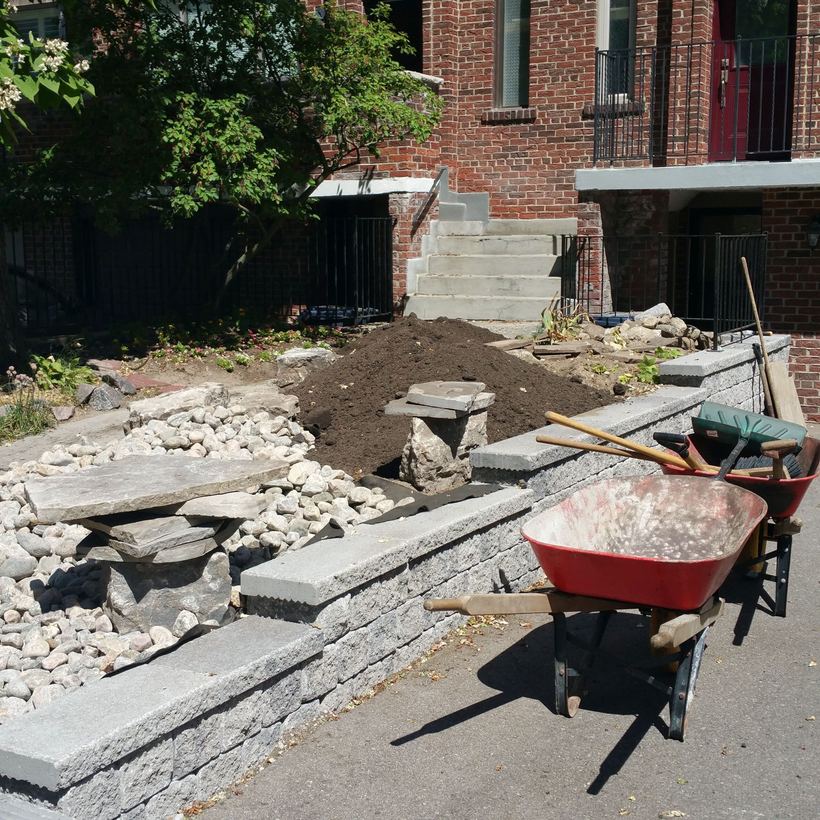
A mixture of landscape materials was installed atop the wall for a visually appealing garden. A combination of armour stone nestled amongst a bed of river rock creates visual appeal, while allowing low-maintenance care.
- Before
- Rotting railroad ties
- Block
- Bestway Stone Parkwall, 2–4′ high
- Structure
- ¾″ gravel base, geo-grid every 2 courses
- Finish
- Parkwall coping, armour stone in river rock
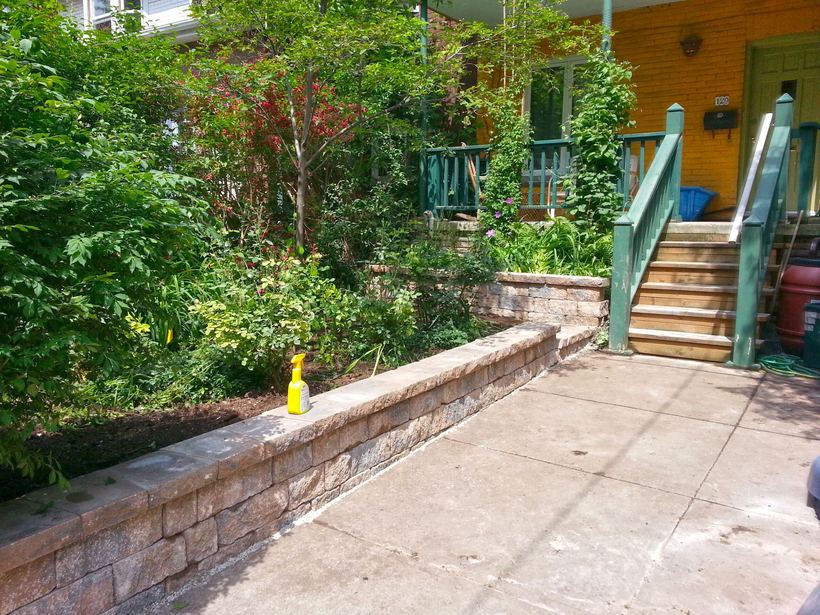
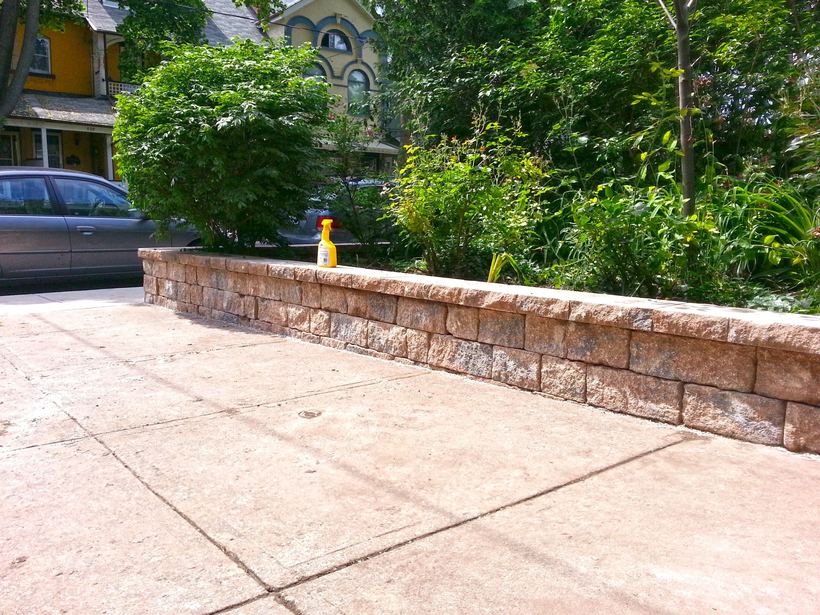
Harbord Handy Man Wall
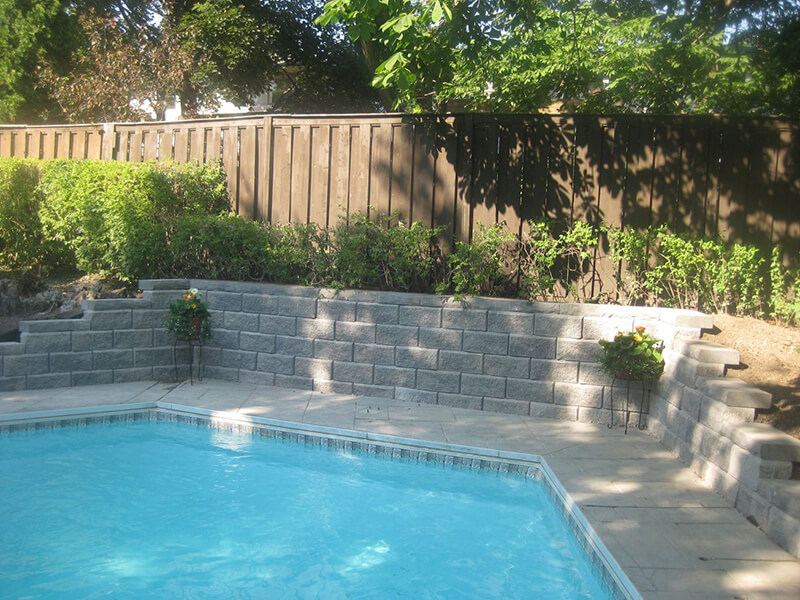
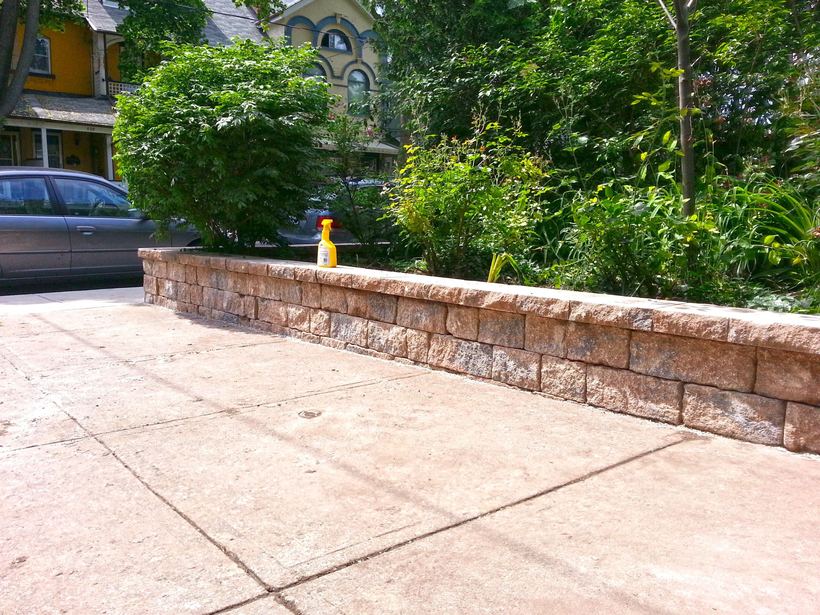
A low-cost wall made of precast block to replace an old, crumbling concrete wall reinforced with metal. This solid block has its own locking grooves and clips, and matching coping. The structure is solid and visually appealing, and creates a long-lasting, decorative appeal for both retaining walls and raised gardens.
- Before
- Crumbling reinforced concrete
- Block
- Solid precast block, locking grooves & clips
- Finish
- Matching coping
- Use
- Retaining wall & raised garden
Have an old timber or tie wall?
Book a free consultation. We’ll look at your grade, soil and access, and recommend the right wall.
Common questions
How tall can a small block retaining wall be?
Small blocks are ideal for light-duty walls under 6′ with no surcharge, within the height limits each block system publishes with and without geo-grid. Taller walls need a geotechnical design, and large precast block is often the better fit.
Can a small block wall be used for a raised vegetable garden?
Yes. Precast concrete block is a good choice for edible beds because, unlike old creosote-treated railroad ties, it has no wood preservative to leach into the soil. Build it on the same compacted base as any retaining wall, line the back with filter fabric, and leave a way for water to drain out of the bottom so the soil doesn’t stay waterlogged.
Is a small block wall cheaper than natural stone or large precast?
Usually. Small precast blocks are one of the most cost-effective ways to build a retaining wall, and there’s no heavy machine to bring in. Length, height, drainage and site access set the final cost, so we price each wall at the free consultation.
Can a small block wall curve or step down a slope?
Yes. Small units handle curves, corners and height changes well; the Harbord wall above turns corners and changes height along the patio. On a slope, the base is stepped in level sections so every course sits flat.
How do I look after a block wall?
Keep the weeping tile outlet clear, don’t point downspouts behind the wall, and re-set any loose coping. Call us if a course starts to bulge or lean.