How long do retaining walls last? A well-built natural stone or armour stone wall can last 50 to 100 years or more, a concrete block wall about 30 to 50 years, poured concrete about 50 to 75, and a pressure-treated timber wall only 10 to 20, based on typical industry ranges. The material sets the ceiling. In Toronto, the base, the drainage and the reinforcement behind the face decide whether a wall reaches it.
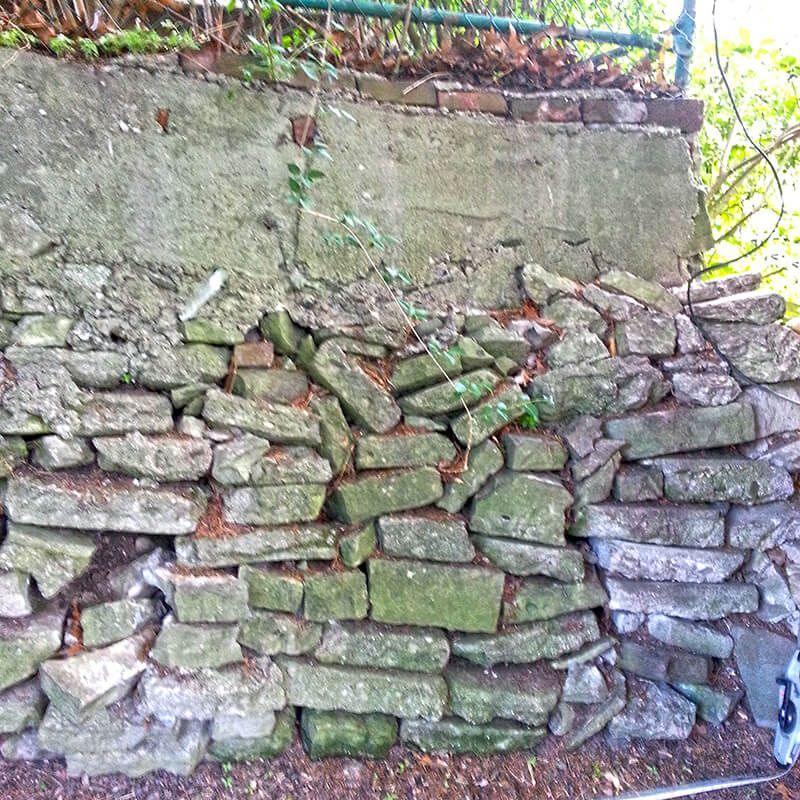
We replace failed walls across Toronto and York Region, and the old walls in our documented projects tell the same story: they rarely wear out from the face inward. They are pushed over by water, undermined by a poor base or rotted from the soil side. This article sets out the typical retaining wall lifespan for each material, what shortens it, and what makes a new wall last.
Retaining wall lifespan by material
The ranges below are typical industry ranges, not guarantees. The right-hand column links each material to our own documented projects, old walls and new.
| Material | Typical lifespan | What usually ends it | Top Mark examples |
|---|---|---|---|
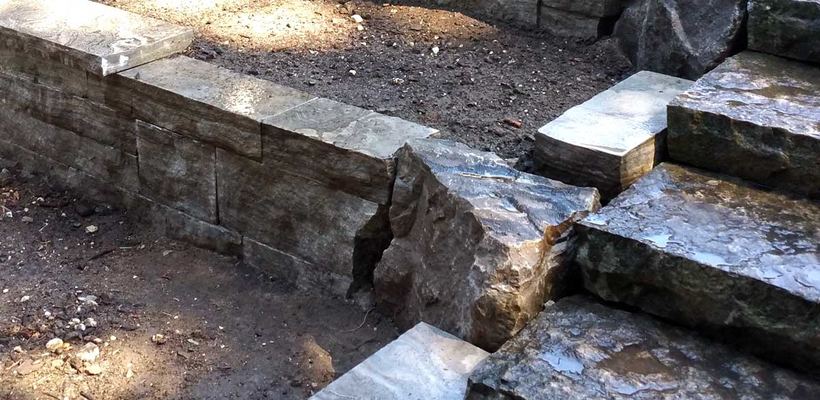
| Natural stone (Eramosa and similar, dry-stacked) | 50–100+ years | Water behind the wall, a base that settles | Jancy King and Sandy Dix: new dry-stacked Eramosa walls |
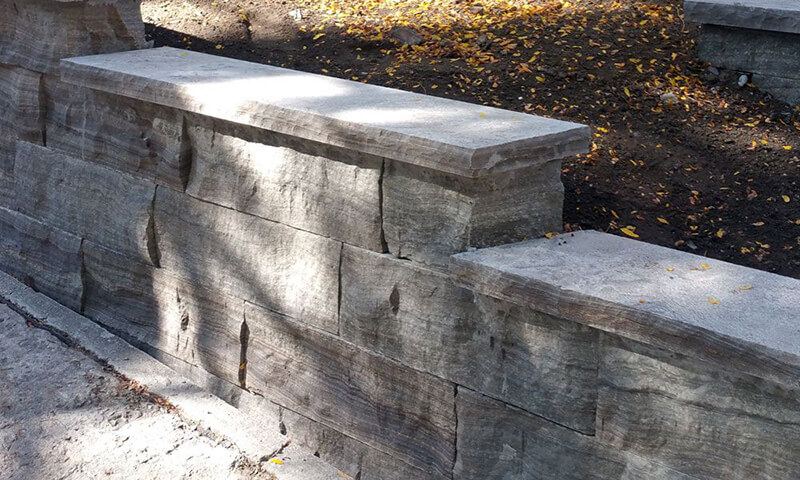
| Armour stone | 50–100+ years | Undersized or poorly seated stones, no drainage | Large stones bookend each Sandy Dix tier |
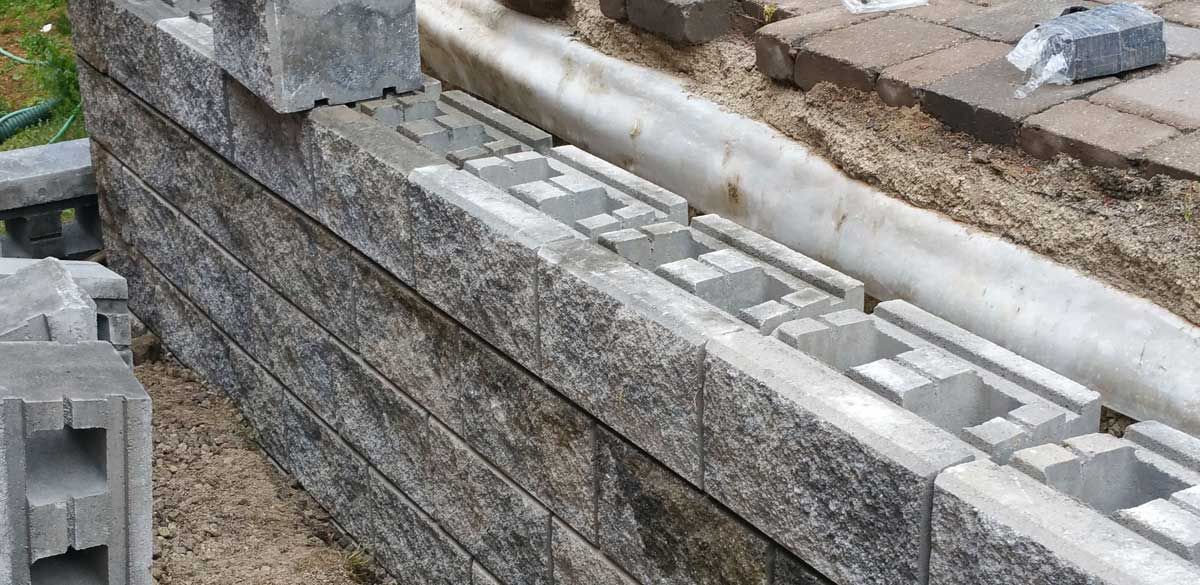
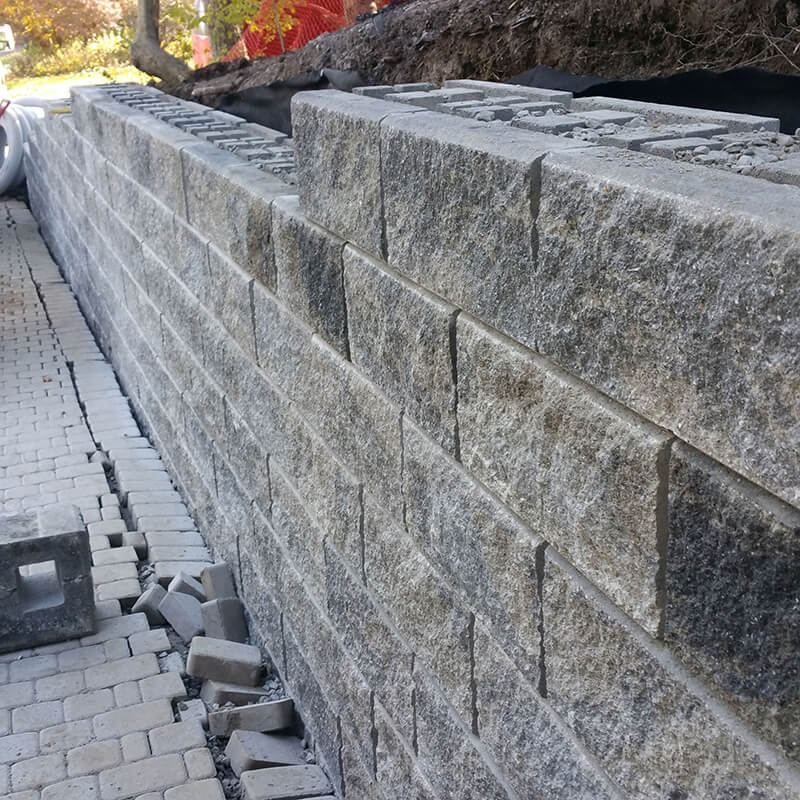
| Large precast block | 30–50 years | Poor base, missing geo-grid, trapped water | Sandie Dix, Perry, Pinkus and Kaivan: new walls |
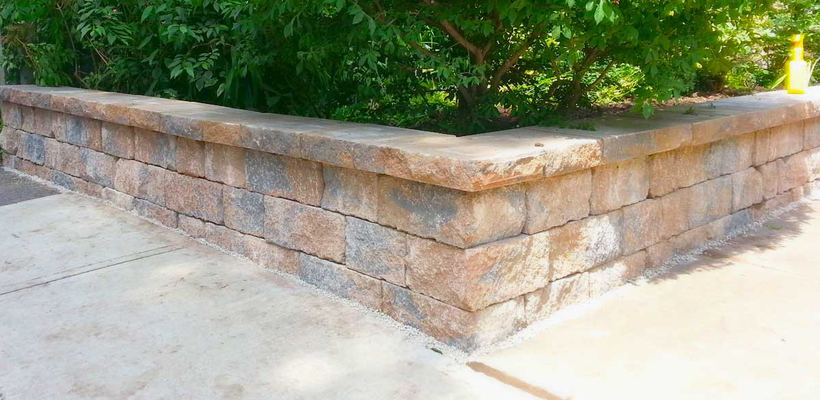
| Small precast block | 30–50 years | Settlement, a load it wasn’t built for | Peter Palmer and Harbord: new walls |
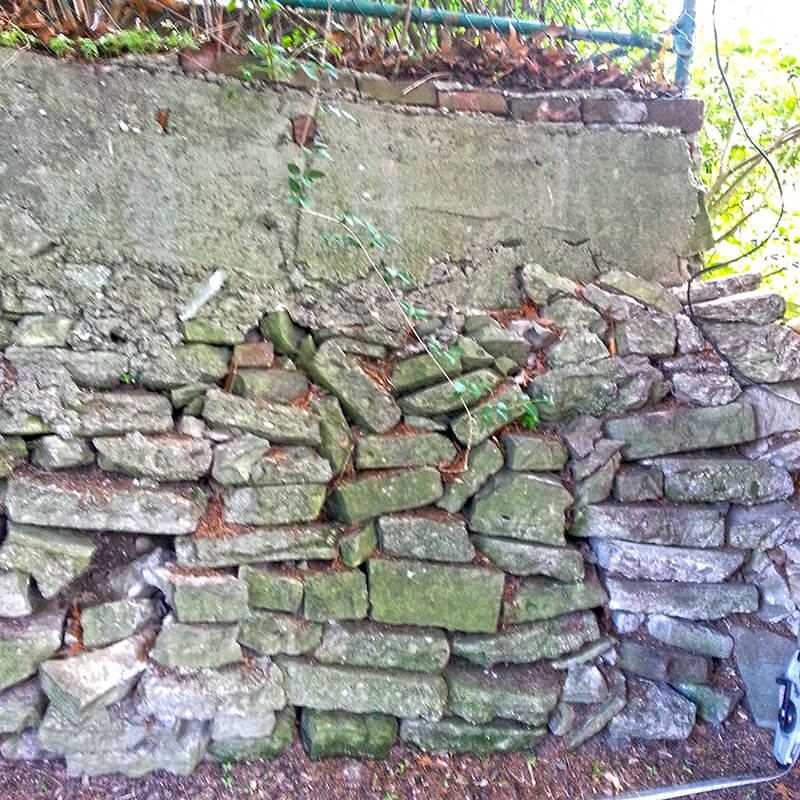
| Poured concrete | 50–75+ years | Cracking, corroding reinforcement | Harbord: crumbling metal-reinforced concrete wall replaced |
| Pressure-treated timber, railroad ties | 10–20 years | Rot from the soil side, insects | Sandy Dix, Perry and Peter Palmer: rotted walls replaced |
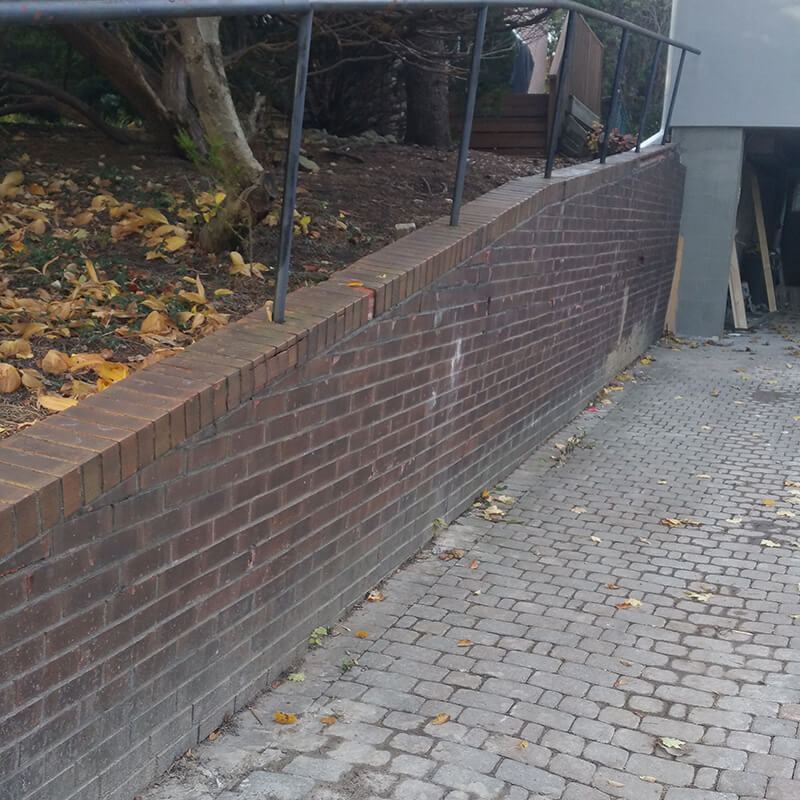
| Brick-faced or patchwork walls | No reliable figure | Never designed for the load | Pinkus (outlived its structure); Sandie Dix (stone, concrete, pipe and wood) |
These are typical industry ranges; a wall’s real life depends on how it was built and what it holds. Our cost guide compares the price of each material against these lifespans.
Lifespan is decided at the design stage
A retaining wall’s life is set long before the first course goes down. Choosing materials that don’t rot, and building in the base, drainage and reinforcement that keep the soil from pushing the wall out of line, decides whether a wall lasts decades or a handful of winters. Engineered walls are designed around the soil, the height and what sits above them for exactly this reason, and the same thinking applies to a garden wall.
What shortens a retaining wall’s life in Toronto
Trapped water
Saturated soil pushes much harder than dry soil. With no clear-stone zone and no weeping tile, the pressure builds every wet season.
Freeze-thaw on clay
GTA clay holds water and expands as it freezes. A poorly drained wall gets pushed a little further each winter.
A weak base
Units set on loose soil settle unevenly. A rigid block wall then tips or cracks instead of flexing.
No reinforcement
Taller segmental walls need geo-grid tying them into the backfill, or they can rotate outward over time.
Added loads
A driveway, shed or pool deck added above an old garden wall loads it beyond anything it was built for.
Wood in the ground
Timber in contact with wet soil rots from the back, where you can’t see it until it gives.
The Kaivan wall shows several at once. Poor drainage and an improperly installed base had made it lean, the path on top had shifted, and when we took it down we found a layer of railroad tie left inside it. Every one of those faults cut years off a wall that should have lasted decades. The seasonal side of this is in why retaining walls fail after winter.
How long do timber retaining walls last?
Timber has the shortest life of any common wall material, typically 10 to 20 years for pressure-treated 6×6s. Wood in a retaining wall sits against damp soil on one side, so rot starts where nobody looks. The old Sandy Dix garden wall had stood for a few decades as three tiers of 6×6 timber; by the time we replaced it, it was extensively rotten, full of insects and mould, and unsafe. The Perry pool wall and the Peter Palmer front-yard wall were railroad-tie walls, both replaced in precast block.
One soft tie in a low wall can sometimes be swapped. Widespread rot means replacement, and that is the moment to move to stone or block rather than build another wall with a fixed expiry date.
How long do concrete block retaining walls last?
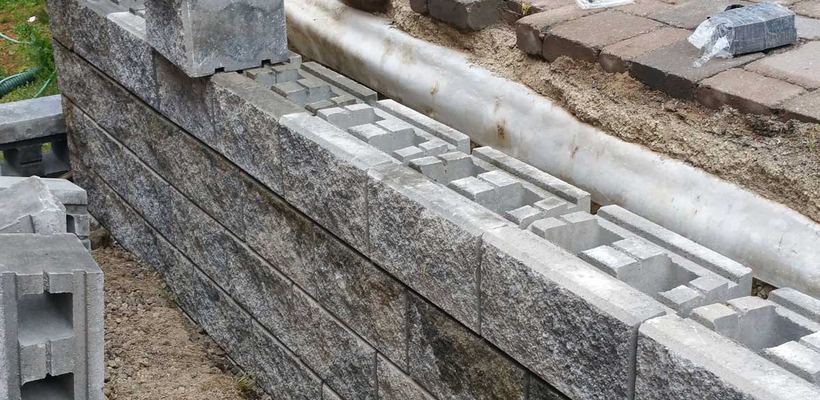
A segmental block wall is typically good for 30 to 50 years, and it reaches that when it is built properly. The blocks themselves are dense, factory-made concrete. What fails is everything around them. On our block walls such as Pinkus and Sandie Dix, the hollow cores are filled with clear gravel, which adds weight and lets water drain through, and geo-grid runs back into the backfill every 24 inches or so of height. On the Pinkus wall, that gravel fill locks the courses together and prevents excessive movement for the life of the wall.
Because a block wall is rigid, it can’t absorb settlement. A level, compacted gravel base is the single biggest factor in how long a concrete block retaining wall lasts.
How long do stone retaining walls last?
Built correctly and cared for, natural stone walls can last for decades, often well beyond 50 years; typical industry ranges put natural stone and armour stone at 50 to 100 years or more. Stone doesn’t rot, and a dry-stacked wall is somewhat flexible, so frost can move it slightly without breaking it. If a section does shift, the same stones can usually be lifted, the gravel reset and the courses relaid, which is a repair a rigid wall rarely allows.
How to make a retaining wall last
Almost everything that extends a wall’s life is buried. When we build a new wall, these go in before the face is finished:
- Excavation down to firm, undisturbed ground
- A compacted ¾″ gravel base, level along the wall
- A first course set partly below grade
- Clear-stone backfill as a drainage zone
- Non-woven filter fabric against the native soil
- Perforated, socked weeping tile with a working outlet
- Geo-grid tie-backs where the height calls for them
- A slight batter into the slope, and a finished coping
The drainage layers matter most in GTA clay; our retaining wall drainage guide explains each one. After the build, keep downspouts and sump discharge away from the high side, don’t add a driveway or shed above a wall that wasn’t designed for it, and walk the wall each spring looking for lean, bulges, washouts and a dry outlet after rain.
Repair to extend its life, or replace?
A straight wall with a local problem, such as a loose cap, a few shifted stones or a blocked outlet, can usually be repaired and will keep going. A wall that leans along its length, bulges, has rotted timbers or sits on a failed base has reached the end of its useful life, whatever its age. Our retaining wall repair page sets out the signs, causes and fixes side by side.
Wondering how much life your wall has left?
We’ll check it for lean, water and base problems and tell you straight.
Retaining wall lifespan: common questions
How long do retaining walls last?
Typical industry ranges are 50 to 100 years or more for natural stone and armour stone, 30 to 50 years for concrete block, 50 to 75 for poured concrete and 10 to 20 for pressure-treated timber. A wall only reaches those numbers with a compacted base, drainage behind it and reinforcement where its height calls for it.
How long does a timber retaining wall last?
Usually 10 to 20 years for pressure-treated wood. Timber rots from the soil side, so it can look fine from the front until it fails. Widespread rot can’t be patched; replacing the wall in stone or block gives a much longer life.
How long does a concrete block retaining wall last?
About 30 to 50 years is the typical industry range. The blocks themselves are durable; block walls fail early when the base settles, water is trapped behind them or a taller wall was built without geo-grid. Gravel-filled cores, clear-stone backfill and weeping tile are what let a block wall reach its full life.
Does Toronto’s climate shorten a retaining wall’s life?
It can. Freeze-thaw cycles and the water-holding clay under many GTA neighbourhoods push hard on any wall that traps water. A well-drained wall shrugs this off; a poorly drained one moves a little more each winter. That is why drainage behind the wall matters more here than the choice of face material.
Can an old retaining wall be made to last longer?
Sometimes. If the wall is still straight, moving downspouts away from it, clearing the drain outlet and resetting loose caps or stones can add years. If it leans along its length, bulges or has rotted timbers, the base or structure has failed and a rebuild is the lasting fix.
Which retaining wall lasts the longest?
Natural stone and armour stone have the longest typical lifespans, followed by poured concrete and concrete block, with timber far behind. Our comparison of armour stone, precast block and small block walls explains which one suits a given height, load and site, since the longest-lasting option isn’t always the right one.