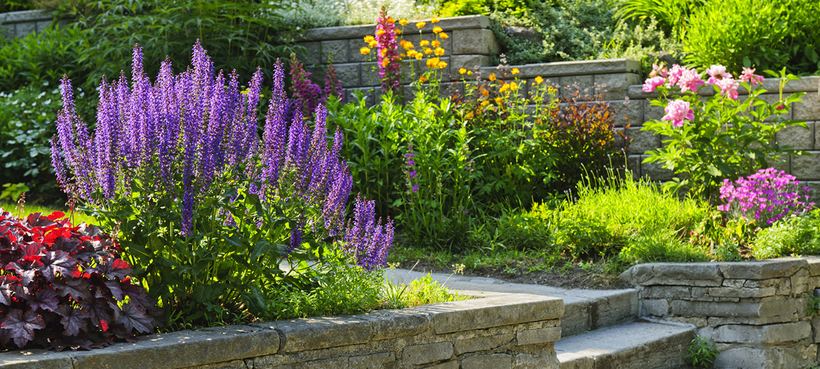
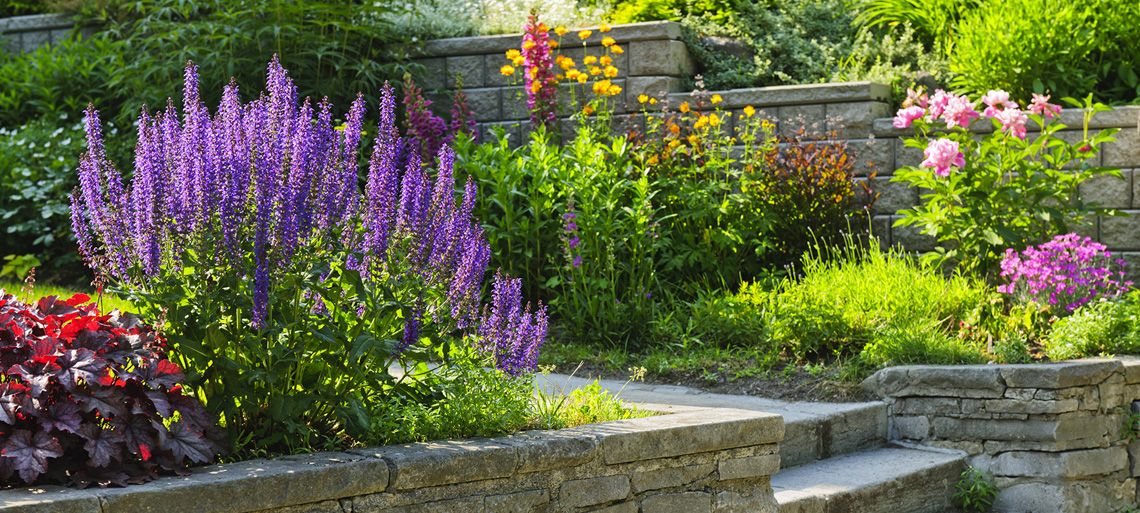
Adding decorative natural stone enhancements to your Toronto home’s exterior is the kind of idea that makes so much sense you’ll wonder why you didn’t think of it before. The benefits of natural stone decoration run the gamut from aesthetic to practical to bottom-line financial.
At Top Mark Property Improvements we’ve studied the effects and benefits of decorative natural stone on Toronto homes and recommend it highly to many of our clients, whether they are contemplating selling their home or are just looking for a way to give their property a bit of a facelift.
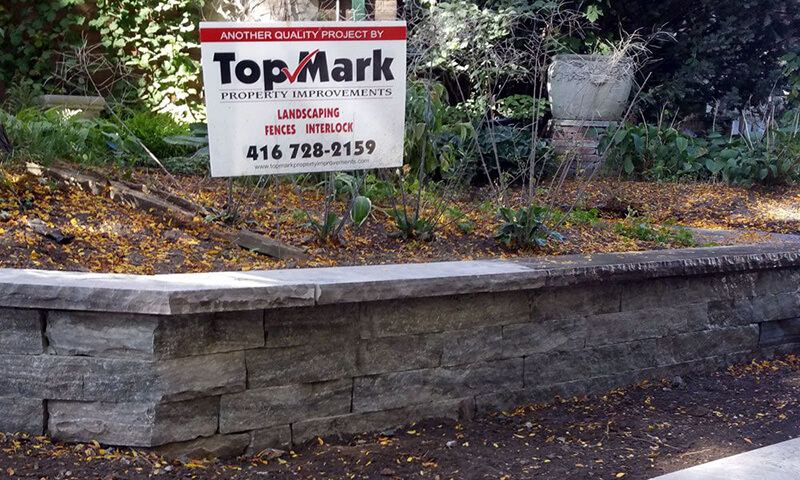
Enhancing your home’s appeal with decorative natural stone
Decorative natural stone for Toronto homes can take many different shapes, from various types of pebbles and crushed stone to striking marble and granite slabs. When we recommend you install decorative stone on your property, it is typically for one of the following reasons:
Aesthetics
Building a natural stone walkway can tie various parts of the property together in a satisfying way that can aid in any potential sales process. Likewise, introducing aggregate or other decorative stone enhancements around trees and shrubbery can help achieve a more formal air to your gardens, either for your own personal enjoyment or to facilitate the engagement of potential buyers.
Practicality
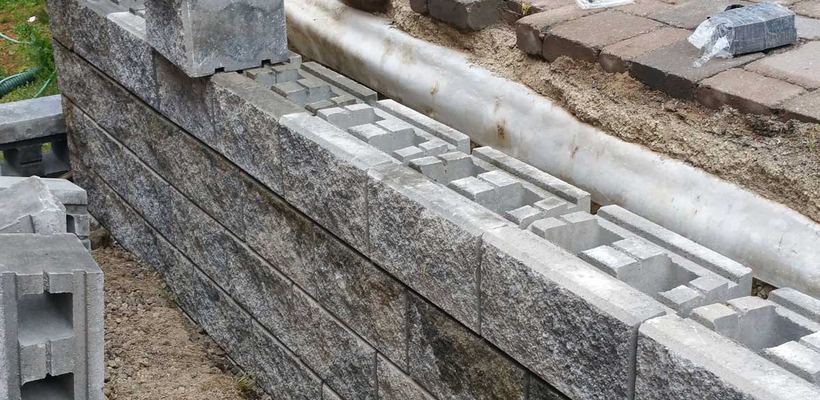
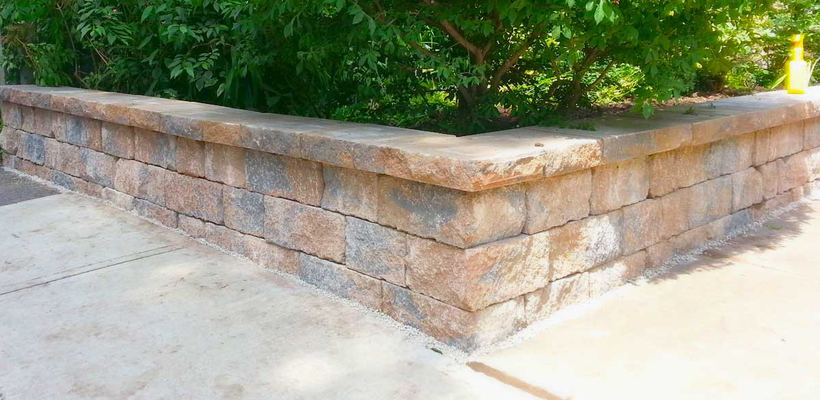
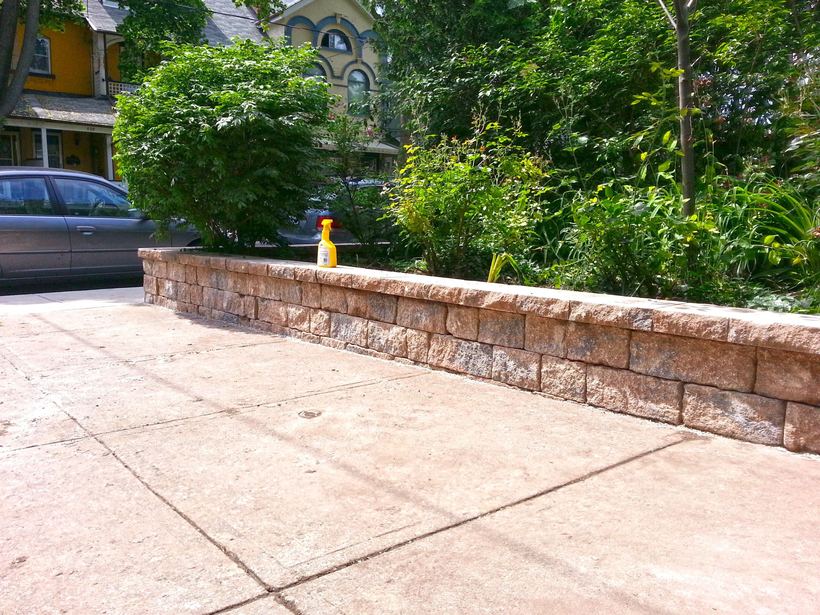
A natural stone walkway can be much easier to keep clear in the wintertime than a dirt or grass path. Also, introducing aggregate around the foundation can help in water mitigation efforts and aid in runoff. Retaining walls built of natural decorative stonework can help in drainage, wind management and watering efforts, and help delineate various parts of your property as being used for different reasons.
Staging
Home staging is more than simply cleaning up and arranging furniture. When you enlist Top Mark Property Improvements to enhance the look and feel of your property, you’ll be able to take advantage of our comprehensive expertise in the field of architectural and decorative natural stone. We can add just the right touch to catch the eye of potential buyers by drawing attention to specific elements of the landscape or housescape.
Bottom line
The introduction of decorative stone to Toronto yards, driveway areas, patios and more has allowed homeowners to add significant curb appeal and market value to their properties, great and small. Top Mark Property Improvements can help transform your property into a showcase through the use of these incredible materials, and it won’t empty your bank account to do so.
Armour stone landscaping: accents and bookends
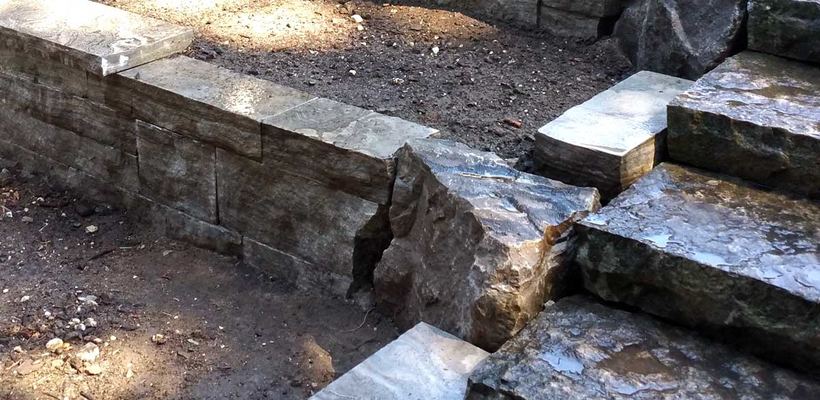
Armour stone is natural stone, quarried either by drilling or blasting the rock face or by peeling off layers of stone with an excavator. Drilled and blasted stones are irregular, so they can’t be stacked effectively for a retaining wall, but that rough, one-of-a-kind character makes them great accent pieces: a boulder at the corner of a bed, set partly below grade so it looks as if it has always been there.
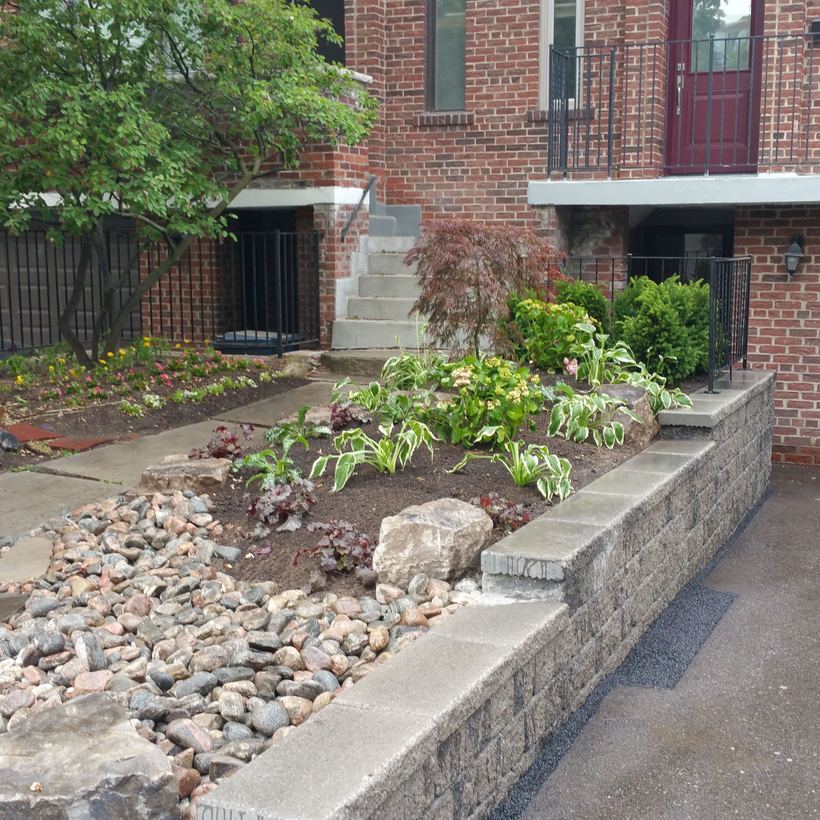
Armour stone in a river-rock bed
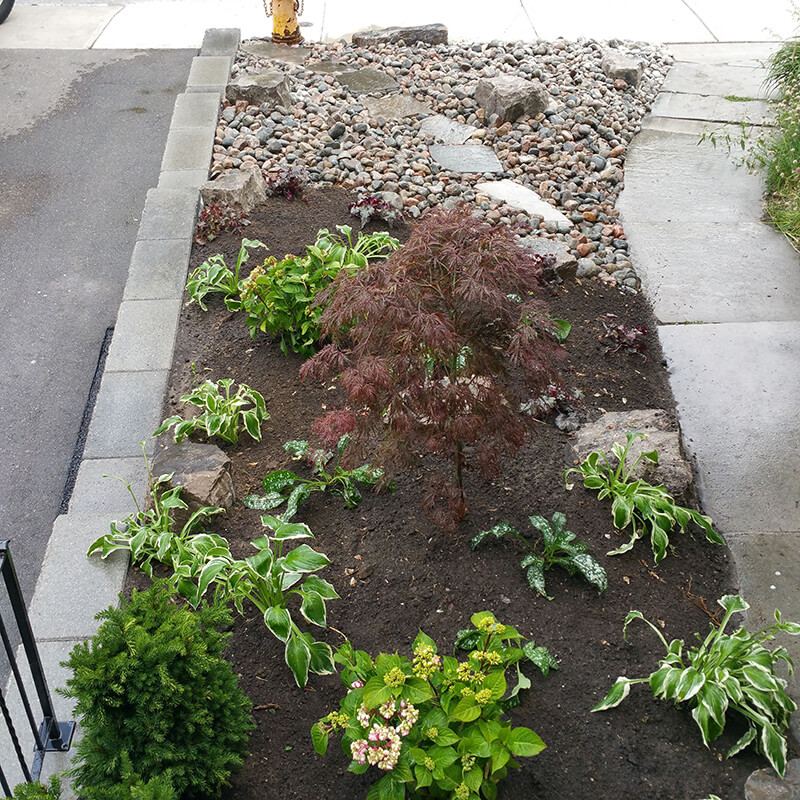
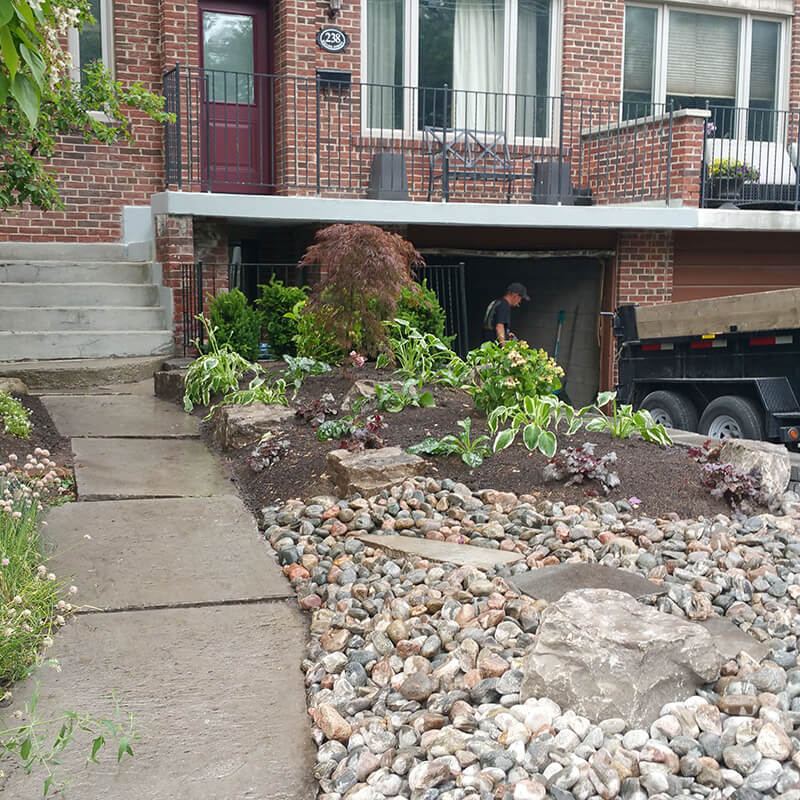
On the Peter Palmer project, a new block wall replaced a rotting railroad-tie wall along the driveway, and the front yard above it became a bed of river rock with a few large armour stones set into it. The boulders give the bed a focal point, the rounded rock lets rain through, and there is very little lawn left to cut. Read the Peter Palmer write-up.
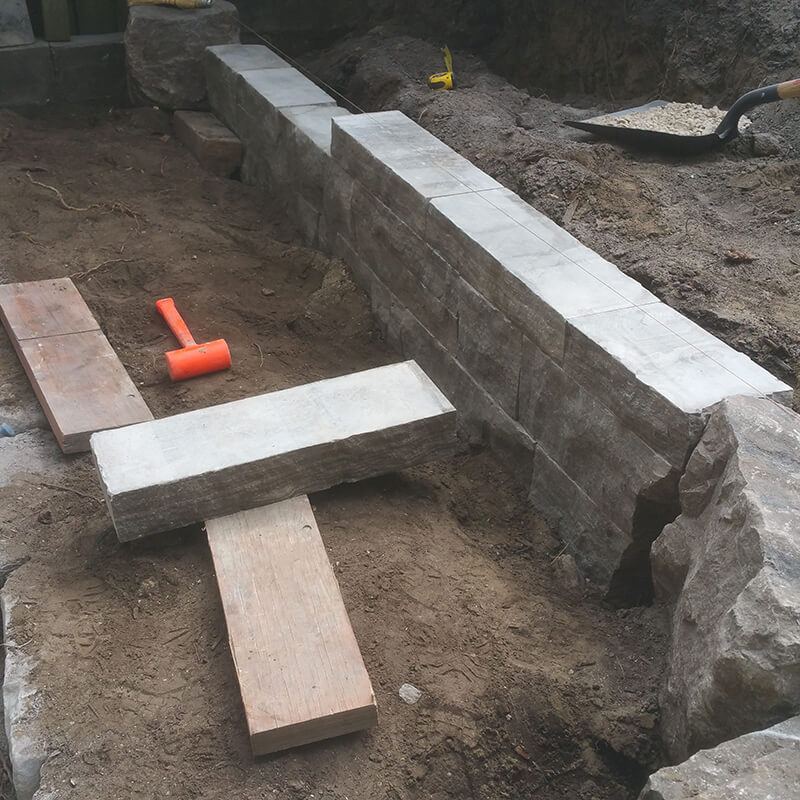
Armour stone also finishes other stonework. On the Sandy Dix garden wall, a single big armour stone closes off the end of every Eramosa tier: the rugged block gives each terrace a strong corner, and it fills space that would otherwise take many courses of cut stone.
Choosing the stone
Most decorative stonework comes down to a handful of materials, each with its own character and job in the yard:
| Stone | Character | Good for |
|---|---|---|
| Armour stone | Massive and rough-faced; no two alike | Accent boulders and tier bookends; uniform, quarry-picked pieces for walls |
| Eramosa “Tiger Stripe” | Ontario stone from the Owen Sound area, with a striped grain | Dry-stacked planter walls, coping, bush-hammered stair treads |
| River rock | Rounded, water-worn stones in mixed colours | Low-maintenance beds around boulders and planting |
| Crushed stone and pebbles | Small aggregate in even sizes | Beds around trees and shrubs; a strip along the foundation |
How natural stone steps are set
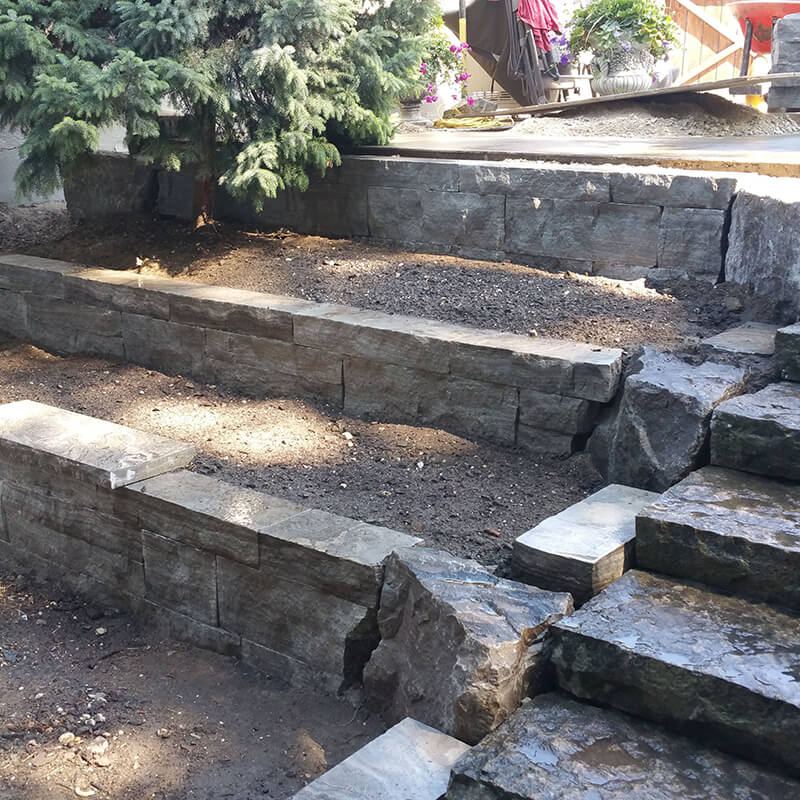
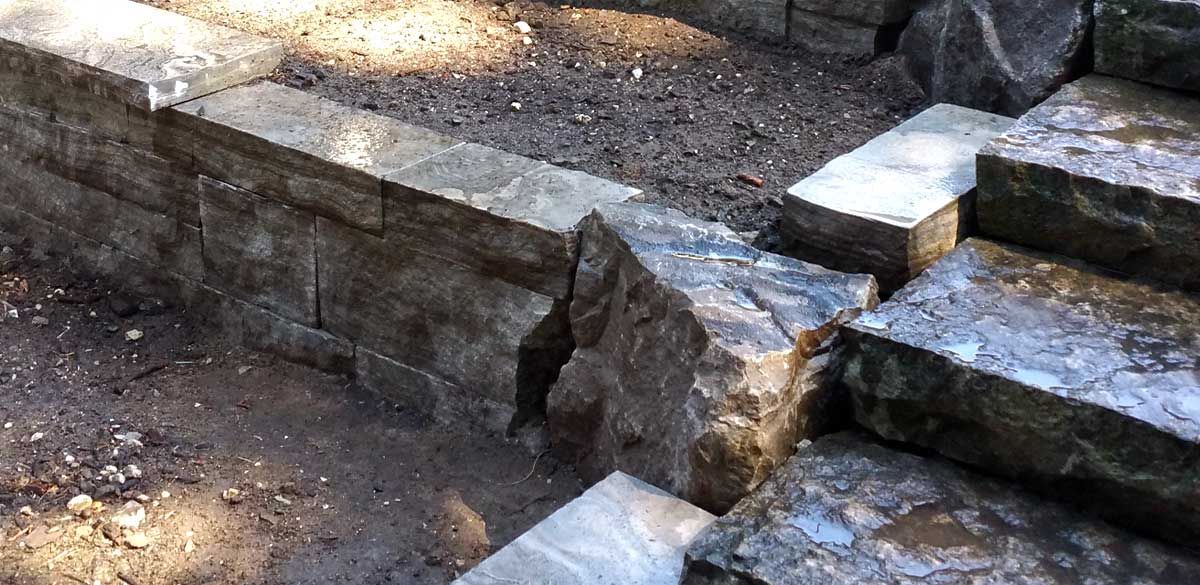
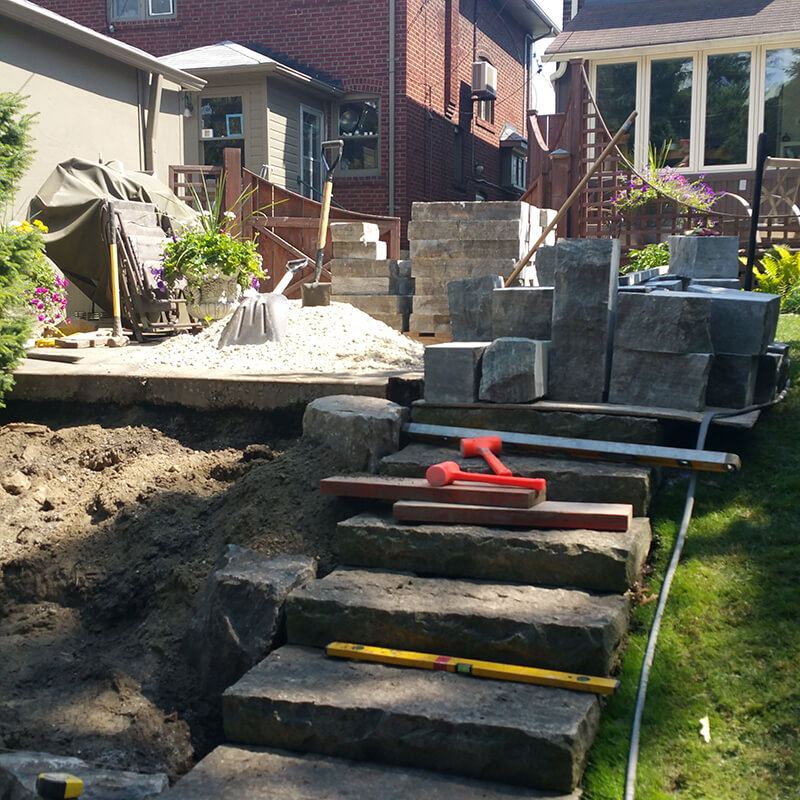
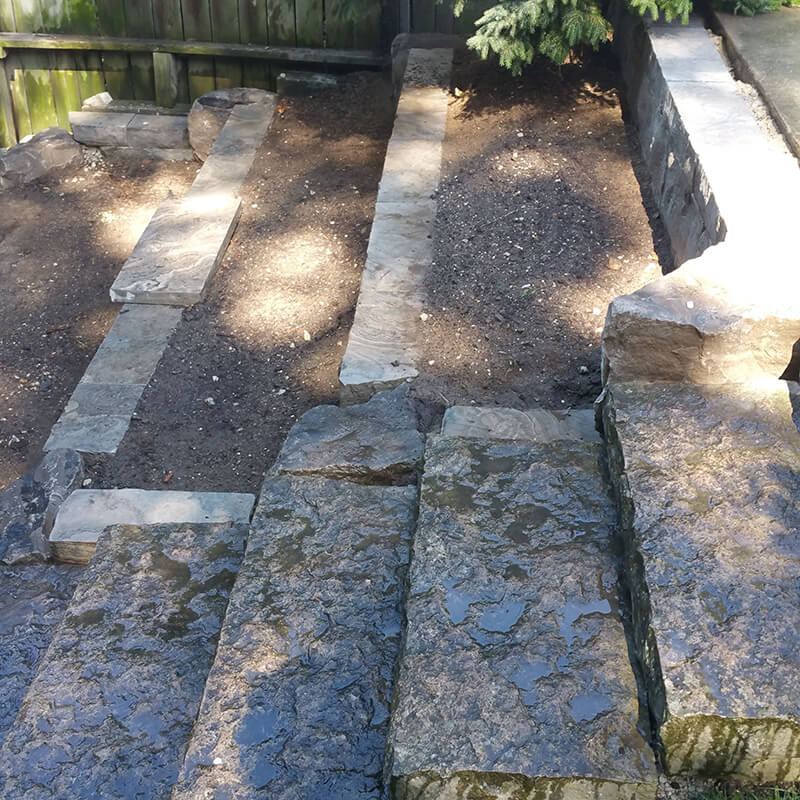
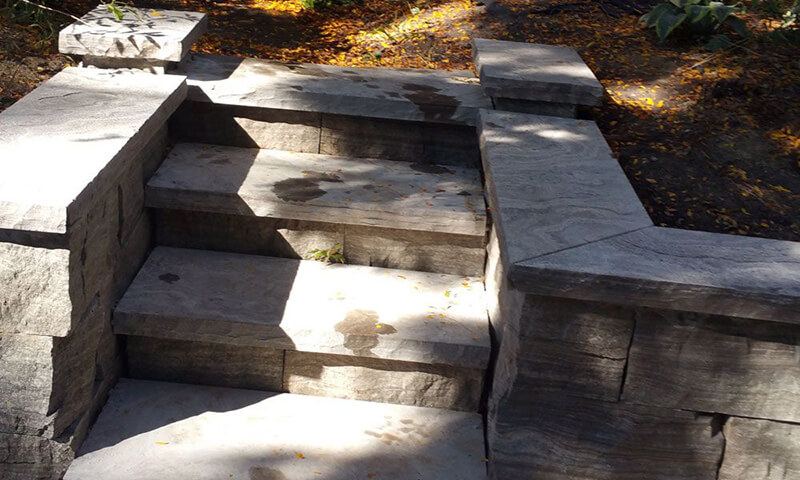
The original stairs at the Jancy King home in High Park were solid concrete, and had cracked and were unsafe. Their replacements, two sets of bush-hammered Eramosa treads, were individually set on a concrete base. Whatever the stone, the sequence is similar:
- Lay out the rise and runEvery riser should be the same height; uneven risers are the classic trip hazard.
- Build a solid baseEach tread sits on a base that won’t move, like the concrete base under every Jancy King tread.
- Set and level each treadTreads go in one at a time, level side to side with a slight forward pitch so meltwater runs off instead of freezing.
- Tie into the wallsWall stone and coping wrap around the stairs so the two read as one piece.
- Drain what’s behindClear gravel, filter fabric and socked weeping tile behind the adjoining walls carry water away, which helps keep frost from pushing stones out of line.
Thinking about stone for your yard?
Book a free consultation and we’ll walk the yard with you, then suggest where stone will do the most good.
Matching stone to your house
Decorative stone works best when it looks as though it belongs to the house. Start with what’s already there: the brick or siding, the trim colour, and any older stonework on the lot that new work should sit comfortably beside. Take colour cues from the house (grey and tan stone pair well with red brick), and decide early between a formal look of squared, capped walls and an informal one of boulders and river rock.
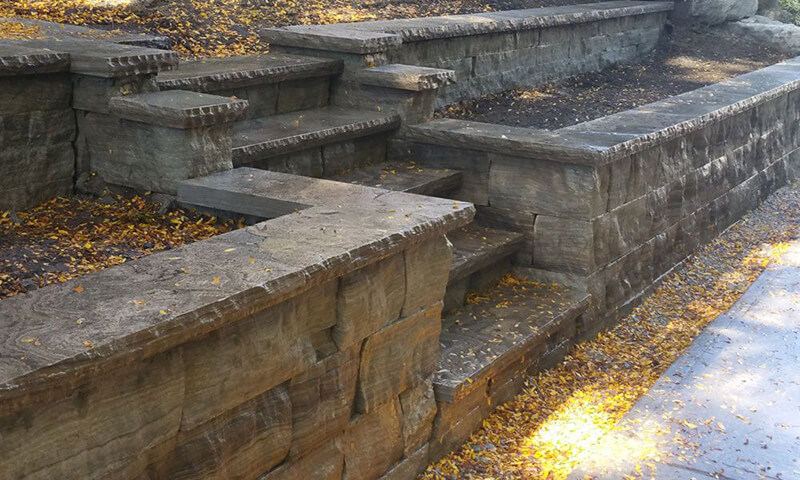
The Jancy King home originally had an informal tiered rockery-style retaining wall. The homeowners wanted a more formal look, so it became a tiered planter-style wall in dry-stacked Eramosa, topped with natural Eramosa coping. See the Jancy King write-up.
Caring for decorative natural stone
Natural stone needs little care. Each spring, once the frost is out of the ground:
- Look for cracks and loose stones
- Wash off dirt and moss with mild soap
- Keep weeping-tile outlets clear
- Weed and top up river-rock beds
In winter, clear stone steps with a plastic shovel and go easy on rock salt, which can wear stone surfaces over repeated freeze-thaw cycles; sand gives grip without the damage.
Common questions
Can armour stone accents be used to build a retaining wall?
Not the irregular ones. Armour stone for a wall needs smooth surfaces and a uniform height, usually about 12 to 14 inches, and each stone weighs over a tonne. Smaller walls can be dry-stacked from 8- and 4-inch Eramosa pieces, as on the Sandy Dix wall. See our natural stone retaining walls page.
Are natural stone steps slippery?
Any stone can be slick when wet or icy, but a rough, bush-hammered finish like the Jancy King treads grips better than a smooth, polished face.
Does decorative stone help with drainage?
It can. Aggregate around the foundation helps with runoff, but stone won’t fix a lot that drains toward the house; the grade itself has to slope away. We look at drainage as part of landscape planning.
Do I need a permit for stone steps or a stone wall?
Accent boulders, river-rock beds and a few garden steps usually don’t. A stone retaining wall can, once its exposed face passes about 1 m (3′3″) and it stands next to a sidewalk or other public land, a building entrance, or private ground the public is invited onto; see our retaining walls page. Two other things catch people out: a ravine or creek lot may fall under Toronto’s ravine and natural feature by-law or TRCA rules, and digging close to a large tree can need a tree permit. Ask your municipality before you start, and we’ll raise anything we spot when we plan the work.
How do I keep a river-rock bed from filling with weeds?
Lay landscape fabric over the graded soil before the stone goes down, use enough rock to hide the fabric completely, and edge the bed so the rock stays put. Seeds will still blow in, so pull seedlings while they’re small.
Put decorative natural stone to work
Maintaining your home’s appearance is serious business, yet one that doesn’t have to cost an arm and a leg. By putting decorative natural stone to work, we can turn your yard into a landscaper’s delight and help it function more effectively during rough weather conditions. Whether it’s time to sell your home or just breathe some new life into it, decorative natural stone from Top Mark Property Improvements is a sure-fire way to ramp up value and increase the effectiveness of overall home operations.
We serve homeowners across Toronto, Thornhill, Vaughan, Richmond Hill and Markham. Call us today at 416.728.2159 to find out more.