Retaining walls in Thornhill come with a question most GTA towns never ask: which side of Yonge Street are you on? West of Yonge, Thornhill is part of the City of Vaughan; east of Yonge, it’s the City of Markham. Both sides share the East Don ravines, big mature trees and a historic village core, and Top Mark Property Improvements builds natural stone, armour stone and precast block walls on both.
Our office is on Bayview Ave in North York, a short drive from Thornhill. Working across Thornhill as a retaining wall contractor, we’re asked most often about walls on ravine-edge gardens, replacements for older walls on mature lots, and garden walls that tidy up a front yard.
One community, two cities
Thornhill isn’t a municipality of its own, so your building permit, tree rules and any heritage approval come from whichever city your lot is in. The basics on each side:
| West of Yonge | East of Yonge | |
|---|---|---|
| City | City of Vaughan | City of Markham |
| Neighbourhoods include | Old Thornhill (west side), Uplands, Thornhill Woods | Old Thornhill (east side), Royal Orchard, Bayview Glen, German Mills |
| Heritage district | Thornhill-Vaughan Heritage Conservation District, established 1984 | Thornhill-Markham Heritage Conservation District, adopted 1986 |
| Private trees | Permit to injure or remove a tree 20 cm or more across (By-law 052-2018) | Permit to injure or remove a tree 20 cm or more across (By-law 2023-164) |
| Ravines and creeks | Toronto and Region Conservation Authority (TRCA) | Toronto and Region Conservation Authority (TRCA) |
On both sides, the Ontario Building Code generally requires a building permit for a retaining wall more than 1 m (about 3′3″) in exposed height that is next to public property, a building entrance or private property the public can enter, and that wall must be designed by a professional engineer. A lower wall can still need approval near a ravine, in a heritage district or close to protected trees, so confirm with your city before the design is final. We help with permits as part of planning the wall.
The East Don and Thornhill’s ravines
The East Don River rises at the southern edge of the Oak Ridges Moraine, runs down through Richmond Hill and winds south-east through Thornhill, meandering through the old village and its ravine parkland. On the Vaughan side its valley holds the Uplands ski hill and golf course; on the Markham side it runs through Pomona Mills Park off Henderson Avenue. German Mills Creek, which crosses Vaughan, Richmond Hill and Markham, joins the East Don at Steeles.
Backyards that fall toward these valleys are where Thornhill walls work hardest. Slopes shed water toward the creek, and TRCA regulates development in river and stream valleys, and on land near them, under Ontario Regulation 41/24. If your lot backs onto a ravine, plan on TRCA reviewing the work until it tells you otherwise.
Ravine-edge gardens
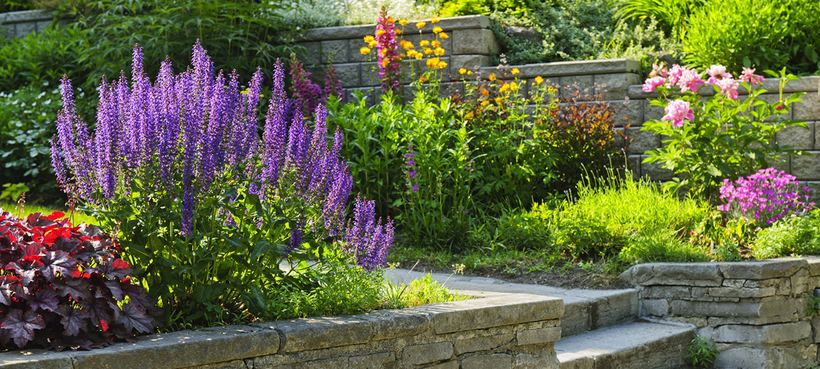
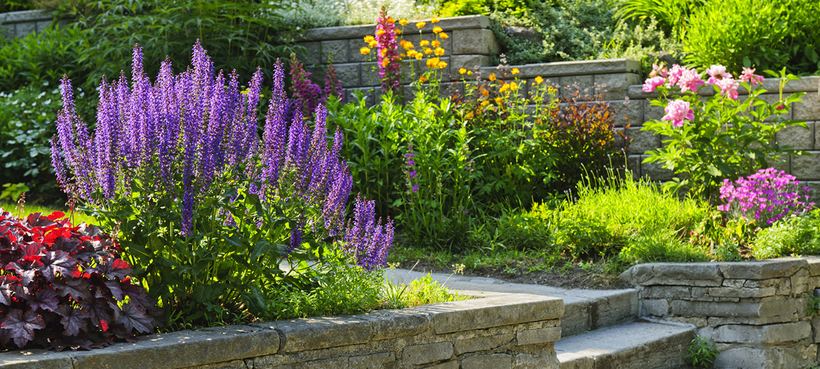
Terraces stepping down toward the valley need solid drainage, a base on firm soil and, often, a conservation authority permit before work starts.
Mature lots, older walls
Bayview Glen was largely built between 1960 and 1980 and German Mills in the 1970s and 1980s. Rockeries, timber walls and concrete steps from those first houses are now decades old.
Newer subdivisions
Thornhill Woods, north of Highway 7 between Bathurst and Dufferin, is newer and graded to plan. A wall that raises a yard near a lot line can push water onto a neighbour, so it has to respect the drainage.
Heritage Thornhill: walls that suit the street
Old Thornhill straddles Yonge around Centre and John Streets, and both cities protect it with a heritage conservation district plan that guides how properties change. Those plans generally look at what the street sees, landscape included, not just the house. If your home is in either district, talk to your city’s heritage staff before you replace a front-yard wall, rebuild steps or change grades; they can tell you whether a heritage permit is needed.
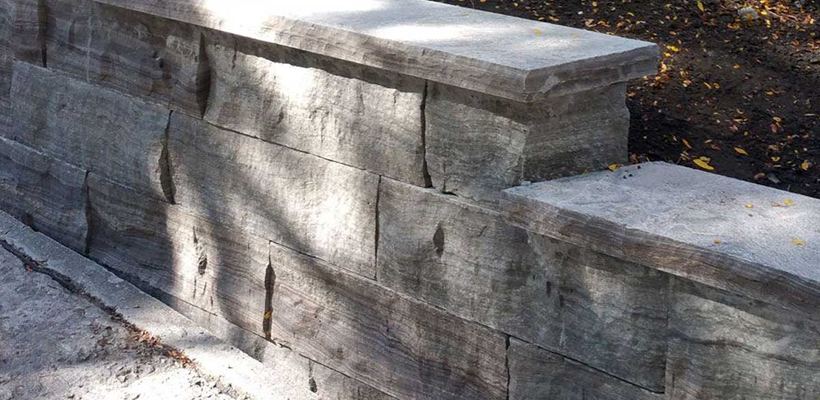
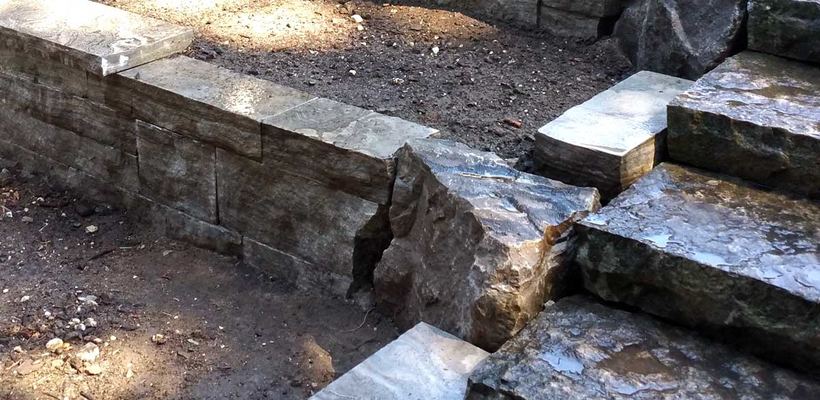
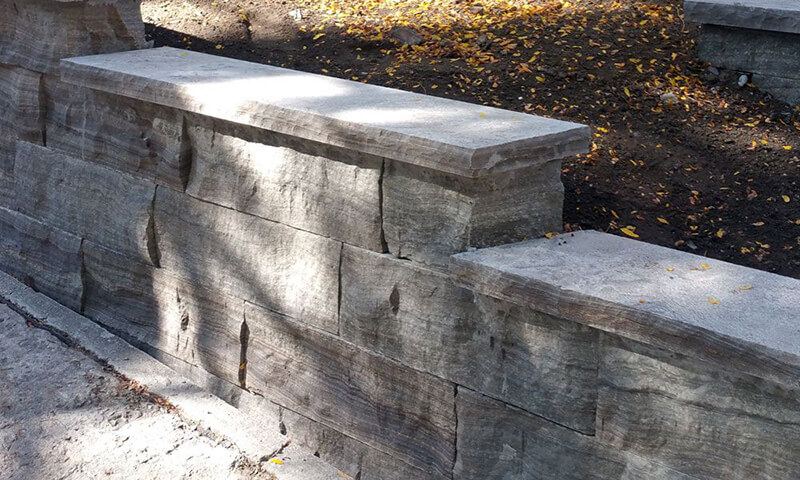
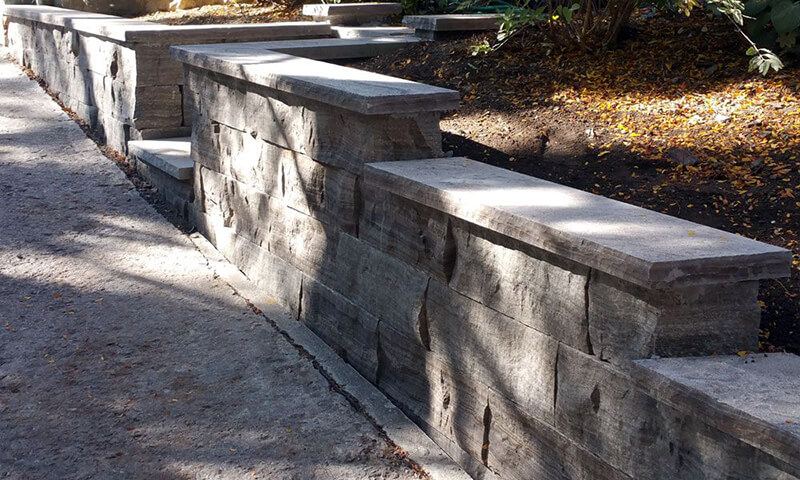
Natural stone tends to sit most comfortably beside a 19th-century house: dry-stacked Eramosa with a stone coping, or armour stone used sparingly at steps and corners. The Jancy King wall in Toronto’s High Park shows the look.
Armour stone in Thornhill gardens
Armour stone suits Thornhill’s larger gardens and bigger grade changes. For a wall, the best stones are about 12–14″ high and usually weigh over a tonne; we hand-pick ours at the quarry for flat, even beds so they stack tightly. The stones don’t interlock, so the wall holds the soil by weight and friction, and it can absorb a little seasonal movement. Geo-grid is added where the slope or soil calls for it.
Mixing armour stone and Eramosa
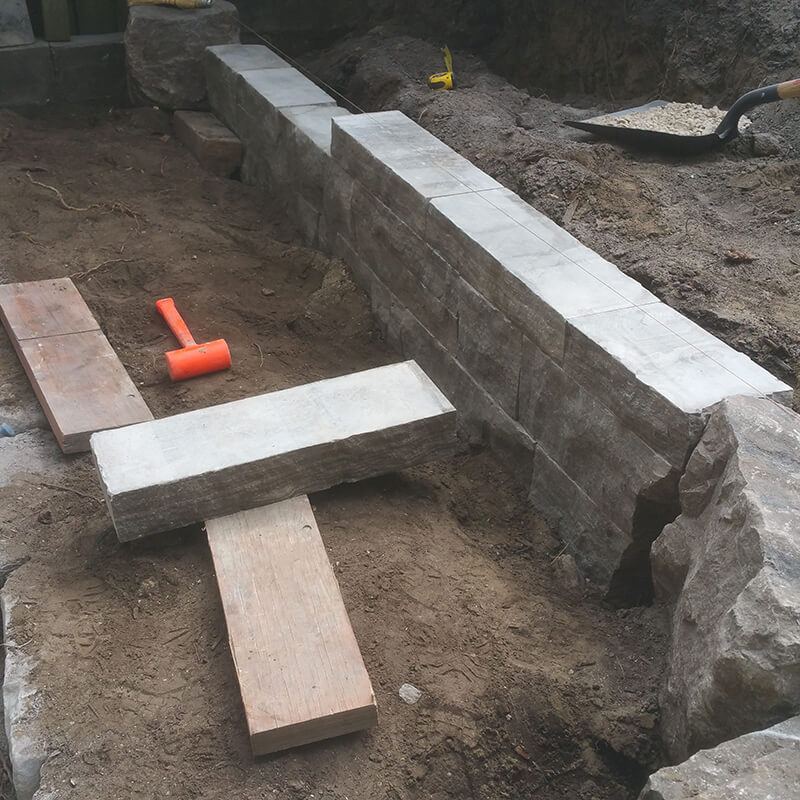
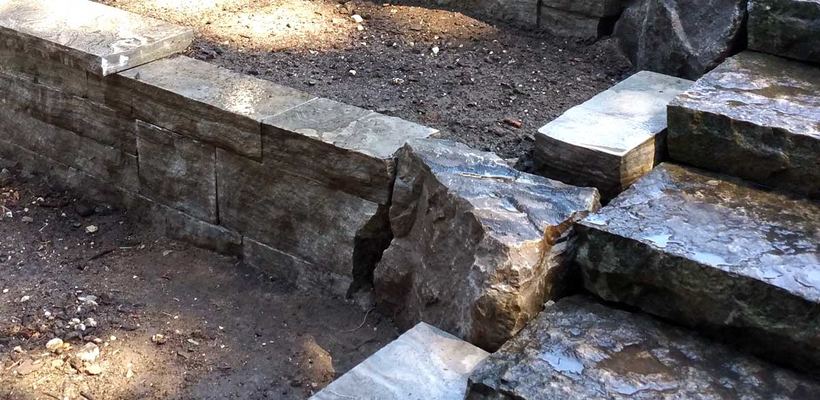
On the Sandy Dix garden wall, each tier of dry-stacked Eramosa was bookended with a large piece of armour stone. The big stones add character at the ends and steps while the coursing stone fills the runs, which saves material cost.
Tonne-plus stones need a machine, so in a mature garden we plan the delivery route around the trees and their roots.
Garden walls for Thornhill front yards
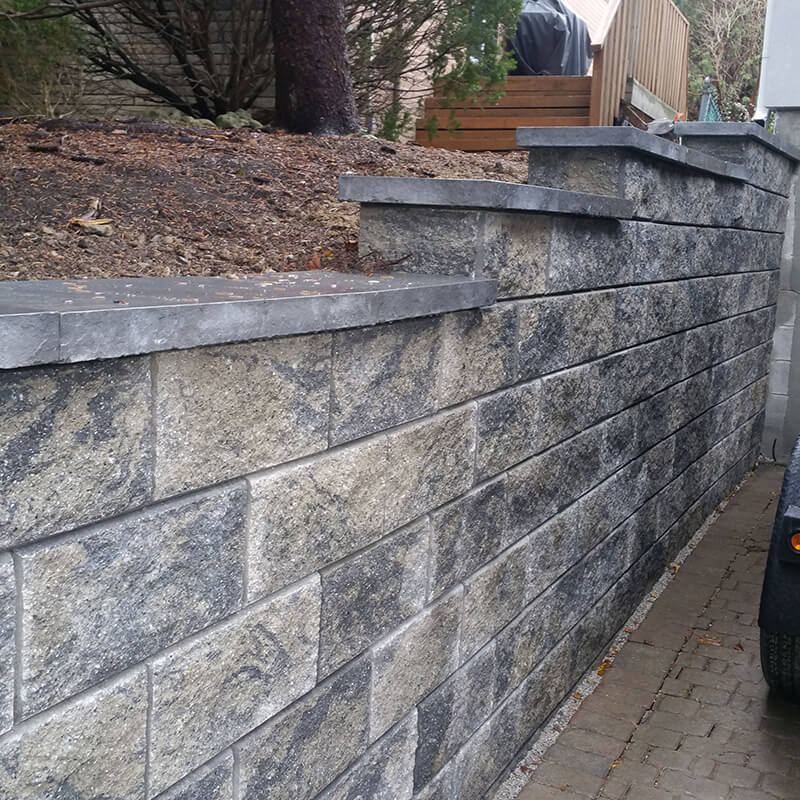
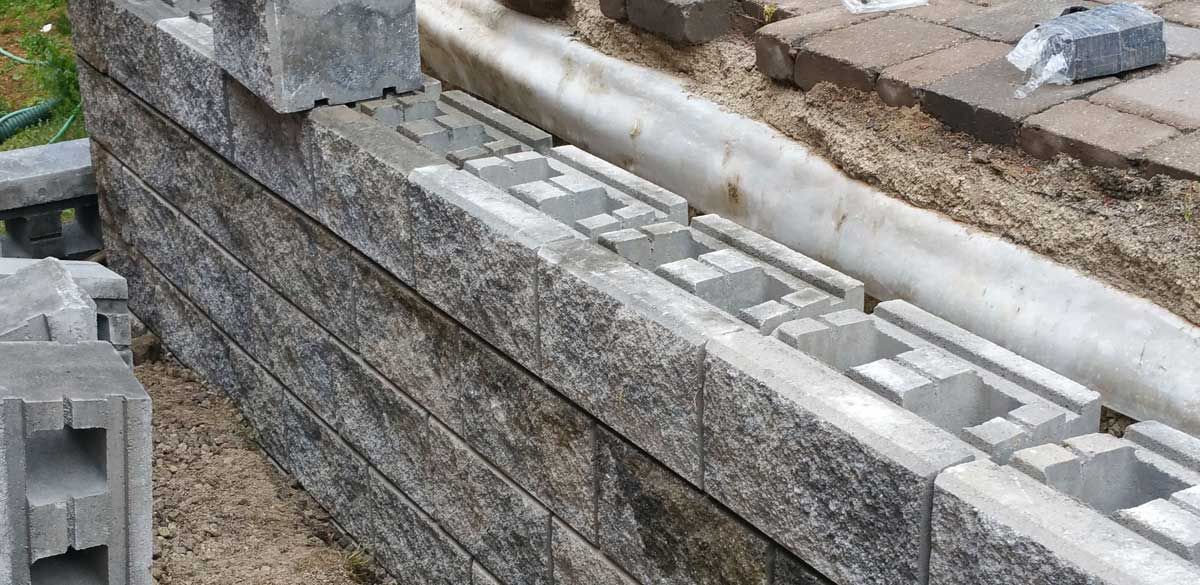
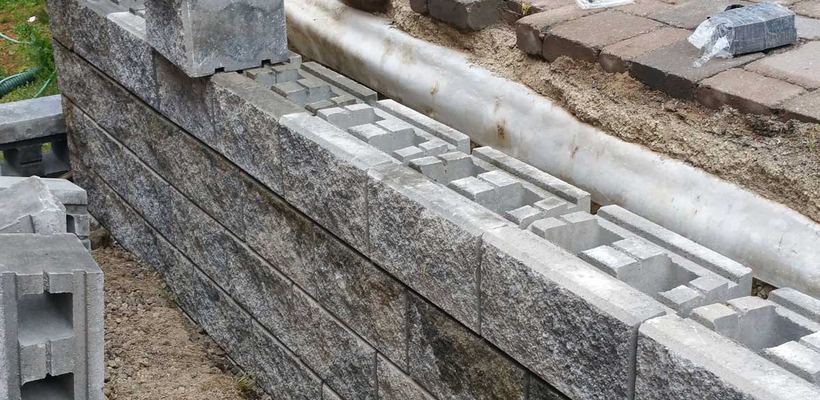
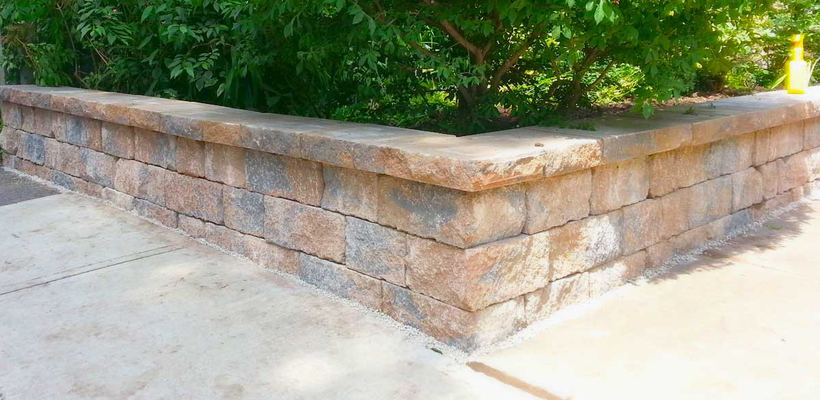
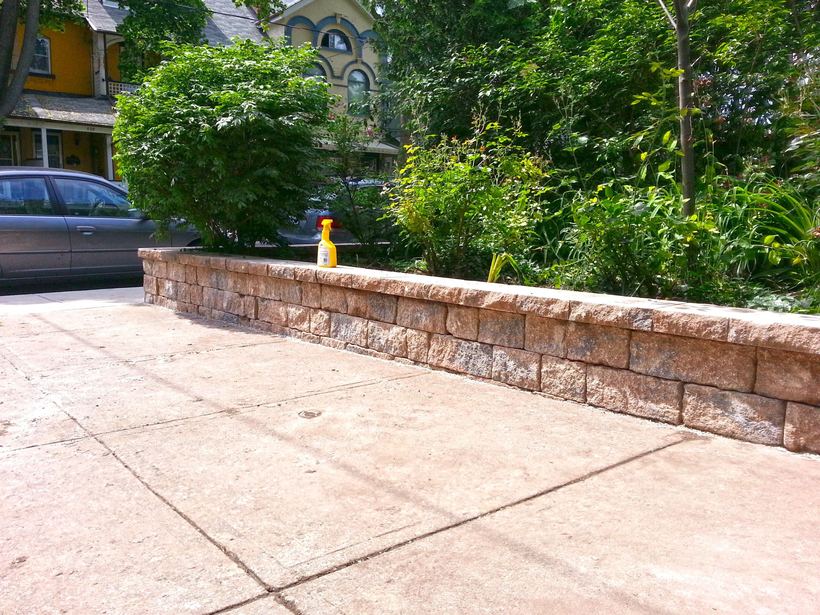
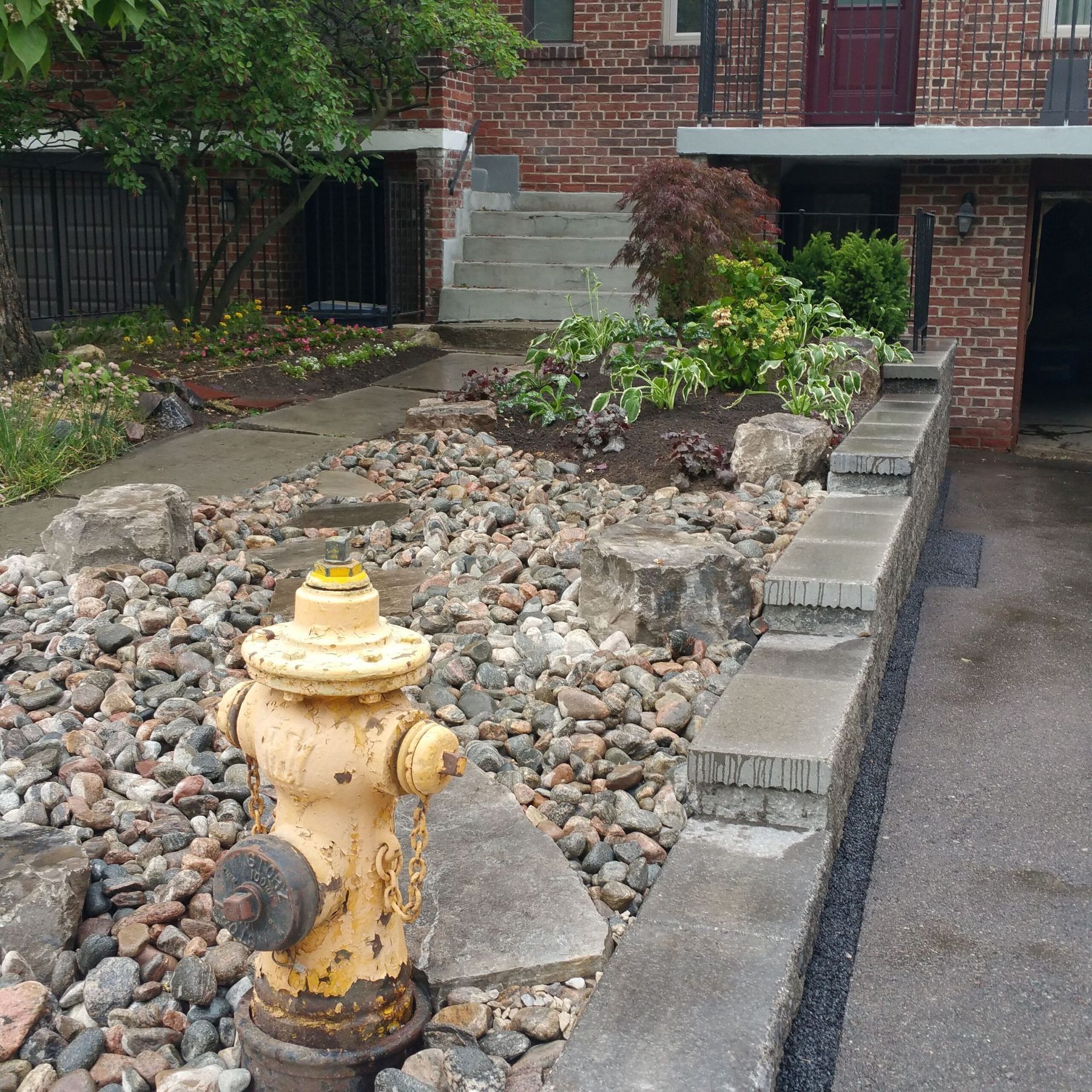
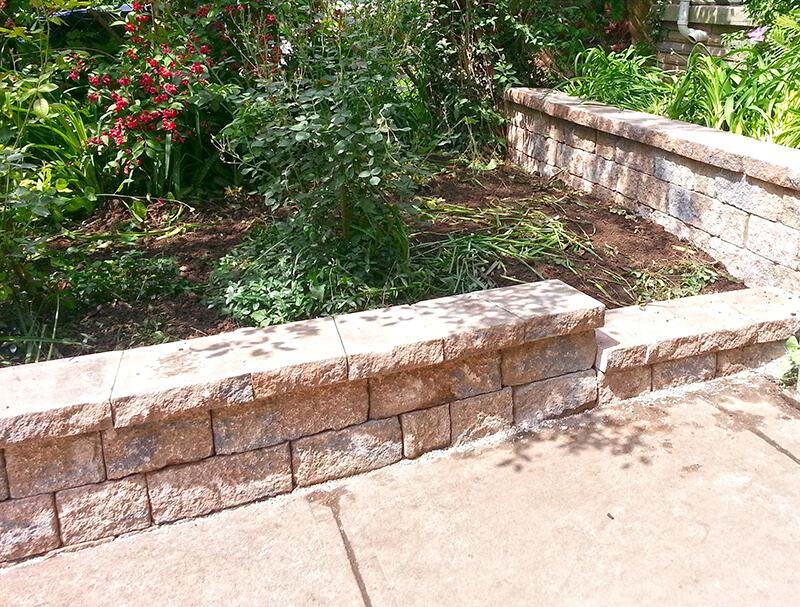
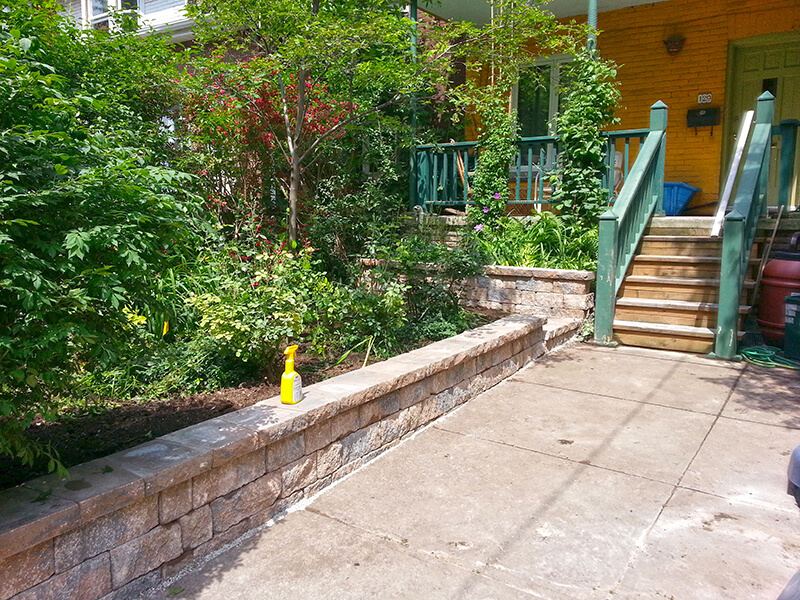
Not every wall holds back a hill. Many Thornhill front yards need a low garden wall to level a planting bed, edge a walk or frame a porch. Under 6′, with nothing pressing down behind it, small precast block is one of the most cost-effective options, and it comes in many shapes, sizes and colours. The Harbord Handy Man wall replaced a crumbling concrete wall with interlocking block and matching coping.
Retaining wall repair in Thornhill
Older Thornhill walls tend to fail in familiar ways. Rockeries slump as soil washes out between the stones, mortared walls crack once frost gets behind them, and timber rots from the back. A dry-laid stone wall can often be rebuilt in sections, reusing the sound stone on a new compacted base with drainage behind it. A leaning block or concrete wall is rigid, so it usually has to be rebuilt from the base. On a ravine slope or in a heritage district, check whether the rebuild needs approval first.
- Face leaning or bulging outward
- Soil washing through the joints
- Water pooling at the base after rain
- Steps heaving or rocking underfoot
- Gaps opening between tiers or caps
- Roots lifting or splitting the wall
How a Thornhill wall project runs
- Which city, which rulesYour address tells us whether Vaughan or Markham issues permits, and whether the heritage district, TRCA or tree by-laws apply.
- Site visit and free consultationWe look at the grade, drainage, soil, access and the trees you want to keep.
- Design and approvalsWe choose the wall type and height, bring in an engineer where the wall needs one, and help with the permits.
- BuildThe old wall comes out, the base and drainage go in, and the wall goes up course by course.
- FinishCoping, steps and planting go in, and we clean up.
Vaughan side or Markham side?
Either way, book a free consultation and we’ll sort out what your wall needs.
What a retaining wall costs in Thornhill
Price depends on the wall type, height and length, removing the old wall, machine access for armour stone, and any engineering, heritage or conservation authority approvals. Our retaining wall cost guide explains typical Ontario ranges and what moves them. For a number for your yard, call 416.728.2159.
Thornhill neighbourhoods we serve
- Old Thornhill, both sides of Yonge
- Uplands
- Thornhill Woods
- Royal Orchard
- Bayview Glen
- German Mills
South of Steeles we build retaining walls in North York, and to the north and west, in Richmond Hill and the rest of Vaughan.
Thornhill retaining wall FAQs
Is my Thornhill home in Vaughan or Markham?
Yonge Street is the line. Homes west of Yonge are in the City of Vaughan and homes east of Yonge are in the City of Markham. That city issues your building permit, enforces your tree by-law and runs the heritage district your street may be in.
Do I need a permit for a retaining wall in Thornhill?
A wall over 1 m next to public property, a building entrance or private property the public can enter generally needs a building permit and an engineer’s design. Ravine lots may need a TRCA permit, heritage district properties may need heritage approval, and injuring a tree 20 cm or more across needs a tree permit in both cities. Confirm with your city; we help with the paperwork.
My house is in the Thornhill heritage district. Can I replace my retaining wall?
Usually, but talk to your city’s heritage staff first. Vaughan and Markham each have a district plan for Old Thornhill, and work visible from the street may need a heritage permit. Natural stone is often the easiest fit with a historic house.
Armour stone or Eramosa: which is better for a Thornhill garden?
Armour stone gives a bold, rugged face and suits bigger grade changes, but tonne-plus stones need machine access. Eramosa is cut into 8″ and 4″ pieces for a crisper, more formal wall and can be set by hand. Many walls use both, with armour stone at the corners and steps.
Can a leaning stone wall be repaired instead of replaced?
A dry-laid stone wall often can: the bulged section is taken down and rebuilt on a new base with drainage behind it, reusing sound stone. A leaning mortared, concrete or precast block wall usually needs a full rebuild from the base.
Will a new wall hurt my mature trees?
It can if it’s dug through the root zone, which is why both Vaughan and Markham require a permit before injuring a tree 20 cm or more in diameter. We plan the wall line and the access route around the trees you want to keep, and an arborist’s input may be required.