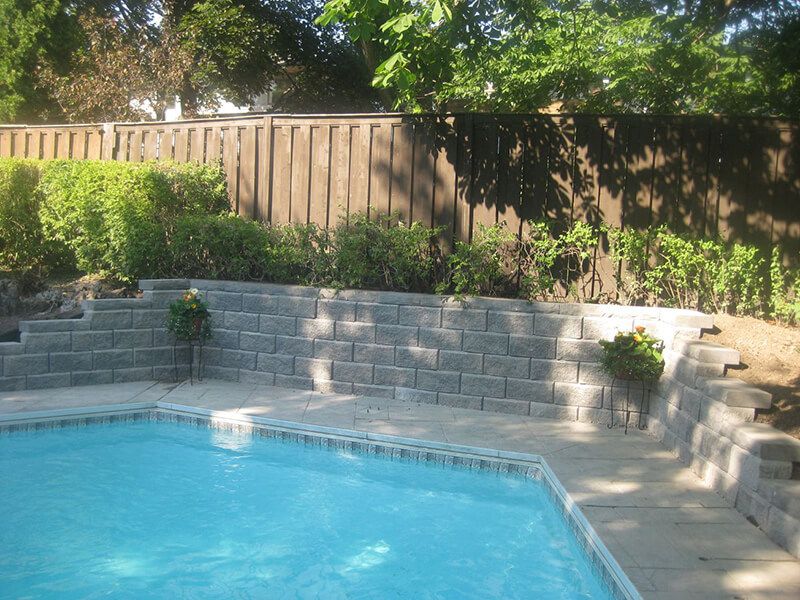
Custom wooden fences in Toronto serve any number of purposes and are one of the smarter investments you can make if you’d like to increase the value of your property without spending your life savings. As opposed to other materials like metal or stone, natural wood provides you with a host of aesthetic options as well.
It’s also easy to install, easy to maintain and looks fabulous no matter if your home is an urban oasis or a bungalow at the lakeside. At Top Mark Property Improvements, our woodworkers can create a wooden fence for you that will become an integral part of your home’s identity and last for decades to come.
Wooden Fences in Toronto: Safety, Beauty, Value
With many years of woodworking experience, our craftsmen know how to create a one-of-a-kind fence that uses natural wood patterns, colouring and textures in ways that harmonize with the surroundings. A beautiful, hand-crafted wooden fence from Top Mark Property Improvements will:
- Provide a safe environment for young children.
- Provide a safe environment for your pets to roam.
- Make barbecues more enjoyable by acting as a windbreak.
- Allow your family and guests to more fully enjoy the pool.
- Mark the boundaries of your property in no uncertain terms.
- Prevent deer and other wildlife from destroying backyard flora.
- Provide privacy, quiet and calm when you want to enjoy your yard.
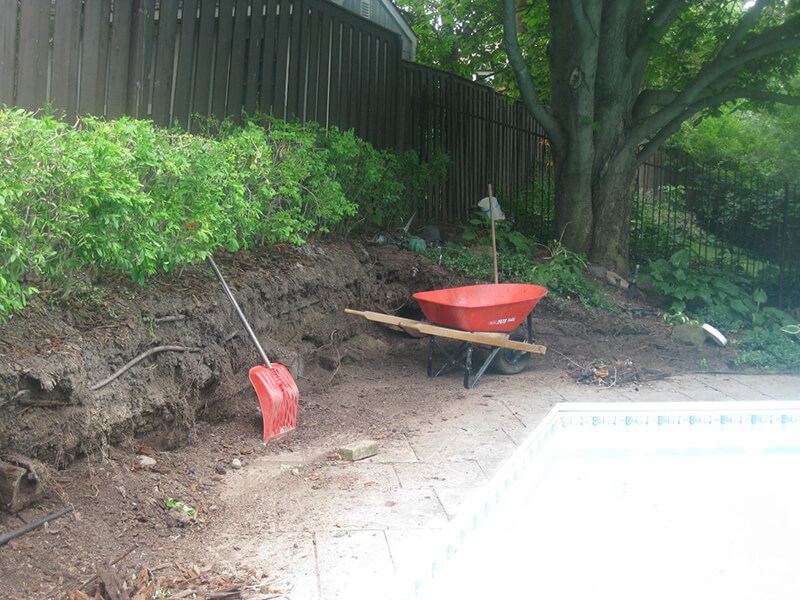
When you enlist Top Mark to design and construct a wooden fence for your home, you can be sure the final product will be a beautiful expression of our:
Commitment to quality
No one in the GTA will design a better-looking fence for you, nor build one from better materials than we use. We’re not here to make a quick buck and escape without being noticed. We’re here to provide our customers with the high-quality fencing solutions they need. We welcome your input at every stage of the process and hope you stay in touch after the project is completed.
Material knowledge
Building wooden fences in Toronto is more than simply sinking a few posts and hanging some planks between them. Your designer needs to possess a comprehensive knowledge of all the materials involved, including whether your fence would benefit from red cedar’s moisture and insect resistance, oak’s strength, the beauty and durability of ipe wood, or if standard pressure-treated pine is right for you.
Affordability
We strive to ensure all our landscaping products are realized in the most effective and efficient manner possible, so that waste is eliminated from the process and costs are reduced. We understand the need in these often challenging economic times to make a responsible budget and stick to it, and we work closely with you to ensure you get the fence you want at a price that works for you.
Popular Wooden Fence Styles
Pick the style for the job: block a view, keep a dog in, meet pool rules or frame a front garden.
Privacy board
Boards butted edge to edge for a solid screen. Small gaps open as the wood dries.
Board-on-board
Boards overlap on alternate sides of the rails, so there’s no straight-through view and it looks finished from both sides.
Picket
Lower, spaced pickets for front yards, where by-laws usually allow less height.
Lattice-top
A solid lower section with a lattice band that lets light through and holds climbing plants.
Pool enclosure
Built to your city’s pool enclosure rules, covered below.
Gates
Heavier posts, a diagonal brace and good hardware keep a gate from sagging.
Choosing the Wood: Cedar, Treated Pine or Hardwood
| Pressure-treated pine | Red cedar | Oak, ipe | |
|---|---|---|---|
| Look | Green or brown tint, greys with age | Warm reddish-brown; silvers if left bare | Rich grain; ipe is deep brown |
| Rot and insects | Chemically treated; ground-contact grades for posts | Natural oils resist both | Ipe is very durable; white oak far more than red |
| Movement | Can shrink, twist and check | Light and stable | Dense, strong, heavy to work |
| Relative cost | Lowest | Higher | Usually highest |
Many fences mix materials: ground-contact pressure-treated posts carrying cedar rails and boards. Fasteners matter too: modern treated lumber corrodes plain steel, so hardware should be hot-dip galvanized or stainless.
Wooden Fence Installation: Posts, Footings and Frost
Most fences fail at the posts. Toronto’s clay soils hold water, and when it freezes, frost heave lifts a shallow post a little each winter until sections lean and gates stop latching. The answer is a concrete footing set below frost depth.
- Site visit and designWe talk about privacy, pets, the pool and style, and look at grade, trees, drainage and any walls the fence will meet.
- Property line and by-lawsConfirm the line (a survey helps), check the by-law and pool rules, and talk to your neighbour if the fence is shared.
- Locates and footingsUtilities are marked through Ontario One Call, then posts are set plumb in concrete below frost depth, with the top sloped to shed water.
- Rails, boards and gatesRails go on level or stepped with the grade, then the boards; gates hang on braced frames.
Fence By-laws, Pool Fences and Shared Boundaries
Toronto, Vaughan, Richmond Hill and Markham each have a fence by-law. Height limits are often around 2 m in back yards and lower in front yards, but the details vary from city to city. Check your city’s by-law before settling on a design; we factor it in as part of planning.
Pool fences in Toronto
Toronto requires a pool enclosure permit before a pool is built, and the city inspects the finished enclosure before the pool can be filled; neighbouring cities have similar rules. A pool fence typically needs:
- A minimum height, set by the by-law, all the way around.
- Self-closing, self-latching gates, with the latch out of a child’s reach.
- Limited gaps between boards and under the fence, and no climbable rails on the outside.
Ontario’s Line Fences Act sets out a process for dividing the cost of a boundary fence, but some municipalities have opted out, including the City of Toronto in 2018. In Toronto, shared fences are settled between neighbours. Wherever you live, agree on location, style and cost in writing before work starts.
Fences On or Near Retaining Walls
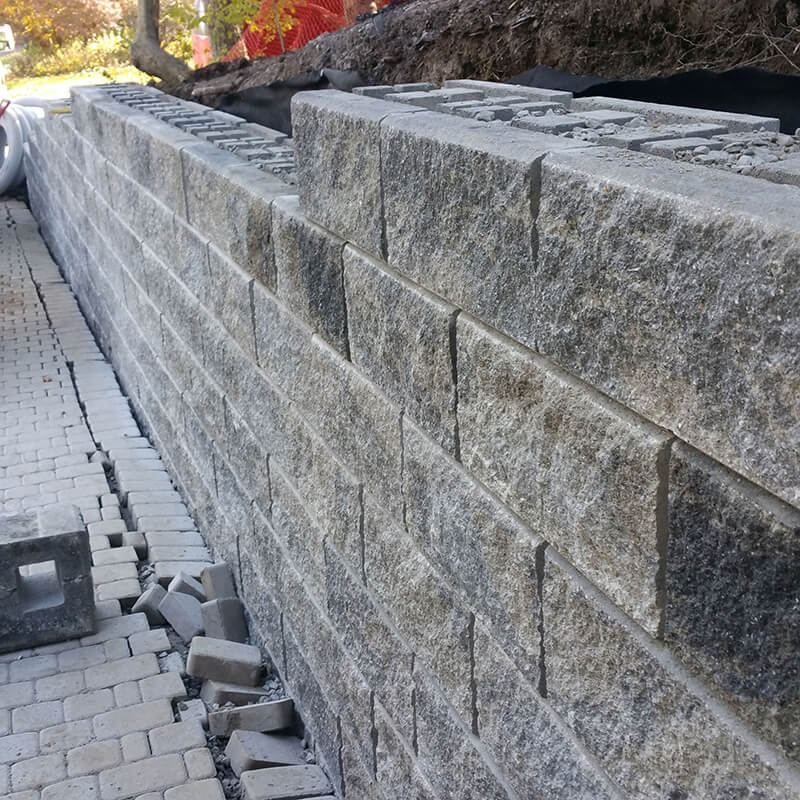
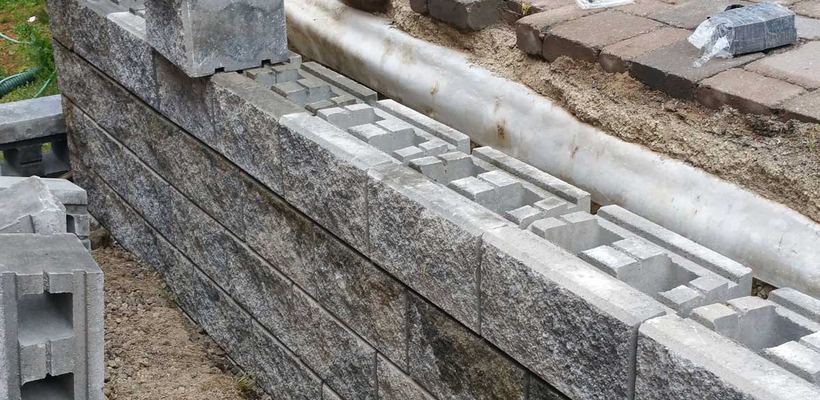
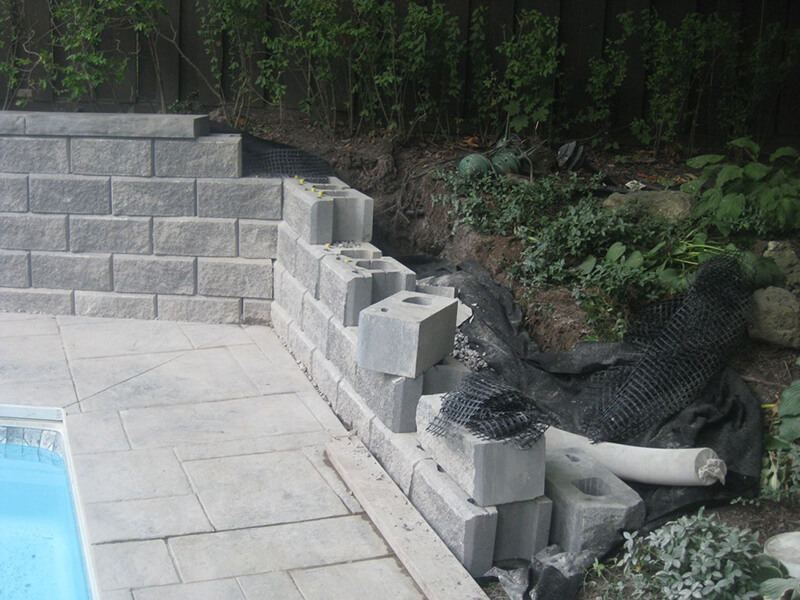
In a sloped yard the fence often meets a retaining wall. A solid privacy fence catches wind like a sail, and that load goes into whatever holds the posts. Block walls aren’t meant to have posts bolted into their top courses unless designed for it, and post holes dug behind a wall can cut geo-grid and drainage pipe.
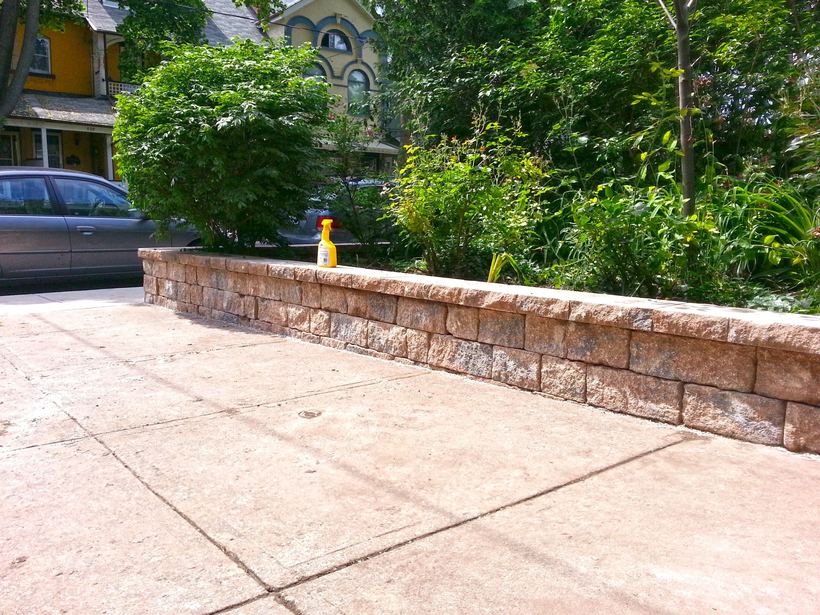
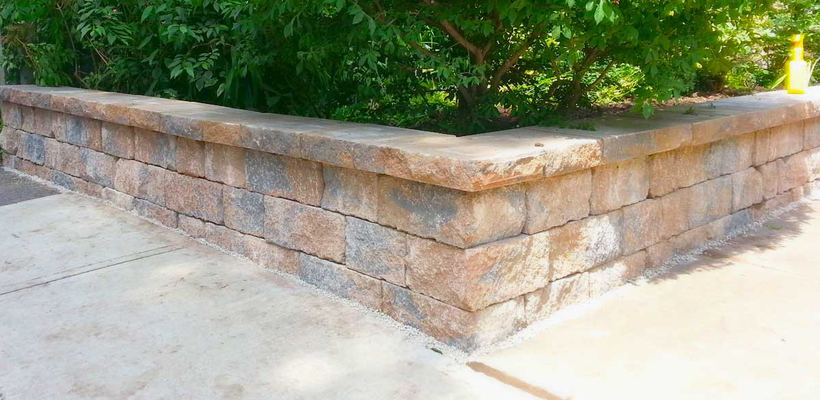
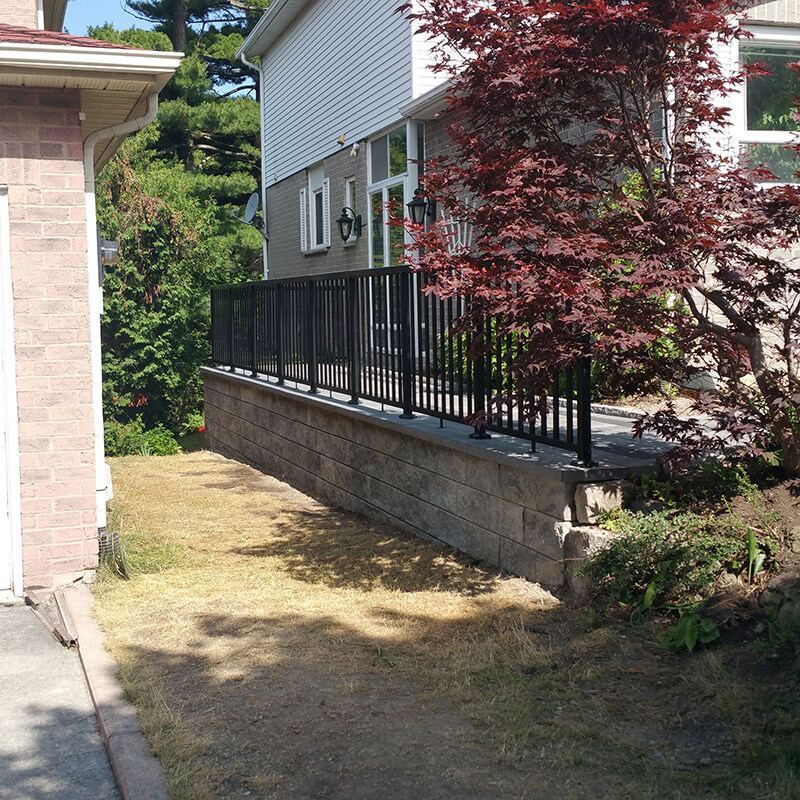
The safer options are to set posts on their own footings back from the wall, or to design the wall and fence together. On our Kaivan wall, the Piedmonte coping is strong enough to carry a railing, and a black safety railing now runs along the walkway on top of it.
Caring for Your Wooden Fence
- Stain or seal it once new wood has dried, and re-coat when water stops beading.
- Check the posts after winter for lean, and make sure gates still latch.
- Keep soil, mulch and sprinklers off the bottom boards so they can dry.
- Trim back vines and shrubs that hold damp against the boards.
- Replace a split board or loose rail as soon as you spot it, before it spreads to the next section.
Top Mark Property Improvements provides the wooden fences Toronto homeowners want. Our custom fencing creations deliver security and privacy while dovetailing stylistically with other elements of your landscaping plan and adding value. Call us today at 416.728.2159 to find out more.
Planning a new fence?
Tell us about your yard, your pool and your neighbours. Book your free consultation.
Wooden Fence FAQ
Do I need a permit for a wood fence in Toronto?
An ordinary fence that meets the by-law usually doesn’t, but a pool enclosure does, and a fence taller than the by-law allows needs an exemption. Digging post holes near a large tree may also need a permit under Toronto’s tree by-laws. Rules differ by city, so check yours.
How deep should fence posts go?
Deep enough that the concrete footing sits below frost depth, which in Toronto usually means about 1.2 m (4 ft). Gate posts and tall, exposed fences may need more; check local requirements.
Is cedar or pressure-treated wood better?
Cedar looks better, stays straighter and resists rot naturally, but costs more. Pressure-treated pine costs less and is the usual choice for posts.
Who pays for a fence between neighbours?
In Toronto it’s up to the neighbours, since the city opted out of the Line Fences Act. Elsewhere in Ontario the Act may apply.
When should I stain a new fence?
Once the wood is dry. Sprinkle on some water: if it beads up, wait; if it soaks in, it’s ready. Dry cedar is often ready within weeks; treated wood installed wet can take months.