

Most people are familiar with the process of home staging, and most think of it as a fundamentally interior phenomenon. While it’s true that most home stagers focus their efforts on the interior of a home that is being offered for sale, we at Top Mark Property Improvements specialize in exterior staging of Toronto homes. It is, after all, the exterior of your home that prospective buyers first take the measure of as they disembark from their car or walk up to your front door.
Why curb appeal matters before you sell
A home is usually the biggest thing a family ever sells, and buyers start judging it before they reach the door. A yard that looks cared for suggests a house that has been cared for; a sagging fence or a cracked walk raises the opposite question, and gives a buyer a reason to offer less. Getting the outside right is one of the most direct ways to protect your sale price.

The first impression now starts online
Most buyers meet your house in the listing photos, and the lead photo is usually the front of the house. A tidy lawn, a straight wall and a level walkway make that photo work; a leaning wall or a heaved slab is what the eye catches.
On showing day, buyers read the approach as a sign of how the rest of the house has been cared for, inside and out.
Exterior staging in Toronto: areas of concentration
Studies conducted by the real estate industry have shown that if potential buyers don’t like what they see as they approach your home, many of them will not even bother entering the house. Exterior staging by Top Mark typically focuses on the following areas:
The front yard and lawn
Nothing will turn potential buyers off faster than a seedy, unkempt lawn with bare patches and perhaps standing water. Before we turn our attention to any other part of the home’s exterior, we take whatever steps are necessary to make sure your lawn is a lush blanket of perfectly manicured green.
The driveway
If you have a driveway, it will be the first thing visitors and potential buyers see when they drive up to your house. They’ll feel every bump and take note of the state of the driveway surface when they exit their car. Avoid losing potential buyers at the driveway. Enlist the help of Top Mark exterior staging in Toronto.
The front entrance
People need to be impressed by the entrance to your home. Not bowled over, but impressed. At the same time, they need to feel comfortable and excited about what may lie behind the door. For the purposes of exterior staging, no one knows how to achieve this balance better than the professionals at Top Mark.
Walkways
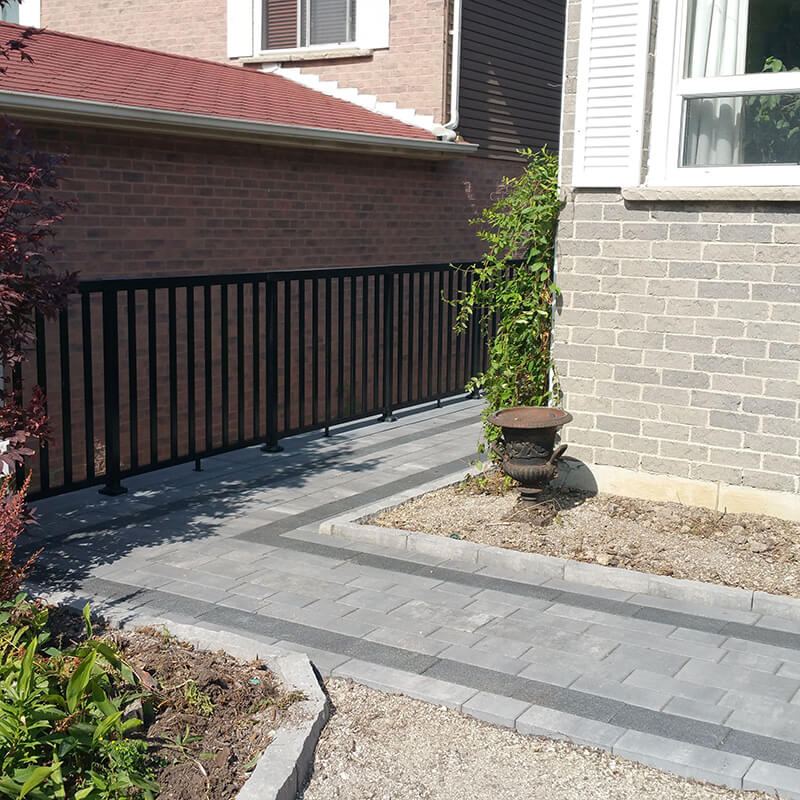
You can have the most spectacular entryway in Toronto, but if the walkway leading up to the front door is a mess, that’s all a potential buyer will remember. Whatever type of material is used to create your walkway, it needs to be clean, weed-free and level so no one will trip and fall.
The backyard deck
A backyard deck can be an enormous selling point if it’s in good shape. We’ll assess your deck from foundation to railings. We’ll address any weaknesses, repair any damage and introduce planters or other features that may liven up the deck environment.
Beds, paint, stairs and gutters
Other things an exterior staging in Toronto will address include the creation of flower beds to provide a homey feel, making sure there’s no peeling or worn paint, checking that all porch and deck stairs are properly maintained, and making sure all gutters and downspouts are working properly and look good.
A pre-listing exterior checklist
Stand on the sidewalk, look at the house the way a buyer would, then walk the route a visitor takes. This is what we look for:
- Walkways and steps: lifted or sunken slabs, trip edges, rocking treads, loose railings
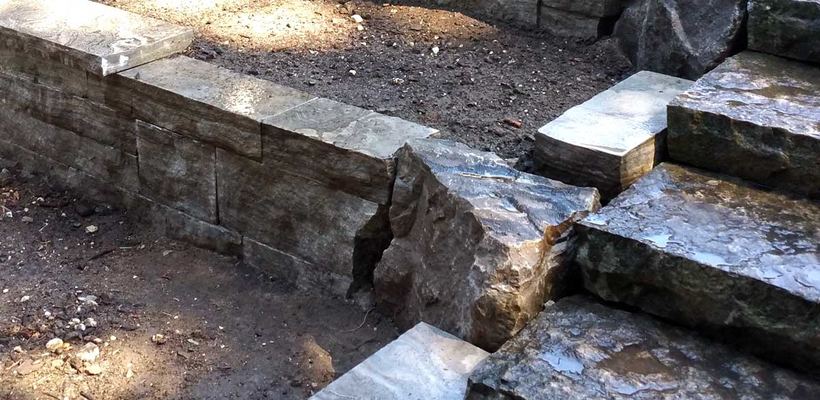
- Retaining walls: leaning or bulging faces, cracked blocks, rotting timbers or railroad ties
- Fences and gates: leaning posts, broken boards, gates that sag or won’t latch
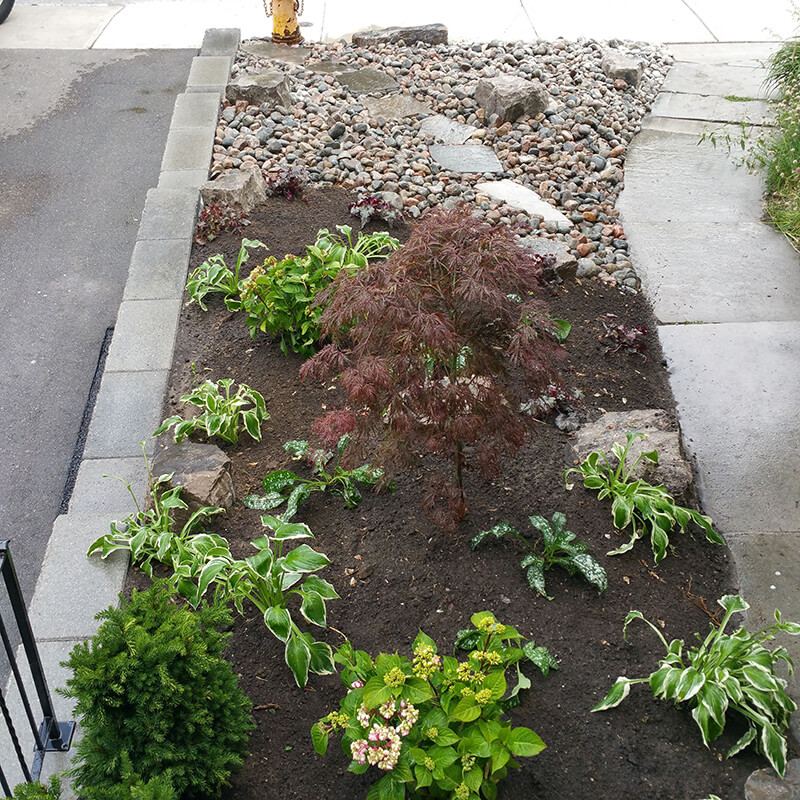
- Beds and edging: weeds, bare soil, frost-heaved edging, overgrown shrubs
- Concrete: cracks, flaking surfaces, settled slabs that pitch water toward the house
- The entry: peeling paint on railings and trim, worn porch stairs, a cluttered landing
- Drainage: standing water on the lawn, downspouts that empty against the foundation
- The driveway: potholes, heaved or crumbling edges
A failing wall or broken steps will turn up in the buyer’s inspection. Repairing them properly before you list takes them out of the negotiation.
Quick wins vs projects worth doing before a sale
Some items are quick and show up immediately in photos. Others are real repairs a buyer will notice either way, and are worth planning properly.
| Quick wins | Projects worth planning | |
|---|---|---|
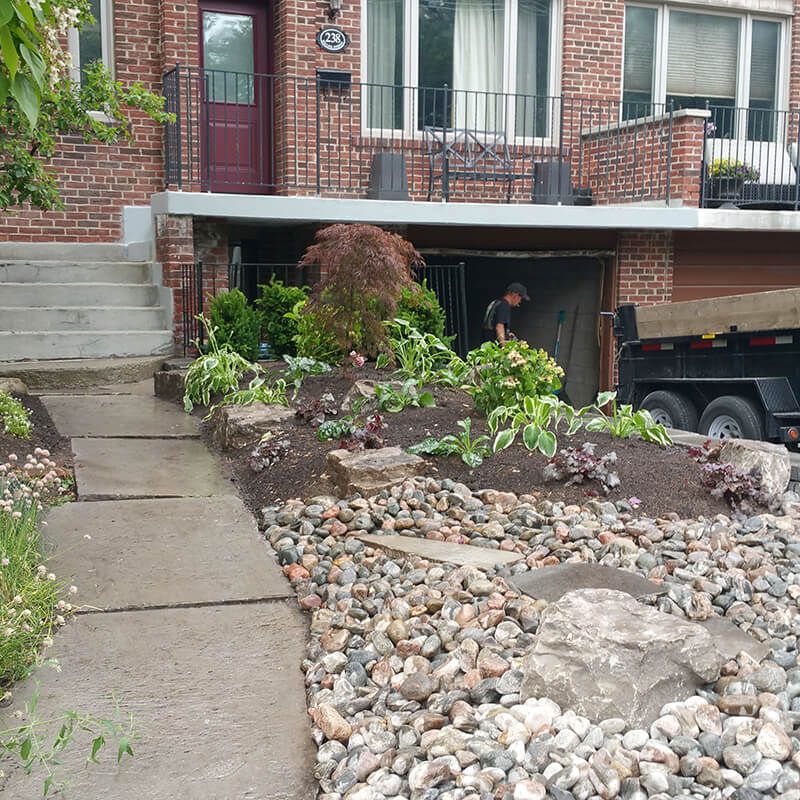
| Lawn and beds | Edging, mulch, seasonal planting, sod over bare patches | Regrading low spots where water stands; new beds with stone borders |
| Walkways, steps and concrete | Weeding, resetting lifted pavers, patching minor cracks | Replacing a heaved walkway, broken slabs or steps |
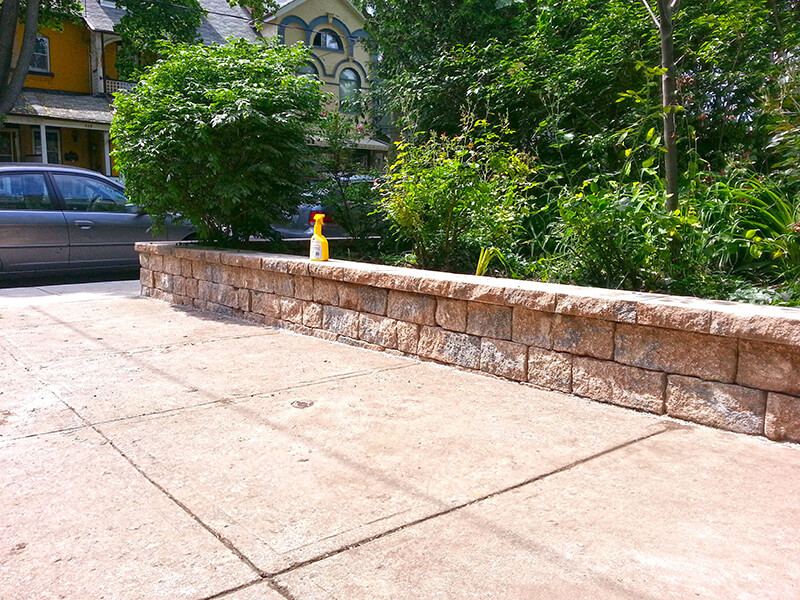
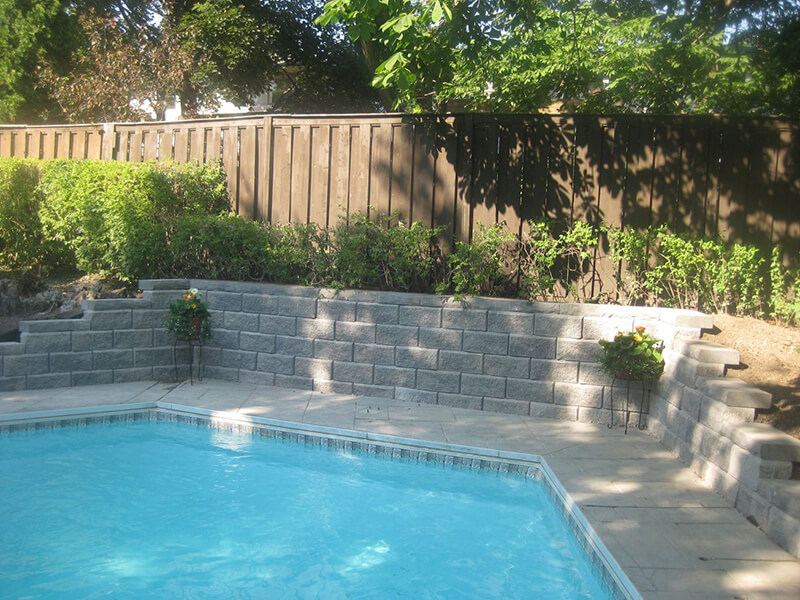
| Retaining walls | Resetting loose caps, clearing overgrowth | Rebuilding a leaning or crumbling wall |
| Deck and fence | Replacing boards, re-hanging a gate, adding planters | Deck repairs from the foundation up; replacing a leaning fence |
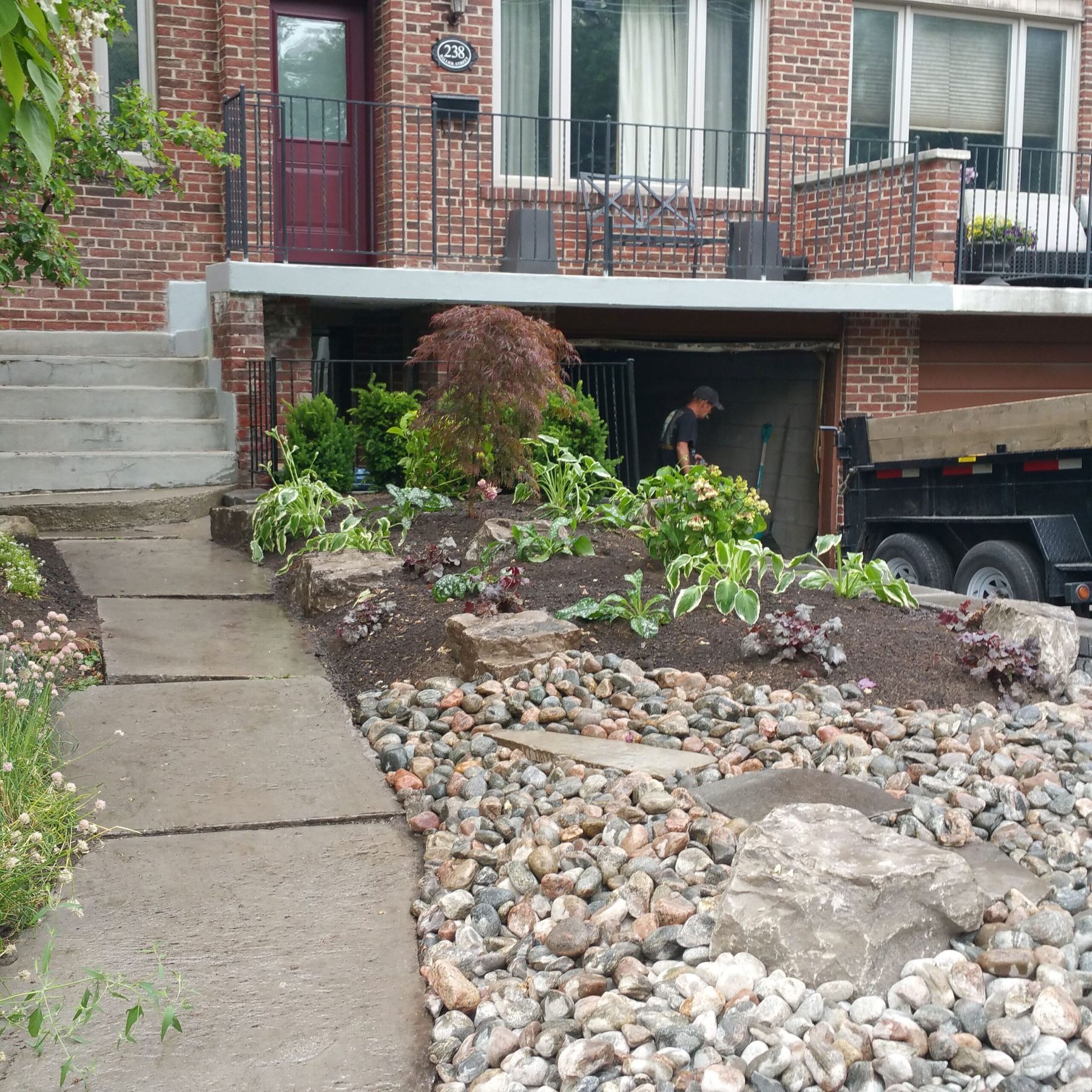
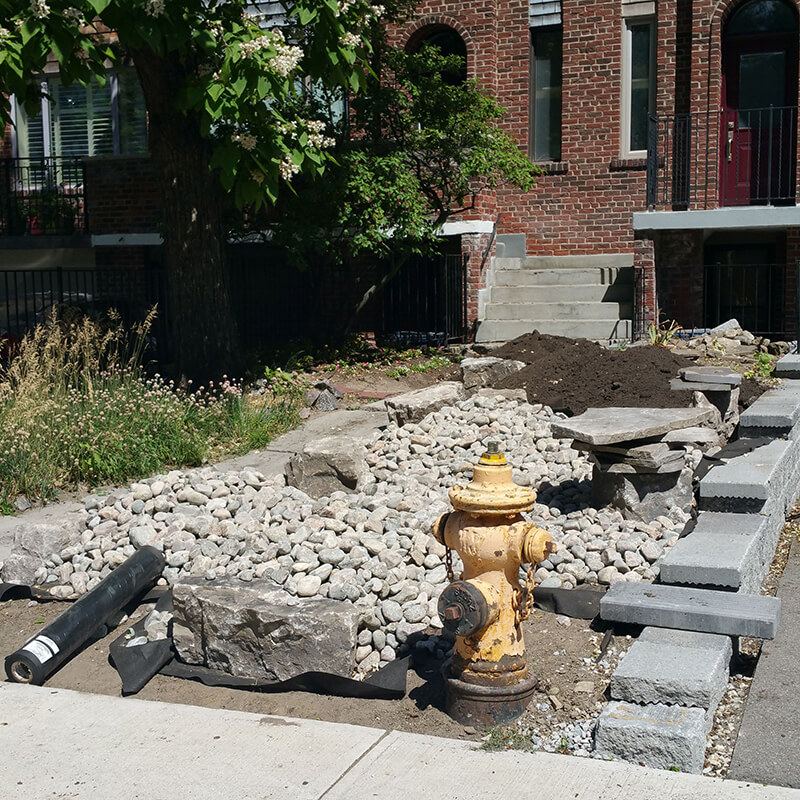
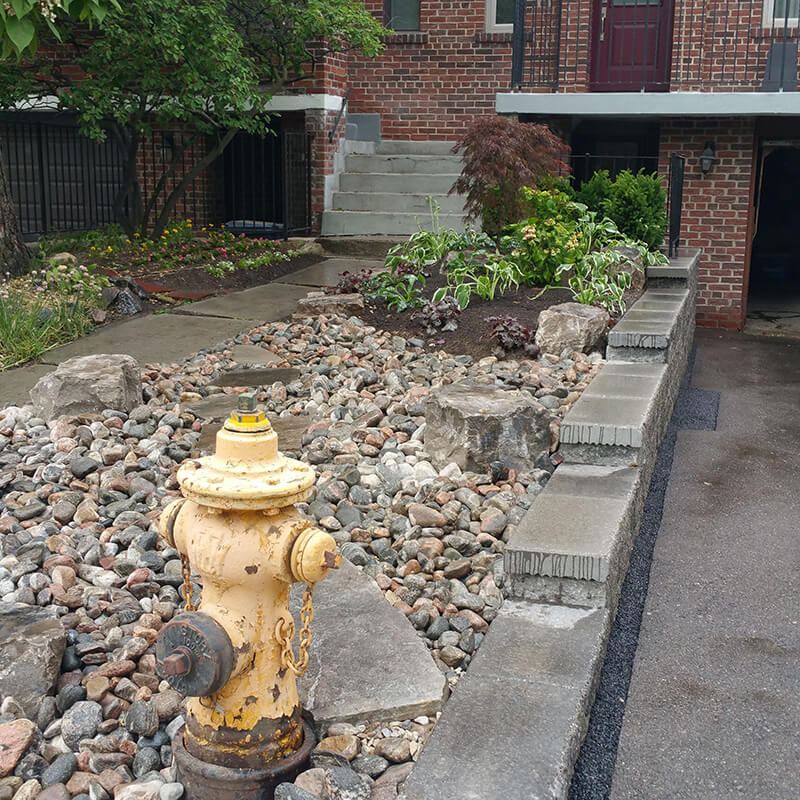
Fix safety issues and anything an inspector will flag first, then refresh what shows in photos and on the walk to the door. Projects that only suit your own taste can wait for the next owner. The Peter Palmer front yard below started with a rotting railroad-tie wall.
Timing: plan ahead of your listing date
Many sellers aim for the spring market, just as Toronto’s ground is coming out of frost. Excavation, gravel bases, concrete and sod all need thawed ground; a base compacted over frozen soil, or concrete poured onto it, can settle and crack once the ground thaws.
If you plan to list in spring, start the conversation in fall or winter, so work can begin as soon as the ground allows and finish before the photographer arrives. New sod and planting also need a few weeks to settle in before they look their best.
A tall retaining wall is the item on a staging list most likely to need approvals before it can be rebuilt. Where a wall shows more than about 1 m (3′3″) of face and borders public land, the way into a building or a space open to the public, Ontario generally expects a building permit and an engineer’s design, and ravine lots can add Toronto’s ravine by-law or TRCA review. Ask your municipality early, or let us check while we plan, so paperwork doesn’t push the work past your listing date.
How Top Mark exterior staging works
- Walk-aroundWe walk the property with you, from the curb to the backyard deck and fence.
- Priority listWe split what we find into repairs and cosmetic quick wins, with the repairs first.
- Plan and scheduleWe work back from your listing date, allowing for the season and any permits.
- The workLawn and beds, walkways and steps, concrete repairs, retaining walls, wooden fences and deck repairs, fixed properly rather than covered up.
- Ready for photosA final tidy, fresh edging and mulch before listing day.
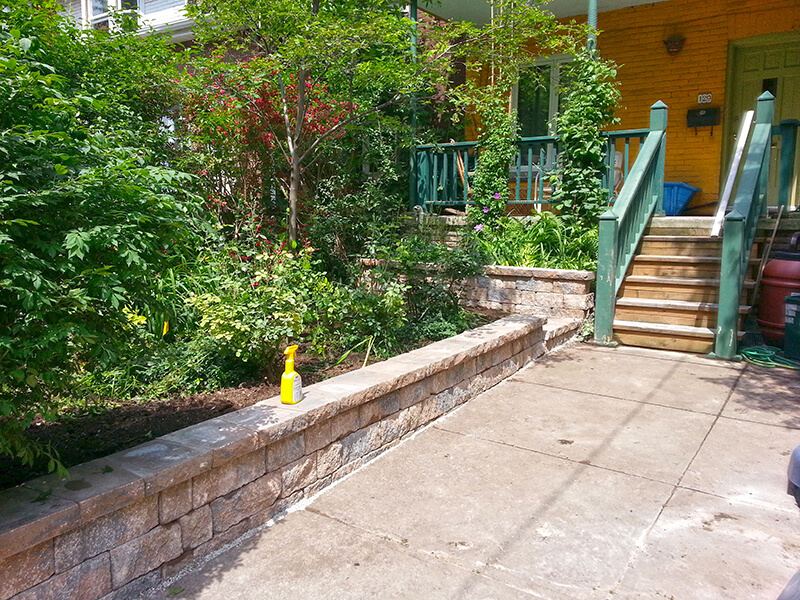
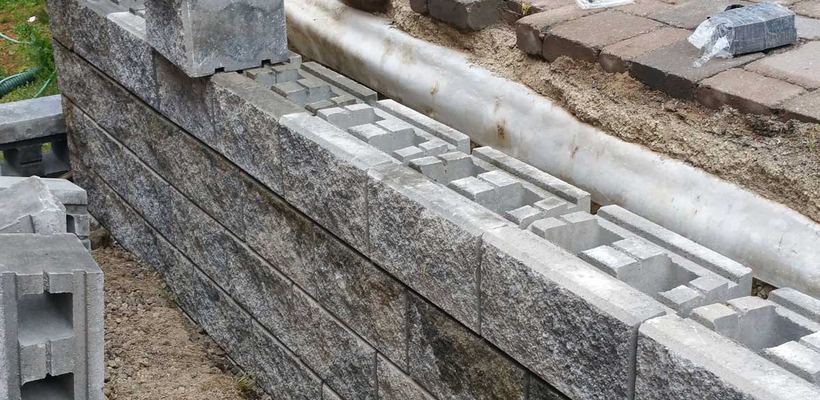
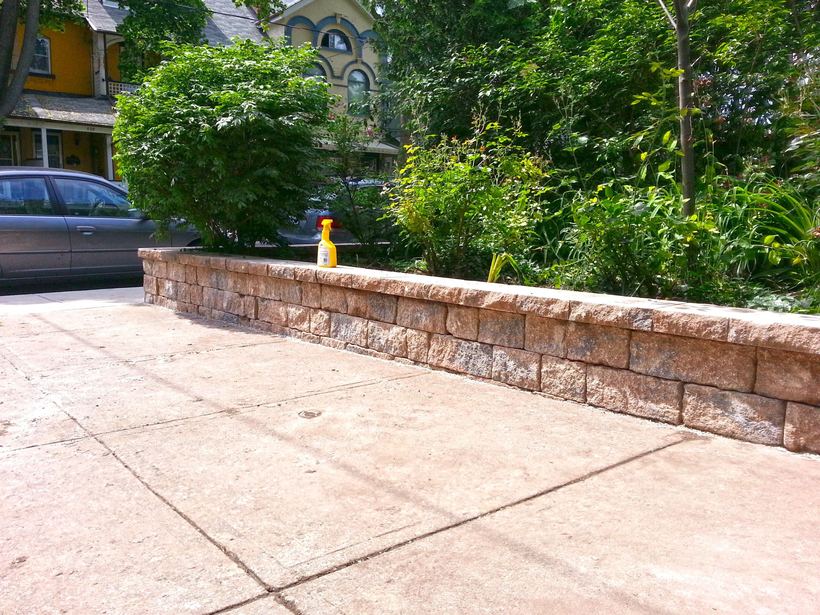
Not every job is large: on the Harbord project, a low-cost precast block wall with matching coping replaced a crumbling concrete wall.
If you’re about to put your home on the market, call Top Mark Property Improvements first at 416.728.2159. We’ll make sure the home you offer for sale is one that will catch the eye of potential buyers the minute they spot it from the street.
Listing in the spring?
Book your free consultation early so the work is finished before your listing photos are taken.
Common questions
How far ahead of my listing date should I start?
As early as you can. Quick wins fit a short window; rebuilding a wall, walkway or steps needs time for planning, materials, suitable weather and sometimes a permit.
Should I fix a failing retaining wall or leave it for the buyer?
A visibly leaning or crumbling wall is hard for buyers to ignore, and replacing it properly before you list removes the question. Ask your agent about any disclosure you need to make.
What if I’m not selling yet?
The same work adds curb appeal you enjoy while you live there. If you’re staying put, start with exterior planning and design instead.
Does exterior staging cover the backyard too?
Yes. The front sets the first impression, but buyers walk the backyard as well: a sound deck, safe stairs, a solid fence and working gutters all count.
Should a tired lawn be reseeded or sodded before listing?
It depends on the calendar. Seed is cheaper but slow, and does best sown in late summer or early fall; sod gives an instant green lawn that needs a few weeks of watering to root. Either way, fix the cause first: low spots where water stands need regrading, or the bare patch comes back.