
Invented by the Romans more than 2,000 years ago, concrete has proven its usefulness over the centuries and is still the most dependable and most widely used building material in the world. But even concrete can break down, crack, subside or suffer a rash of other problems if it’s mixed improperly, poured improperly, set upon an unstable base or, as is the case in Toronto, subjected to repeated freeze/thaw cycles. Should your concrete sidewalk, driveway or patio need repair, the professionals at Top Mark Property Improvements are the people to call.
Reliable and Affordable Concrete Repairs in Toronto by Top Mark
Concrete is an incredibly strong building material, but it’s not impervious to damage. Should any of the concrete in and around your home be showing signs of age, Top Mark can help. Among the many services we offer Toronto homeowners, concrete repair is one of our most popular, and it includes:
Concrete grinding and sealing
Grinding takes down trip edges and cleans up a worn surface; sealing helps keep out water and salt.
Crack and joint repair
Cracks and failed joints are cleaned out and filled so water can’t get under and freeze.
Concrete overlayment
A thin bonded layer that gives a sound but scaled or pitted slab a fresh surface.
Epoxy injection
Resin forced deep into a crack to bond and seal it.
Polyurethane repair
Stays flexible once cured, so it suits cracks and joints that still move.
And more…
Sidewalks, walkways and steps: if it’s concrete around your home and showing its age, ask us.
Common Concrete Problems in Toronto
Most concrete damage around Toronto homes comes down to water, frost and salt. Water soaks into the concrete and the clay soils beneath, then freezes and thaws many times a winter, while de-icing salt eats at the surface.
| What you see | What it usually means | Typical repair |
|---|---|---|
| Hairline cracks, both sides level | Normal shrinkage or minor movement | Clean and seal before water gets in |
| Wide cracks, or one side higher | The base has moved, or a structural defect | Fix the cause, then fill or inject |
| Thin flakes peeling off (scaling) | Surface freeze-thaw damage, worsened by salt | Grind, overlay and seal |
| Chunks breaking away (spalling) | Deeper frost damage or rusting reinforcing | Cut back and rebuild, or replace |
| Sunken or tilted slab | Soil underneath washed out or was never compacted | Replace the section on a compacted base |
Patio and Driveway Failures: How We Repair Cracks
Homeowners commonly find their large outdoor concrete slabs are in need of repair. This is because they’re subjected to the dreaded freeze/thaw cycle that causes the ground beneath them to expand and contract along with the temperature. All the upward and downward pressure weakens the slab and creates fissures or cracks that will only worsen with time if not attended to.
Our concrete repair specialists typically approach the repair of most cracks in the following manner:
- Clean the crackThoroughly clean any cracks and remove loose pieces to create dirt-free edges that will bond with the repair material.
- Brush and blow outGo over the edges of the cracks with a wire brush to ensure all debris is removed, and then blow out the crack with high-pressure air.
- FillOnce the cracks are thoroughly clean and the surfaces ready to accept the repair material, the cracks are filled using concrete sealer, pourable grout, textured caulk or another material.
Expansion joints and slab replacement
In some cases it may also be necessary for our technicians to remove compromised expansion joint material in your driveway or on your patio and replace it. In other cases entire slab sections may need to be removed and replaced.
Why joints matter
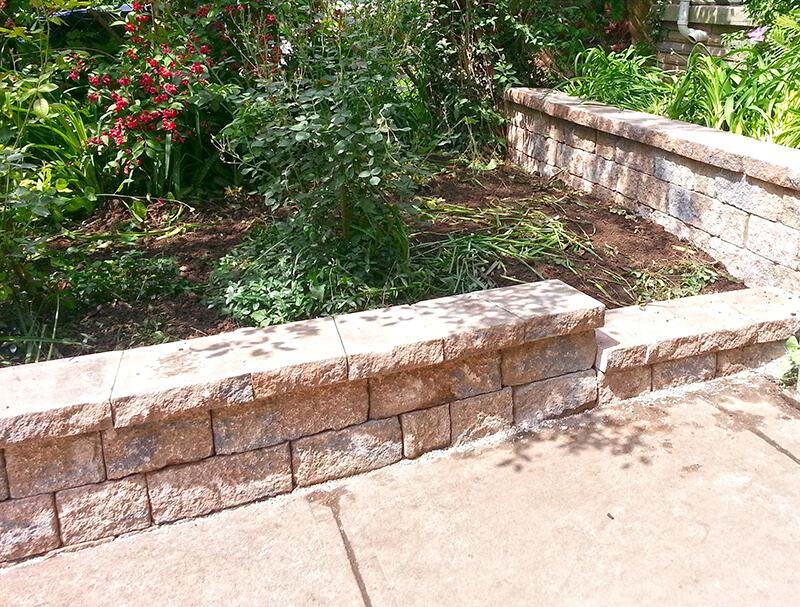
Joints let a slab move, and crack in a straight line instead of at random. Over the years the filler in them rots, weeds take hold and water runs into the base. Cleaning them out and resealing with a flexible sealant is one of the simplest ways to protect a driveway or patio.
Epoxy Injection Repairs
Another popular and effective method for effecting concrete repairs in Toronto is injecting epoxy directly into the cracks. If the cracks are the result of structural defects of some sort (rather than freeze/thaw cycles), we’ll determine the cause of the defect and correct it before administering the epoxy resin repair regimen.
Once structural defects have been addressed, the epoxy injection is undertaken. It penetrates deep into the fissure, sealing the crack and preventing water and other materials from penetrating and further undermining the concrete.
Epoxy is rigid once it sets, so it suits cracks that have stopped moving. For cracks that still open and close, flexible polyurethane is usually better.
Repair or Replace? How to Tell
Not every tired slab needs tearing out, and not every crack is worth patching.
Repair usually makes sense when
- Cracks are narrow and both sides are level
- The surface is scaled or worn, but the concrete underneath is sound
- One or two panels have failed and the rest are solid
Replacement usually makes more sense when
- The slab looks more like a jigsaw puzzle than a smooth surface
- Sections have sunk or lifted into a trip edge, or tilt water toward the house
- The concrete crumbles when scraped, or rusted reinforcing shows
Concrete Steps and Porches
Front steps take more punishment than any other concrete around a house: foot traffic, shovels, salt and water dripping off the porch roof. The front edges chip and crumble first, and over time whole steps can settle and pull away from the house, leaving a gap that fills with water and ice.
Broken edges can be cut back to sound concrete and rebuilt with a bonded repair mortar, and worn treads resurfaced. Seal the joint between the steps and the house so water isn’t sent down the foundation. If the steps have tipped or their base has failed, replacement is usually the safer fix.
When the old steps have to go
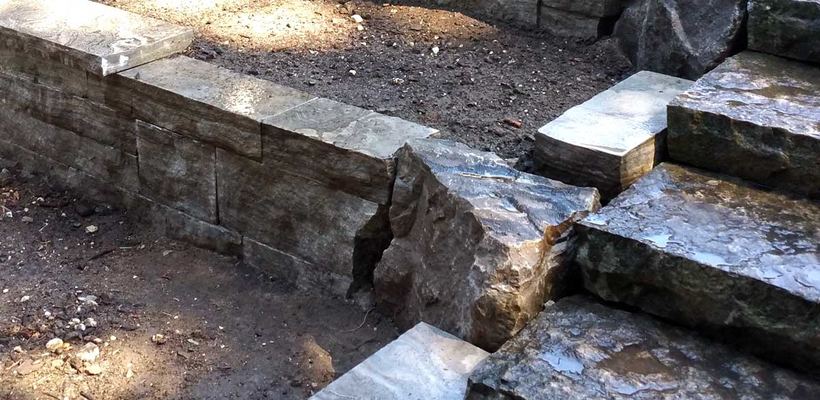
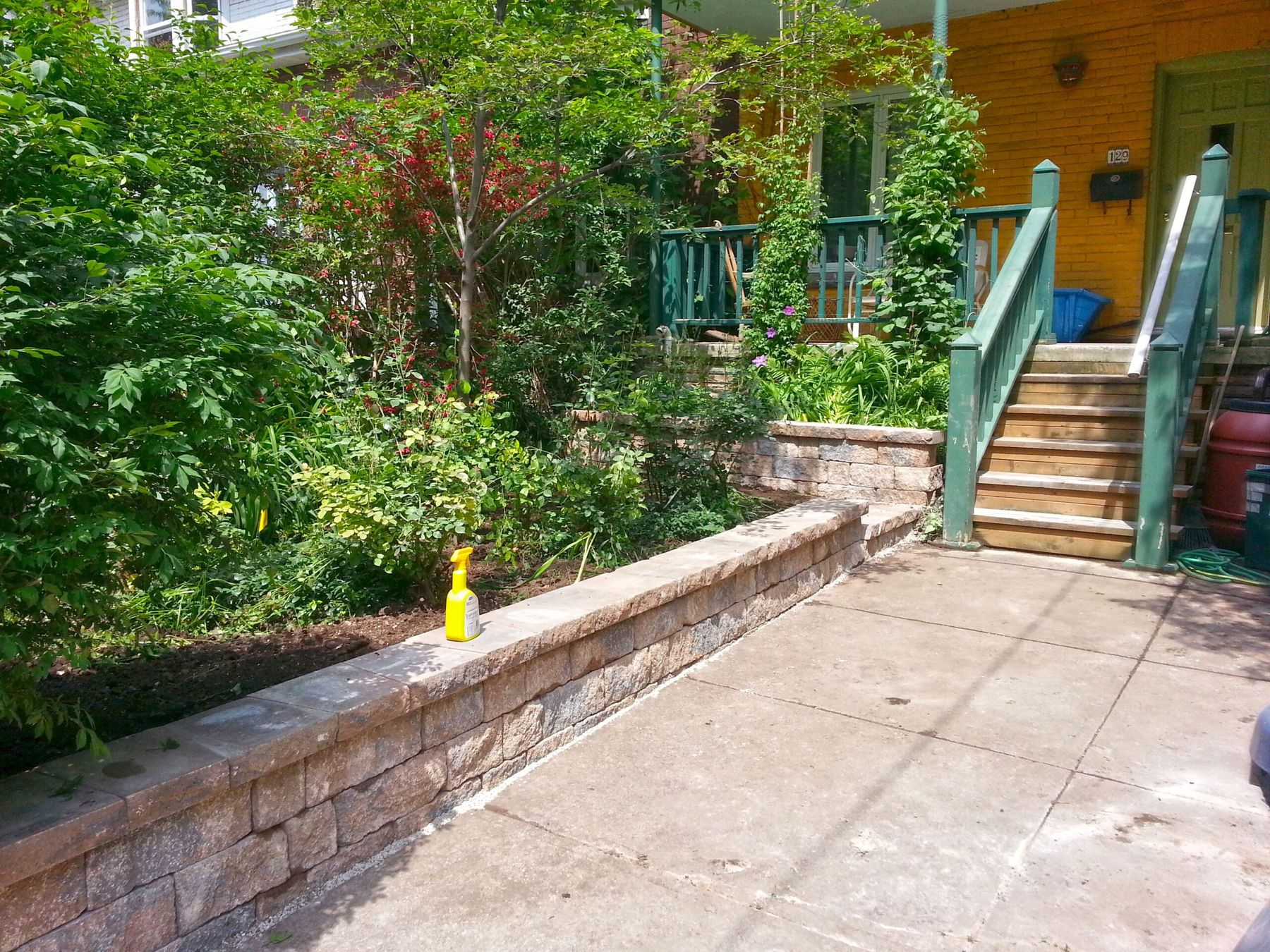
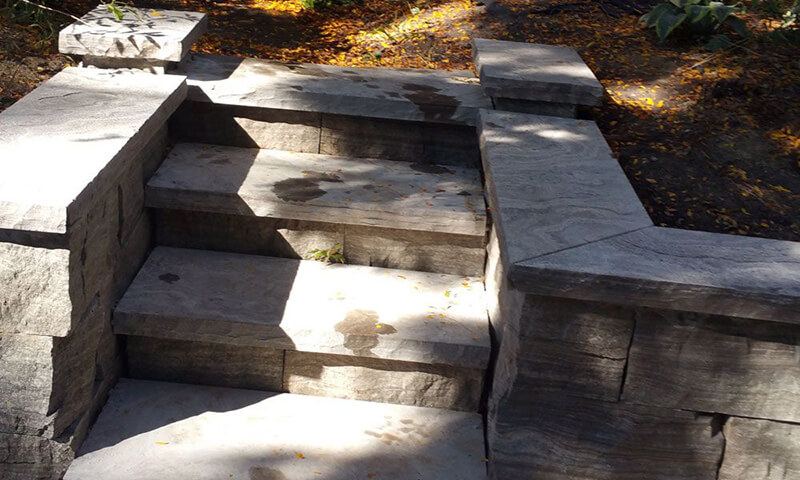
On our Jancy King project in Toronto’s High Park, the original stairs were solid concrete, and had cracked and were unsafe. Both sets were replaced with rough-finished (bush-hammered) Eramosa treads, individually set on a concrete base, as part of a new tiered Eramosa planter wall.
Protecting Concrete After Repair
A repair lasts longest when the conditions that caused the damage change too.
- Seal it. A penetrating sealer cuts the water and salt the surface absorbs.
- Go easy on salt. Shovel early, use sand for grip, avoid de-icers with ammonium nitrate or ammonium sulfate, and keep de-icers off new concrete in its first winter.
- Move the water. Point downspouts away from slabs and steps, and grade beds to drain away.
- Keep joints filled. Pull weeds and top up sealant before water gets under.
Check what’s beside the slab
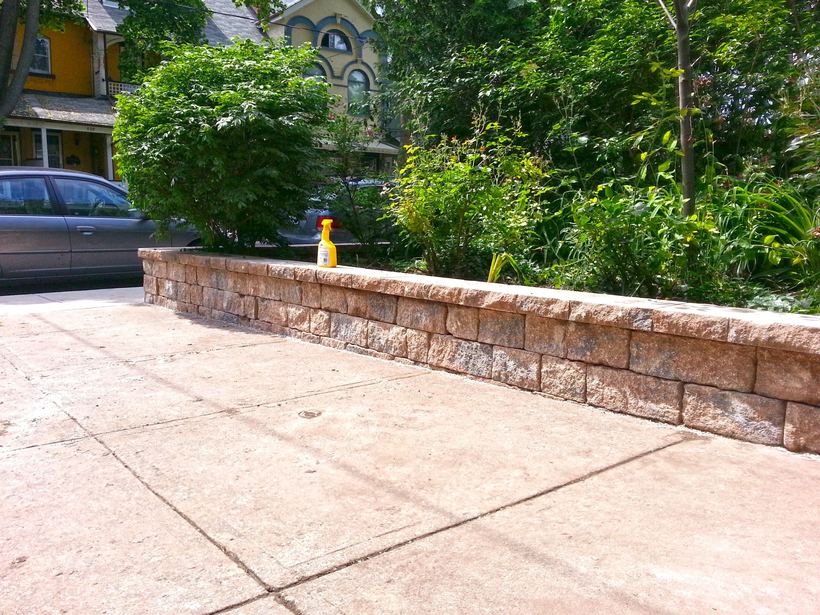
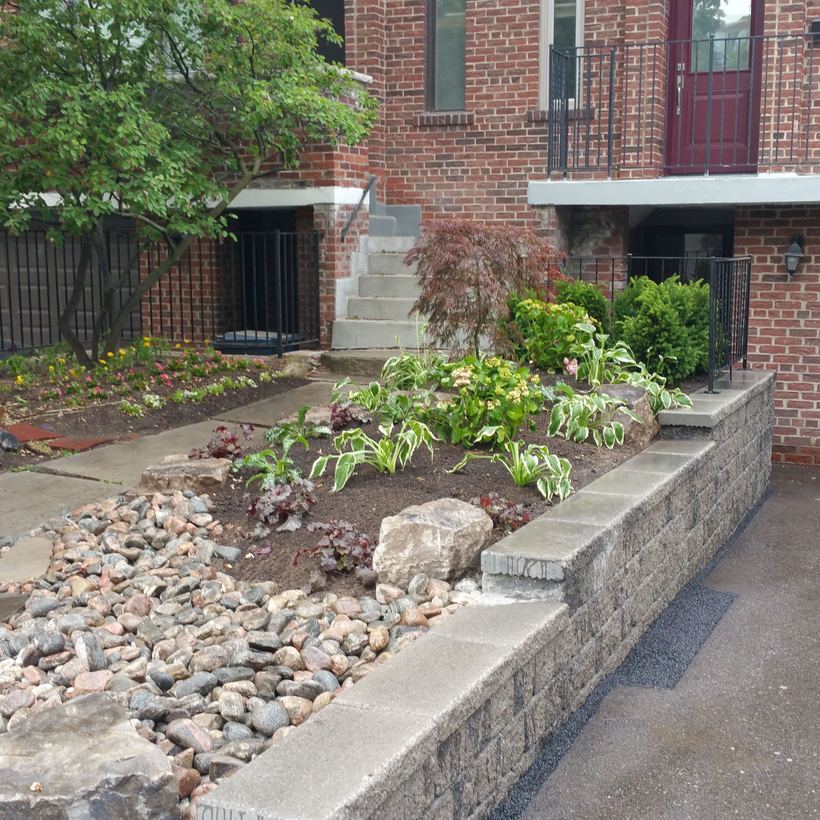
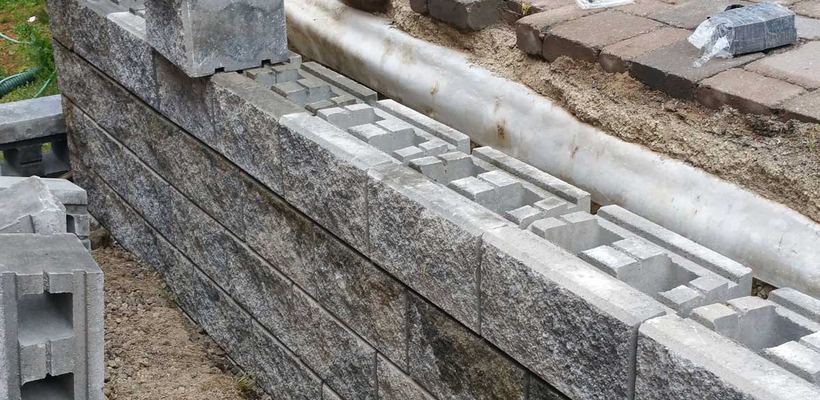
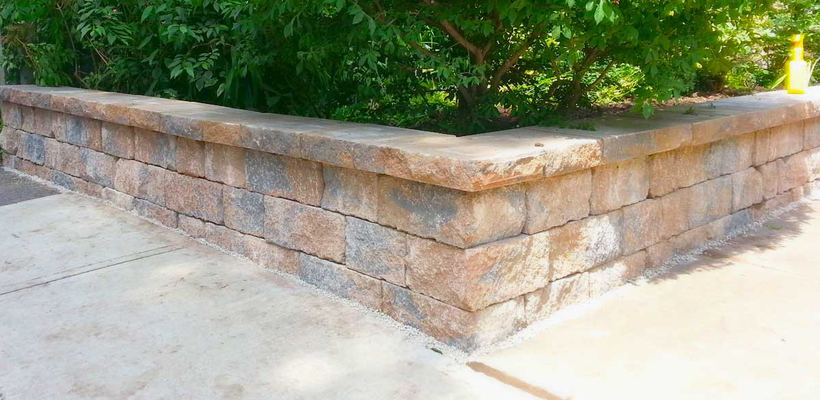
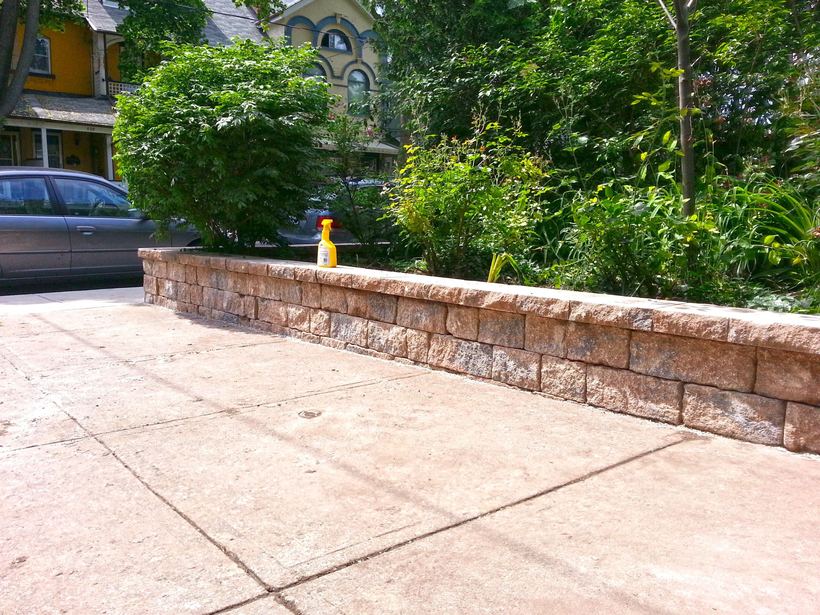
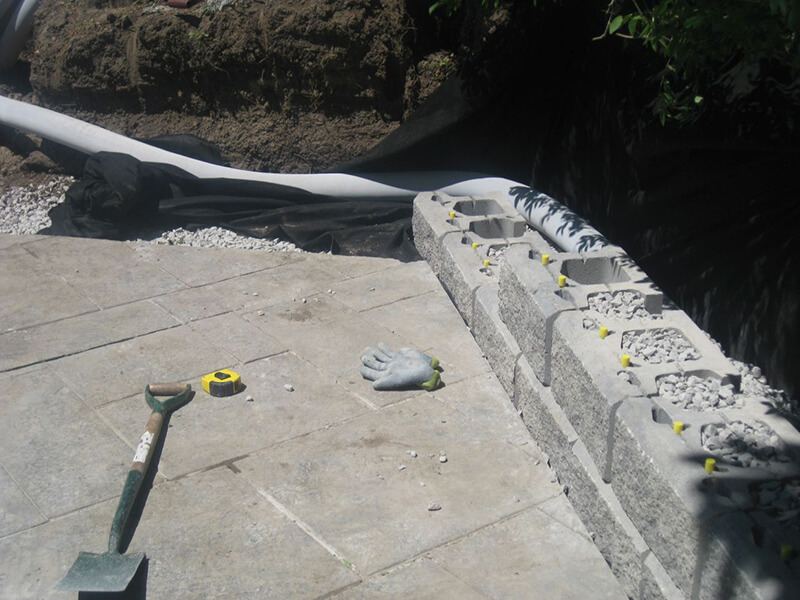
Sometimes the water comes from beside the slab: an unsupported slope, or an old retaining wall that no longer drains. On our Harbord project, an old, crumbling concrete wall was replaced with precast block.
On the Perry project, the new wall went in by hand beside a patterned concrete pool deck to minimize damage, with drain pipe and filter fabric behind it. For bigger yard plans, see exterior planning and design.
Patio looking like a jigsaw puzzle?
Tell us what you’re seeing and we’ll recommend the right repair.
Concrete Repair Questions
Can a cracked driveway be repaired, or does it need replacing?
Narrow, level cracks can usually be cleaned and filled. Panels that have sunk, lifted or broken up are better replaced.
Why do some crack repairs open up again?
Usually because the crack is still moving or the slab is still settling. A rigid filler can’t hold a crack that opens and closes with the seasons, which is why we find the cause before choosing the repair.
Will the repair match my existing concrete?
Not exactly. New patching is usually a different shade from weathered concrete, though the difference softens with age. Where looks matter, an overlay across the whole surface gives a more even finish.
When is the best time of year for concrete repairs?
Most cement-based repair materials need temperatures above roughly 5 °C while they cure, and some epoxies need it warmer, so repair season generally runs from spring to late fall. Fill cracks before winter, so water can’t get in and freeze.
Do I need a permit to repair my concrete?
Routine repairs to your own patio, walkway or driveway don’t usually need a building permit, but rebuilding a raised porch or deck can. The public sidewalk and the boulevard strip by the street belong to the municipality, so work there may need its permission. Check with your city, or ask us at the estimate.
In a very real way, concrete provides the foundation of the modern age. But sometimes even concrete needs some TLC. If your patio or driveway looks more like a jigsaw puzzle than a smooth slab, call Top Mark Property Improvements at 416.728.2159: the number one source for first-class concrete repairs in Toronto.